
The Little Stranger by Sarah Waters: A Haunting Tale of Class, Decay, and the Supernatural
How Sarah Waters Revived Gothic Horror in Post-War England


How Sarah Waters Brought Gothic Horror Back to England After the War Sarah Waters’ The Little Stranger (2009) is a masterful blend of psychological suspense and classic gothic horror, set against the crumbling backdrop of post-World War II Britain. More than just a ghost story, the novel explores the fading aristocracy, the trauma of war, and the unsettling possibility that the true haunting might not be supernatural—but psychological.
The Little Stranger pays homage to gothic traditions while offering a novel, unsettling take on the genre with its slow-burning tension, unreliable narrator, and eerie atmosphere. Themes, historical context, and the ambiguity that keeps readers debating the novel's true meaning are examined in depth in this article. 1. The Plot: A House in Decline
The narrative follows Dr. Faraday, a middle-aged country physician who becomes entangled with the Ayres family, the last remnants of the once-grand Hundreds Hall. The estate, now dilapidated and shadowed by financial ruin, seems to be afflicted by something sinister—strange noises, mysterious markings, and an unseen presence that torments the family.
Caroline Ayres – The pragmatic yet lonely daughter, resigned to her family’s decline.
Roderick Ayres is the war-torn heir who is struggling to keep the estate running. Mrs. Ayres – The matriarch, clinging to the past as the house deteriorates around her.
As Dr. As Faraday gets closer to the family, tensions rise and tragedy ensues. But is the house truly haunted, or is the real horror the family’s unraveling sanity?
2. Class, trauma, and the supernatural are the themes. A. The English Gentry's Demise Hundreds Hall symbolizes the decline of Britain’s aristocracy after WWII. The Ayres family, once powerful, are now relics—trapped in a home they can’t afford to maintain, surrounded by a world that no longer values their name.
Dr. Faraday’s Ambition: As a working-class man fascinated by the estate since childhood, his obsession with the house blurs the line between admiration and possession.
The Servant Problem: The absence of servants (once a staple of such households) underscores the family’s inability to adapt.
B. Post-War Trauma
Roderick’s physical and psychological wounds from the war mirror the house’s decay. His breakdown suggests that the true haunting might be PTSD—an internal specter rather than an external one.
C. Does the supernatural exist? The haunting is ambiguous in Waters: Supernatural Explanation: The house itself is malevolent, punishing the Ayres for their hubris.
Psychological Explanation: The family’s collective trauma manifests as hallucinations.
Unreliability of the Narrator: Is Dr. Faraday an observer—or an unwitting perpetrator?
This uncertainty makes The Little Stranger a deeply unsettling read.
3. Gothic Influences and Modern Subversion
Waters pays homage to classic gothic tropes while subverting them:
Gothic Trope Traditional Example Waters’ Twist
Haunted House: The Fall of Usher's House The specter may represent social and economic collapse. Untrustworthy Narrator In The Turn of the Screw, Faraday's motives are disputed. Declining Aristocracy Brideshead Revisited The Ayres’ fall is inevitable, not romanticized
Unlike traditional gothic fiction, where ghosts are real, Waters forces readers to question whether the horror comes from within.
4. The Conclusion: A Masterwork of Uncertainty (Spoilers Ahead)
The novel’s conclusion is deliberately unresolved:
Caroline’s Death – Was it suicide, murder, or supernatural intervention?
Faraday’s Final Visit – The house seems to reject him—or does his guilt manifest as paranoia?
The Last Line – “I began to run.” Is he running from a ghost or from himself? This ambiguity ensures the horror lingers long after the final page.
5. Adaptations and Legacy
2018 Film Adaptation – Starring Domhnall Gleeson as Faraday, the film captures the atmosphere but simplifies the ambiguity.
Literary Impact – Waters’ novel revived interest in neo-gothic fiction, influencing books like The Loney and The Silent Companions.
About the Creator
Keep reading
More stories from Silas Blackwood and writers in Horror and other communities.
The Night That Created a Monster: How a Stormy Evening in 1816 Gave Birth to Frankenstein
The True Story Behind the World’s First Science Fiction Novel A group of brilliant but troubled writers met in a villa near Lake Geneva in the summer of 1816. The weather was unnaturally cold—later called "The Year Without a Summer" due to a volcanic eruption—and trapped indoors, they told ghost stories by candlelight. What began as a simple challenge—Who can write the scariest tale?—ended up producing one of the most enduring horror stories of all time: Frankenstein; or, The Modern Prometheus, penned by an 18-year-old Mary Shelley. But Frankenstein wasn’t just a ghost story. It was the first true science fiction novel, a meditation on creation, ambition, and the monstrous consequences of playing God. This is the tale of how a stormy night, a waking nightmare, and an adolescent literary genius changed horror forever.
By Silas Blackwood8 months ago in Horror
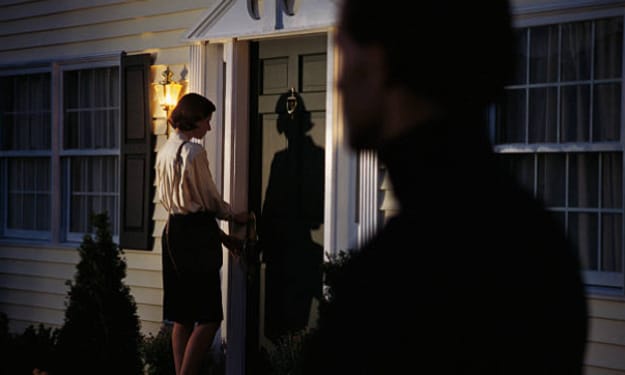
Someone Has Been Watching Me My Whole Life
The first time I saw him, he was standing beside my mother’s grave. Clad in a black coat, with no umbrella and an emotionless face, he stood perfectly still. Rain soaked his hair, yet he didn’t move, only gazing at her name carved into the stone. When he caught me watching, he looked up and smiled.
By Rosalina Janea day ago in Horror



Comments (1)
This sounds like an interesting read. I like how it explores the intersection of class, trauma, and the supernatural. It makes me wonder how the author managed to create such an eerie atmosphere. I also want to know more about Dr. Faraday's character and his motivations. Did his working-class background really drive his obsession with the Ayres family?