

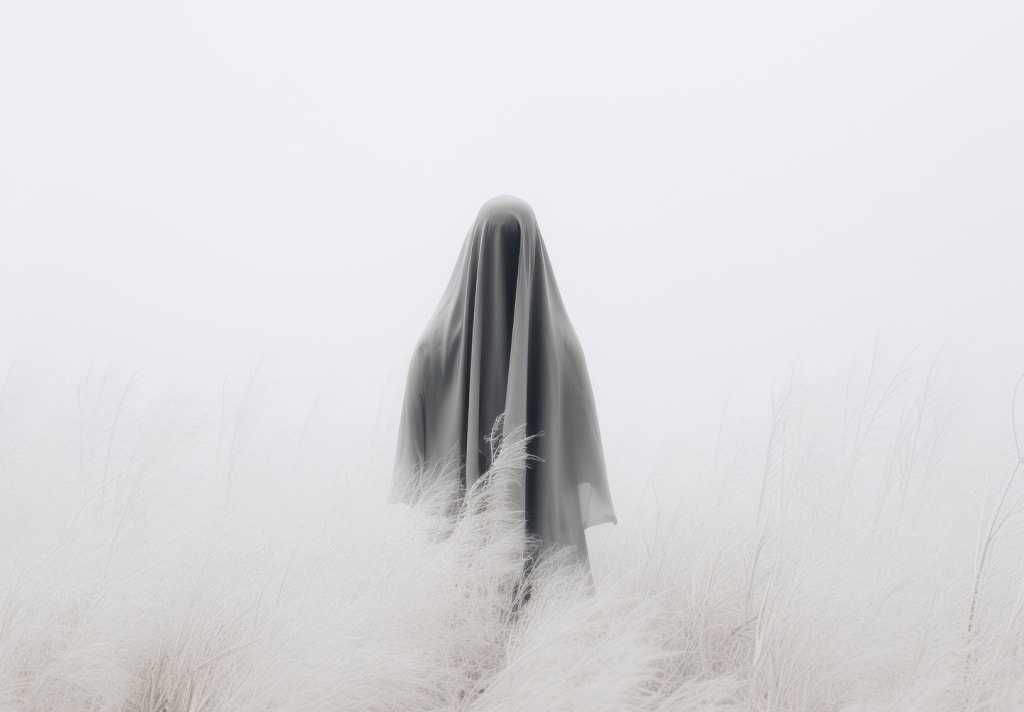
The Whisper on the Wind
The air felt heavy and damp, thick with the earthy scent of river mud and rotting leaves. Little Miguel held tightly to his abuela’s hand, his small heart racing. “Abuela,” he said softly, barely louder than the rustling noises made by unseen creatures in the underbrush, “I hear crying.”
His abuela, a woman whose face told the stories of many generations, squeezed his hand more firmly. Her normally warm, crinkled eyes were wide and dark, reflecting the sliver of moon hanging low in the night sky. “Hush, mijo,” she whispered in a low, urgent voice. “It’s just the wind.”
But it wasn’t the wind. The sound was sharp and haunting, a sorrowful wail that seemed to slink over the water, sending chills down Miguel’s spine. It was a sound full of deep, inconsolable sadness, a grief so overwhelming it felt like a physical pain. Then, through the swirling mist of the river, a figure started to emerge. Tall and dressed in white, it glided unnaturally along the riverbank. The crying grew louder as it came closer, a desperate, echoing call.
Miguel buried his face in his abuela's skirt, trembling. He didn’t need to see the face hidden beneath the shadow of the white veil; he already knew. Everyone in the village recognized the sound. It was the noise that haunted the outskirts of their town, the noise that kept children indoors after dark. It was the cry of La Llorona. And tonight, she was closer than ever.
La Llorona: The Weeping Woman
The eerie tale you've just read showcases the lasting strength of folklore, specifically the legend of La Llorona, or "The Weeping Woman." This ghostly figure, forever dressed in white and endlessly searching for her lost children, has haunted the dreams and imaginations of people across Latin America and the American Southwest for centuries. But who really is La Llorona? What are the roots of her chilling legend, and why does it still resonate so powerfully today?
A Tapestry of Sorrow
Trying to pinpoint the exact origins of La Llorona is like trying to catch smoke. The legend has morphed and transformed across different cultures and regions, making it tough to trace back to a single source. However, several intriguing theories exist.
One well-known theory links La Llorona to pre-Hispanic deities. Some scholars believe she could be a modern portrayal of figures like Cihuacóatl, an Aztec goddess associated with childbirth and sacrifice. Cihuacóatl was sometimes depicted as a weeping woman in white, signaling misfortune and war. This connection underscores how indigenous beliefs and fears might have become woven into the legend.
Another prominent theory suggests that the legend originated during the colonial era. This version often tells of a beautiful indigenous woman who fell for a Spanish conquistador. They had children together, but he ultimately left her to marry a woman of his own social class. Filled with rage and despair, the woman drowned her children in a moment of madness. When she comprehended the weight of her actions, she took her own life. As a cruel punishment for her terrible crime, she’s doomed to wander the earth, perpetually searching for her lost children and weeping in sorrow.
There are variations of this colonial story, sometimes portraying La Llorona as a woman betrayed by her husband or one who accidentally drowned her children. Yet, no matter the specifics, the key themes remain: betrayal, loss, and the ultimate tragedy.
A Tale of Loss and Eternal Torment
The most widely known version of La Llorona's legend describes a spectral woman, frequently spotted near bodies of water like rivers, lakes, and canals. She’s always clad in white, with her face hidden by a veil or long dark hair. The most haunting aspect of La Llorona is her chilling cry – a long, mournful wail that echoes through the night, sending shivers down the spines of those who hear it.
The legend warns that La Llorona will snatch children who are wandering alone after dark, mistaking them for her own lost little ones. Some variations suggest she drowns them, while others claim she simply leads them away, never to return. This part of the story serves as a powerful warning, urging parents to keep their children safe and close, especially as night falls.
Descriptions of La Llorona’s appearance and actions vary by region. In some places, she’s depicted as having flowing black hair and intense dark eyes. In others, her face is described as skeletal or even featureless, enhancing the eerie mystique. The one constant is her white clothing and the heart-wrenching cry that marks her presence.
Why La Llorona Still Terrifies??
The lasting allure and fear of the La Llorona legend arise from several key elements that tap into fundamental human fears:
The Unseen Threat: Usually, you hear La Llorona before you ever see her, or you might only catch a glimpse of a fleeting white figure in the dark. This uncertainty and the unknown can be inherently frightening. Our imaginations tend to fill in the gaps, often conjuring fears much worse than reality.
The Power of Sound: The sorrowful wail is La Llorona’s signature sound. Sounds can profoundly stir emotions, and her cry is designed to inspire fear and dread. It communicates unspeakable sorrow and eternal regret.
The Loss of Innocence: The central tragedy of La Llorona is losing her children. This resonates deeply with parents or anyone who cares for kids. The fear of losing a child is a universal anxiety that touches everyone.
The Setting: The connection to water—whether it’s rivers, lakes, or dark canals—adds to the suspense. Water can be both life-giving and treacherous, and the image of a weeping woman by the water evokes vulnerability and discomfort.
Cultural Transmission: The legend is often shared through oral traditions, told in hushed tones around campfires or bedtime. This intimate storytelling style heightens the emotional impact and fosters a shared cultural understanding of fear.
More Than Just a Ghost Story
La Llorona is more than just a spine-chilling tale to share around a campfire. She stands as a significant cultural symbol, reflecting societal fears and moral lessons.
Cautionary Tale: As noted earlier, the legend warns children about the dangers of roaming alone at night and underlines to parents the importance of safeguarding their kids.
Reflection of Societal Issues: Some see La Llorona as a representation of the struggles and injustices faced by women, especially during colonial times. Her story can be viewed as a tragic result of societal pressures and mistreatment of women.
Expression of Grief and Loss: La Llorona’s unending sorrow can symbolize the lasting pain of loss and the ongoing effects of trauma.
Cultural Identity: For many Latino communities, La Llorona is a vital part of their cultural heritage, a shared narrative that connects generations and reinforces cultural identity.
The legend of La Llorona still resonates in popular culture today. She’s made appearances in numerous films, TV shows, books, and video games, each adding its take on the haunting tale. This continuous presence shows the legend's enduring strength and its ability to adapt to different audiences and storytelling forms.
So, the next time you hear an odd sound carried on the night wind, a whisper of sorrow that chills you to your core, think of La Llorona. She’s a reminder of folklore's power to terrify and teach, a ghostly figure whose heart-wrenching cry echoes through time, symbolizing the enduring impacts of loss, regret, and the stories that linger in the shadows. And maybe, just maybe, keep your children close. You never know when the weeping woman might be near.
About the Creator
Ashraf Almamlouk
A passionate writer, graphic designer&animator. I have a deep love for storytelling and a talent for creating engaging content from children’s fairy tales to explorations of the world’s mysteries, My works aim to entertain, and inspire.
Keep reading
More stories from Ashraf Almamlouk and writers in Horror and other communities.
A Shadow in Our Nightmares
The last bit of orange faded from the sky, leaving behind a bruise of purple. Ten-year-old Leo curled up on his bed, making it feel like a lonely island amid the growing darkness of his room. His parents were downstairs, laughter echoing faintly. But up here, in the deepening shadows, something else stirred.
By Ashraf Almamloukabout a year ago in Horror
The Dragon’s Promise
After the death of their parents, two brothers lived in a village. The elder brother was clever, practical, and skilled at earning money. Neighbors praised him, while the younger brother was still young, simple-hearted, honest, and inexperienced in earning a living. The elder brother looked down on him, mocked him, and even the villagers called him foolish.
By Sudais Zakwan2 days ago in Horror



Comments
There are no comments for this story
Be the first to respond and start the conversation.