
The Last Room on Sycamore Street
Some rooms are never truly empty—they just wait for the next guest to notice.


The taxi dropped Emma at the corner of Sycamore Street just as the fog rolled in, muffling the outlines of houses. The street was mostly quiet, save for the faint hum of a streetlamp that flickered as if it, too, had grown weary.
She pulled her coat tighter and checked the slip of paper again: Room 6, second floor, Sycamore Inn. It had been recommended as a temporary stay until she found a more permanent place. The building loomed ahead—an old boarding house with peeling paint and windows that seemed to hold their breath.
Inside, the air smelled of dust and lavender. The innkeeper, a thin woman with sharp eyes, slid the key across the counter without a word. The key was heavier than expected, ornate, as though it belonged to a different century.
“Second floor,” the woman said. “Last door on the left. Don’t linger in the hallway.”
Emma hesitated. “Why not?”
The woman’s mouth twitched, almost a smile, almost a warning. “You’ll see.”
The hallway upstairs stretched on longer than it should have. Dim yellow bulbs buzzed overhead, their glow barely reaching the carpet patterned with faded roses. Each door looked the same—plain wood with brass numbers—but as Emma walked, she noticed the air shift. It grew colder, thicker, as though she were moving underwater.
Finally, she reached the last door. Room 6. The brass number was tarnished, but her fingers tingled the moment she touched it, like static coursing beneath her skin.
Inside, the room was simple: a bed, a dresser, a single chair by the window. Yet something about it felt… occupied. She set down her bag, trying to shake off the unease.
That night, sleep didn’t come easily. Each time she drifted off, a sound pulled her back—the creak of the chair, the rattle of the window latch, footsteps pacing the hallway though she knew she was alone. At 2:13 a.m., she woke to find the chair turned toward her bed. She had left it facing the window.
Emma whispered to herself, “Old houses make noises. That’s all.”
The next day she asked the innkeeper if anyone else stayed on the second floor.
The woman’s eyes flicked up, then away. “No one has, for years.”
“Then who—” Emma began, but the woman cut her off.
“You’ll be leaving soon. Best not to ask questions you don’t want answered.”
That night, Emma packed her bag, ready to leave in the morning. But exhaustion overcame her, and she fell into a restless sleep.
At 3 a.m., the sound of breathing filled the room—not hers. She opened her eyes and froze. A figure sat in the chair, its outline barely distinguishable in the dim light. She couldn’t see its face, only the shape of a body, hunched forward, watching.
Her voice caught in her throat. “Who’s there?”
The figure didn’t move. Didn’t breathe. Yet she felt its gaze like a weight pressing down.
Heart pounding, Emma reached for the lamp. But when the light flicked on, the chair was empty.
The next morning, she stormed to the desk. “I’m leaving. Give me back my deposit.”
The innkeeper didn’t look surprised. “Most do.”
Emma leaned in. “What’s in that room?”
The woman finally met her eyes. “Not what. Who. Room 6 belonged to a man who never checked out. He sat in that chair every night, staring at the door. Waiting. No one stays long. But some say… once you see him, he sees you too. And he follows.”
Emma left without another word, but as the taxi pulled away from Sycamore Street, she couldn’t shake the feeling of eyes on her back—silent, patient, waiting for nightfall.
About the Creator
Jack Nod
Real stories with heart and fire—meant to inspire, heal, and awaken. If it moves you, read it. If it lifts you, share it. Tips and pledges fuel the journey. Follow for more truth, growth, and power. ✍️🔥✨
"Scream 7" (2026): Running out of Fresh Screams
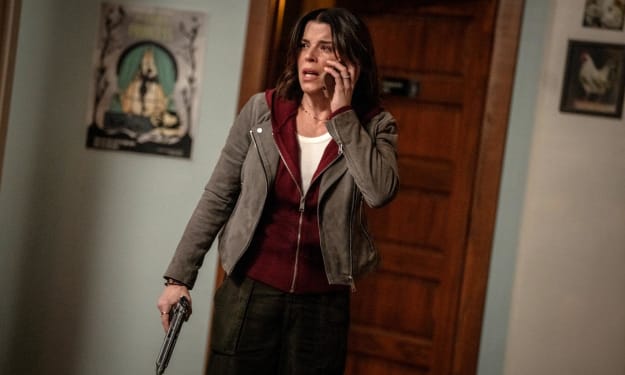
This is the seventh time we’ve had a Ghostface crisis. Scream 7 is the latest edition of the Scream franchise. Sydney Prescott and her family are under attack by another anonymous killer dressed in a Ghostface costume. While having issues with her daughter, Tatum, they run from the bloody murders, trying to determine who is behind it all.
By Marielle Sabbag6 days ago in Horror


Comments
There are no comments for this story
Be the first to respond and start the conversation.