
“The Last Morning in Hiroshima”
“A City’s Final Breath Before the Sky Fell”

The sun rose slowly over Hiroshima on the morning of August 6, 1945, spilling golden light over the quiet streets. The air smelled faintly of smoke from the coal stoves burning in homes, mingling with the soft fragrance of early summer blossoms. For most of the city, it was an ordinary morning. But for Aiko Tanaka, a fourteen-year-old girl with bright eyes and a restless spirit, it was a morning she would never forget.
She tied a red ribbon into her hair, smiling at her younger brother, Shinji, who stumbled toward the breakfast table, rubbing sleep from his eyes. Their mother ladled miso soup into bowls while their father had already left for the factory, a part of the wartime workforce. Life had grown difficult over the past years—food was scarce, work demanding, and every day carried whispers of bombings and air raids in distant cities. Yet Hiroshima had remained untouched, and its people clung to the fragile rhythm of daily life.
“Shinji, hurry up,” Aiko called, tugging at his sleeve. “If you’re late again, sensei will scold you.”
“I’m coming! I’m coming!” he replied, trying to match her pace.
Aiko stepped outside for school, inhaling the fresh morning air. She glanced up at the sky—clear, blue, peaceful—and felt a strange calm settle over her. She had no idea that within the hour, the sky would turn into a river of fire, and her life would be irreversibly changed.
The Flash That Stole the Morning
At 8:15 a.m., a B-29 bomber, flying high above the clouds, released a bomb unlike anything humanity had ever known. The bomb drifted silently for seconds that stretched like hours. Then came the explosion—a blinding flash that swallowed the morning sun.
Aiko was thrown off her feet by the force of the blast. The ground trembled violently beneath her as a wave of heat and light engulfed everything. She screamed, but the sound was drowned by the roar of collapsing buildings and the screams of people caught in the chaos. The city, as she had known it, vanished in an instant.
When she regained consciousness, she saw only destruction. Wooden houses had evaporated. Metal frames twisted into grotesque shapes. Streets were filled with fallen lives. Smoke, ash, and fire filled the air. The peaceful morning was gone—replaced by a landscape of horror.
“Mother… Shinji…” Aiko called, her voice trembling.
Her friend, Emi, limped toward her, her face scorched, her clothes tattered. “We… we have to find them,” she whispered. But even Emi’s voice carried uncertainty, the kind that only comes when the world itself has collapsed.
Searching Through the Ruins
Aiko ran toward her home, her legs burning, her lungs choking on dust. Each step was met with rubble, flames, and the bodies of those who had not survived. The streets she knew were unrecognizable, twisted and charred. She called her family’s names over and over, her voice growing hoarse, yet no one answered.
When she reached her home, all that remained was a pile of ash and smoldering beams. Tears streamed down her face as she sank to her knees. The home where she had laughed, argued, and grown up was gone. Her father emerged from the smoke, battered but alive, and held her trembling hands. But there was no trace of her mother or brother. The realization sank deep—her family was gone.
“Promise me you will live,” her father whispered, his voice weak but resolute. “You must live and remember this, so the world never forgets.”
A City Silenced, Lives Shattered
The days that followed were unbearable. Survivors wandered aimlessly through the streets, many carrying children, some carrying nothing. Hospitals overflowed. Relief could not keep pace with the magnitude of suffering. Radiation burned unseen, leaving invisible scars that would linger for years. Hunger, thirst, disease, and grief became companions for the survivors.
Aiko and her father found shelter among other survivors. Every day, she walked through ruined streets, searching for signs of life, scavenging for food, and tending to the wounded. Each face she encountered reflected the same pain, the same silent question: Why?
Yet amidst the ruin, small acts of courage flickered. Neighbors shared meager rations. Strangers carried the injured to safety. Each act reminded Aiko that even in the face of unimaginable destruction, humanity could endure.
Nagasaki: Another Morning Lost
Three days later, on August 9, 1945, another city faced a similar fate. Haruto Sato, a young worker at the Mitsubishi shipyard in Nagasaki, had heard rumors about Hiroshima. Entire cities destroyed, lives extinguished in a flash of light. He had dismissed it as exaggeration—human minds could not fathom such destruction.
At 11:02 a.m., a second bomb, nicknamed “Fat Man,” detonated above Nagasaki. Haruto felt a force crush him into the ground. The factory around him crumbled, metal beams snapping like twigs. Dust and smoke filled his lungs, and the sky was swallowed by a strange, unnatural light.
He crawled through rubble, searching desperately for his fiancée, Kei. Hours later, he found her among the remains of her home, badly burned but alive. She grasped his hand and whispered, “Live… for both of us.” Her strength was fleeting, and soon she slipped away, leaving Haruto alone amidst the ruins.
The Weight of Survival
Both Hiroshima and Nagasaki became cities of ghosts. Lives were lost, and memories were scorched into the walls of every surviving structure. Aiko carried the pain of her family’s loss, while Haruto carried the promise of Kei’s last words. Both became witnesses to humanity’s darkest hour, bound by shared grief, even though they had never met.
In the months and years that followed, they devoted themselves to helping others—rebuilding shelters, distributing food, and sharing their experiences. Aiko began to document her memories, drawing images of Hiroshima before and after the bomb. Haruto spoke at gatherings, telling the story of Nagasaki, of hope amidst despair, and of the urgent need for peace.
A Message Through Time
Decades later, Aiko and Haruto would meet in Tokyo, their paths finally crossing. Both had survived destruction, both had endured unimaginable loss. Together, they became voices for the voiceless, storytellers of history’s pain, and advocates for peace.
“War,” Aiko said to young students, “does not end when the bombs stop. Its echoes carry on for generations.”
Haruto added, “We must remember the past, not to fuel anger, but to protect the future. Peace is our responsibility.”
Conclusion: The Last Morning
Hiroshima and Nagasaki were more than just cities—they were testimonies of human suffering, courage, and resilience. Their story is not only one of destruction, but also of hope and the enduring spirit of those who survived.
“The Last Morning in Hiroshima” is a story of a day when the sun rose on two cities, and life as people knew it ended forever. It reminds us that even in the face of absolute darkness, the light of human courage, compassion, and hope can never be extinguished.
The message resonates today, echoing across generations: Never again. Let no city, no child, no family endure the horrors of such devastation. Peace is not just a wish—it is a duty.
About the Creator
Keep reading
More stories from Saif Ullah and writers in Horror and other communities.
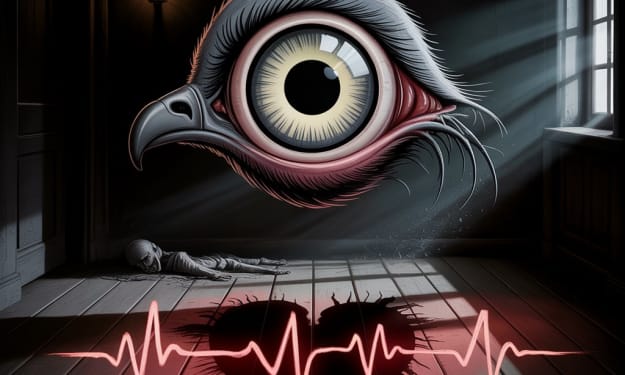
✨ The Tell-Tale Heart.
I am not mad. You must believe me. The disease had sharpened my senses, not weakened them. I could hear the faintest rustle of a leaf, the tiniest whisper of a footstep, the beating of a heart. Yet it was precisely this heightened awareness that drove me to fixate on the old man with whom I lived. I loved him, and he had never wronged me. But there was one thing about him that I could not endure: his eye. That pale, vulture-like eye, with its milky film and cold, watchful stare—it filled me with a horror I could neither explain nor contain.
By Saif Ullah3 months ago in Horror
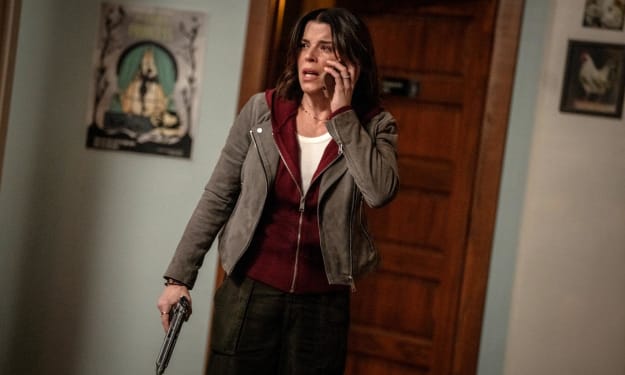
"Scream 7" (2026): Running out of Fresh Screams
This is the seventh time we’ve had a Ghostface crisis. Scream 7 is the latest edition of the Scream franchise. Sydney Prescott and her family are under attack by another anonymous killer dressed in a Ghostface costume. While having issues with her daughter, Tatum, they run from the bloody murders, trying to determine who is behind it all.
By Marielle Sabbag3 days ago in Horror

Comments
There are no comments for this story
Be the first to respond and start the conversation.