
The Last Elevator Ride: The Unsettling Mystery of Elisa Lam
A strange video, a vanishing guest, and a hotel wrapped in decades of dark stories—the case that still haunts America.

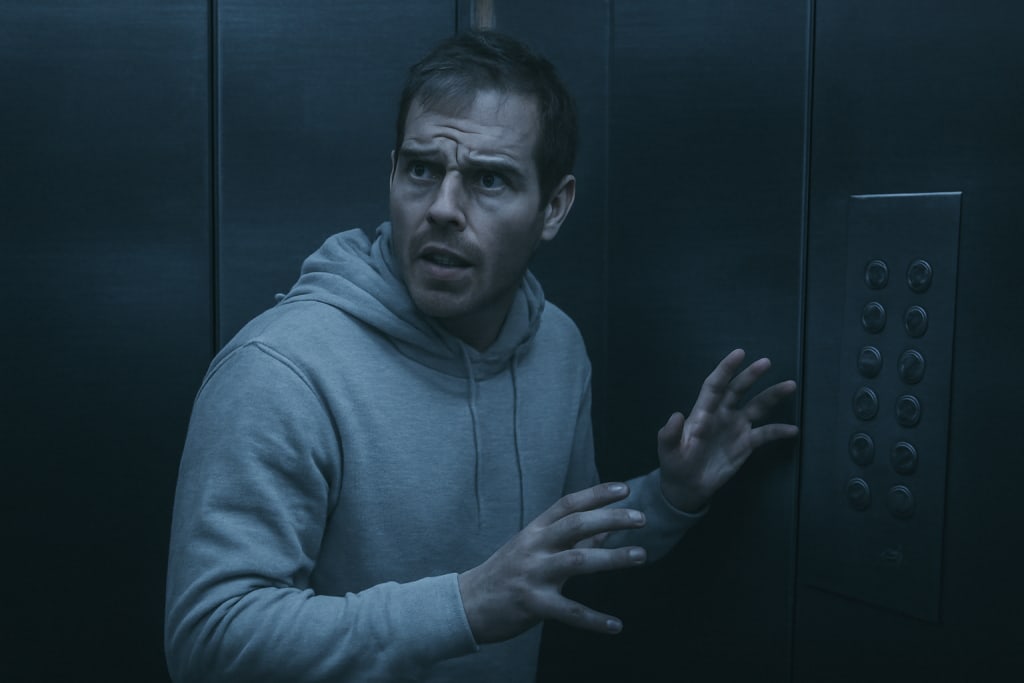
The strange thing about some mysteries is that they don’t start with a scream or a crime scene. They begin quietly, almost too quietly, and then grow into something no one can forget. The case of Elisa Lam is one of those stories—simple at the start, almost routine, and then suddenly so disturbing that Americans still revisit it years later, as if hoping this time the ending will change.
In January of 2013, a 21-year-old student from Canada, Elisa Lam, checked into the Cecil Hotel in downtown Los Angeles. She was traveling alone, taking a break from university stress, and documenting every step of her trip on Tumblr. Her posts were emotional, thoughtful, sometimes funny—just like any other young traveler searching for something new in life.
For the first few days, everything looked normal. She explored bookstores, photographed street art, shared her feelings online. There was no sign of danger. No hint that the world would soon know her name.
Then, on January 31st, she vanished.
The hotel staff told police she simply stopped appearing. No breakfast the next morning. No new Tumblr posts. No checkout. She was just gone. And that disappearance became the start of one of the most unsettling mysteries modern America has ever seen.
When the Los Angeles Police Department struggled to find clues, they released a piece of evidence to the public—something they hoped might help. It wasn’t a note. It wasn’t a witness statement. It was a video.
A short clip from inside the hotel’s elevator.
The video appeared online on February 14, 2013, and within hours it spread across the United States. People shared it not because they wanted gossip, but because they couldn’t explain what they were seeing. The footage showed Elisa inside the elevator… behaving in a way no one could understand.
She stepped in and pressed several buttons at once. Then she waited. The elevator doors didn’t close.
She peeked outside, slowly at first, then suddenly jumped back inside as if someone was approaching. She pressed herself into the corner. She moved her hands in strange, fluid motions—almost as if she was trying to feel something in the air. Then she stepped out again, looking to her left and right, speaking to someone who wasn’t visible.
And the doors still didn’t close.
It was the kind of video that makes you lean closer to the screen without meaning to. It didn’t feel staged. It didn’t feel acted. It simply felt wrong.
Millions of Americans watched. Some said she looked terrified. Others believed she was hallucinating. A few became convinced there was someone—just out of the camera’s frame—following her.
Online theories exploded overnight. People compared the video to horror movies, psychological breakdowns, and paranormal encounters. The elevator itself became a character in the story. Why did the doors refuse to close? Why did it work normally as soon as she left the frame? Why did her hands move like that?
But the real shock came two weeks later.
Guests staying at the hotel began complaining that the water in their rooms tasted strange. The pressure was low. The color was off. Maintenance workers climbed to the roof to check the water tanks.
Inside one of them, they found Elisa Lam.
The discovery made the story even darker. The tanks were heavy, difficult to open, and standing on a platform that required a ladder. The area was supposed to be locked. And yet somehow, she ended up inside.
There were questions everywhere.
How did she get onto the roof?
How did she open a tank designed to stay sealed?
How did no one hear anything?
Why did the elevator behave the way it did?
Was she running from someone—or something—only she could see?
Police eventually concluded the death was accidental. They explained it as a tragic combination of mental health struggles and disorientation. Many accepted the explanation. Many others didn’t. Not because they wanted drama, but because too many details didn’t line up neatly.
The Cecil Hotel added another layer of unease to the story. This was not an ordinary hotel. It had a long history of violent deaths, suicides, unexplained accidents, and even serial killers who once lived there. It wasn’t cursed—but it certainly wasn’t normal either. Journalists called it “a building with a shadow.” For Americans who knew the hotel’s past, Elisa’s fate felt like another chapter in a book that should have ended long ago.
What makes the Elisa Lam case so powerful in American culture is not just the sadness of a young life lost. It’s the combination of unanswered questions, real video footage, psychological complexity, and the eerie setting of a hotel with a dark reputation. It’s the kind of story that people return to when they can’t sleep, searching for a detail they missed.
Even today, years later, the mystery stays alive. Documentaries revisit it. Podcasts analyze her gestures in the elevator frame by frame. Reddit threads still argue about whether someone was with her. Psychologists discuss the possibility she was experiencing a severe mental episode. Engineers debate the elevator’s behavior. Security specialists question why the footage had strange cuts.
Some mysteries fade. This one didn’t.
It remains suspended between rational explanation and haunting unanswered questions. A story that sits uncomfortably between coincidence and tragedy. A reminder that even in a world filled with cameras, technology, and logic, some events refuse to fit neatly into a single explanation.
And maybe that’s why America can’t let it go.
Human beings fear the unknown—but they’re also drawn to it. The Elisa Lam case gives people a puzzle they can almost solve, but not completely. It lets them explore fear safely, from behind a screen. It forces them to ask how well we understand our own minds. It asks whether buildings hold memories. It asks whether tragedy is always random.
Most of all, it reminds us how delicate life is.
Elisa wasn’t a ghost, a symbol, or an urban legend. She was a real person with dreams, anxieties, humor, and a future she never got to live. Her story became viral not because people wanted to turn her into entertainment, but because her final moments struck a nerve deeper than crime or fear—they touched something human.
And that is why her last elevator ride is still one of America’s most unforgettable mysteries.
About the Creator
The Insight Ledger
Writing about what moves us, breaks us, and makes us human — psychology, love, fear, and the endless maze of thought.
Keep reading
More stories from The Insight Ledger and writers in Horror and other communities.
The Black Dahlia: Unmasking the Perpetual Shadow Over Hollywood
The Hollywood narrative is typically one of dazzling spotlights, star-studded premieres, and dreams realized. Yet, deep within the foundation of this glamour lies a scar—a chilling, unsolved murder that remains the definitive cold case of the 20th century: The Black Dahlia. More than just a crime, it is a cultural touchstone that embodies the darkness lurking beneath the façade of post-war prosperity and optimism in Los Angeles. The Victim: Elizabeth Short and the Pursuit of Stardom The victim at the heart of this enduring mystery was 22-year-old Elizabeth Short. Born in Boston, Massachusetts, she was drawn, like countless others, to California by the irresistible lure of Tinseltown. She was an aspiring actress and model, though her path often saw her working odd jobs or spending time with military men who frequented the region. The moniker "The Black Dahlia" was not given by her killer, but by the sensationalist Los Angeles press. It was a play on the popular 1946 film The Blue Dahlia and Elizabeth’s striking appearance; she favored black attire, often adorned with a flower in her hair. This media nickname was the first step in transforming a tragic murder victim into an eternal, fictionalized enigma. January 15, 1947: The Discovery That Shook a City The horror began on January 15, 1947, when Elizabeth Short’s completely nude and mutilated body was discovered in a vacant lot near 39th Street and Norton Avenue in Leimert Park, Los Angeles. The nature of the discovery was instantly shocking, unlike any crime the city’s police force had ever encountered. The body had been perfectly severed at the waist, divided into two halves. Betty Bersinger, a local resident, initially mistook the corpse for a discarded store mannequin. The meticulous, almost ritualistic, nature of the injuries immediately set this crime apart. Surgical Precision: The dismemberment was performed with expert precision, suggesting the killer possessed significant knowledge of human anatomy, perhaps stemming from medical, surgical, or butchering experience. Exsanguination: The body was completely drained of blood, further suggesting the murder had taken place elsewhere and the killer had gone to great lengths to clean the remains before disposal. The Glasgow Smile: The most visually disturbing injury was the deep lacerations extending from the corners of her mouth across her cheeks, creating a grotesque, permanent grin known today as a "Glasgow Smile." The sheer barbarity and theatrical presentation of the body—posed with arms above the head and legs spread—suggested a killer motivated by extreme malice and a desire to engage with the authorities and the public. The Media Mania and The Killer’s Taunts The Black Dahlia case exploded into a full-blown media spectacle. Los Angeles newspapers, locked in a fierce circulation war, assigned dozens of reporters to the story, often publishing unverified tips, rumors, and graphic details. This relentless, often irresponsible, coverage played directly into the killer's hands. A week after the body’s discovery, the press began receiving chilling communications. The ‘Zodiac-Like’ Challenge: A package containing Elizabeth Short’s birth certificate, photographs, business cards, and an address book was mailed to the Los Angeles Examiner office. These items were meticulously wiped clean with gasoline to remove fingerprints, confirming the killer's cunning and awareness. The Confession Notes: Numerous notes and postcards followed, allegedly from the killer, taunting the police and promising further acts. This pattern of communication, attempting to control the narrative through media interaction, foreshadowed the tactics of later infamous killers like the Zodiac. The sensationalism created a devastating side effect: it generated a flood of false leads, confessions, and tips. Over the course of the investigation, more than 150 individuals confessed to the crime, many driven by a desire for notoriety or mental instability. The deluge of misinformation crippled the investigation's ability to focus on substantive leads. The Suspects: From Eccentric Doctors to Petty Criminals The official LAPD investigation interviewed over 50 "serious" suspects, but the most compelling and enduring theories center around individuals with specific professional backgrounds. Dr. George Hodel: The Enduring Theory The most credible modern theory revolves around Dr. George Hodel, a wealthy and politically connected physician known for his eccentric behavior and ties to the Hollywood elite. The Detective's Son: The most damning evidence came decades later from LAPD homicide detective Steve Hodel, Dr. Hodel’s own son. Steve Hodel dedicated his retirement to investigating his father, convinced he was the killer. The Wiretap: In 1950, police placed a wiretap on Dr. Hodel's residence, the famous Sowden House. Transcripts revealed chilling conversations. On one recording, Hodel is allegedly heard saying, "Supposin' I did kill the Black Dahlia. They couldn't prove it now. They can't talk to my secretary anymore because she's dead." Forensic Links: Steve Hodel’s investigation also established potential links between his father and other unsolved crimes, suggesting a serial pattern. Furthermore, the Sowden House was a short distance from the vacant lot where Elizabeth Short was found. The specific surgical nature of the cuts strongly aligns with a man of medical training. Other Noteworthy Suspects Leslie Dillon: A bellhop and former surgical assistant who wrote crime fiction stories and had detailed knowledge of the case. He was identified by psychologist Marvin Fowler as a potential suspect, though later dismissed after intense interrogation. Orson Welles: The acclaimed filmmaker was briefly considered because of his controversial art installations, which included a bizarre severed-body exhibit that eerily mirrored the Dahlia scene. This was likely a coincidence, but illustrates the reach of the investigation into Hollywood’s inner circles. The Legacy: A Symbol of Unresolved Fear The Black Dahlia case remains officially unsolved. The police ultimately failed to find the crucial evidence—the site where the murder took place, or the definitive connection between Elizabeth Short and her killer. The case file ballooned into thousands of pages, but the trail went cold. Elizabeth Short’s death achieved the perverse fame she sought in life. Her tragedy became immortalized in countless books, films (most notably James Ellroy’s novel and the subsequent film adaptation), and television series. The Black Dahlia is more than a cold case; it is a cultural indictment. It exposed the rot beneath the post-war veneer of Los Angeles, revealing that even in the brightest spotlight, the darkest evils could operate with impunity. The perpetual shadow of the killer, whose identity remains a secret confined to history, continues to loom large, forever staining the golden age of Hollywood with blo
By The Insight Ledger 4 months ago in Horror
The Forsyth House Fire
Since 1851, Forsyth House has stood on the corner of Union Street and Gordon Street in the heart of Glasgow. Its iconic, or was... because on Sunday 8th of March, 2026, a fire broke out in a small, seemingly un-named shop in the building and tore all that history down. As I write, the rubble is still unsettled and the street is still blocked off. Central Station is quiet on the upper level, and around 30 small businesses have quite literally gone up in smoke.
By S. A. Crawford3 days ago in The Swamp


Comments
There are no comments for this story
Be the first to respond and start the conversation.