
The GREEN Children of Woolpit: A Medieval Mystery Wrapped in Green
These aren’t just your average muddy, scrappy medieval kids. They have green skin, speak a language no one understands, and look utterly baffled by the sight of bread.

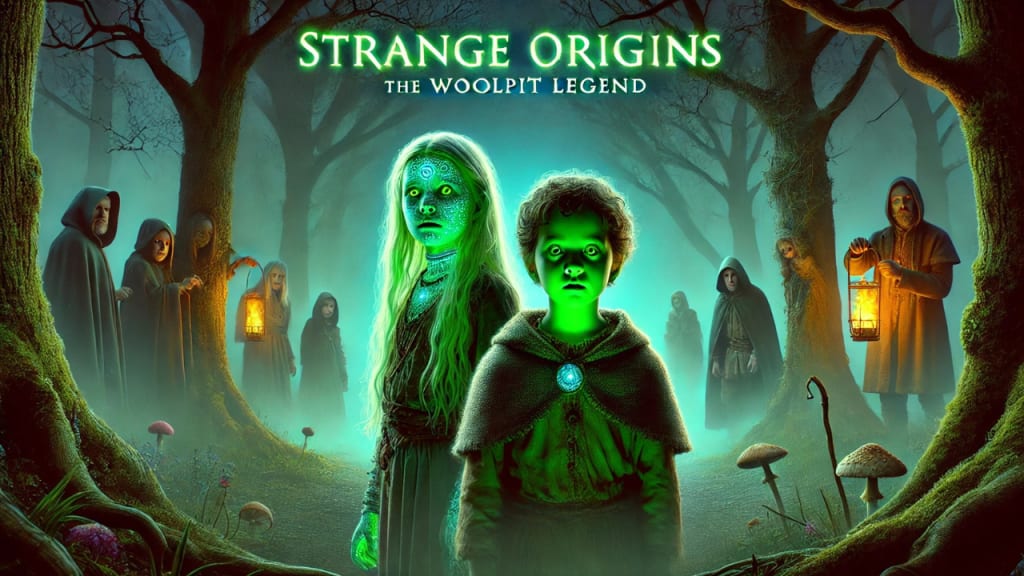
Imagine you’re a farmer in medieval England, going about your day, when you stumble upon two children wandering out of a wolf pit (yes, the town of Woolpit literally gets its name from pits meant to trap wolves). But these aren’t just your average muddy, scrappy medieval kids. They have green skin, speak a language no one understands, and look utterly baffled by the sight of bread. Congratulations—you’ve just stumbled into one of the strangest legends of the Middle Ages.
The tale of the Green Children of Woolpit is the kind of story that keeps historians, folklorists, and sci-fi enthusiasts awake at night. Was it a case of malnutrition? Aliens? A parallel universe? Grab your tinfoil hats, folks, because we’re diving deep into this bizarre medieval mystery.
Scene Setting: Woolpit, Suffolk, 12th Century
Let’s start with the basics. Woolpit is a charming little village in Suffolk, England, whose name comes from those aforementioned wolf pits—traps designed to deal with the pesky wolf population. Back in the 12th century, Woolpit was a quiet farming community. That is, until two mysterious kids decided to make their grand, green entrance.
One day, villagers discovered a boy and a girl near one of these pits. They were speaking in a strange tongue, wearing clothes of an unfamiliar material, and, most notably, had green-tinted skin. Oh, and they were terrified.
The Kids’ Curious Story
The villagers did what any reasonable medieval townsfolk would do: they took the children in and stared at them like they were exotic pets. When the kids were offered food, they rejected everything—until someone brought out some green beans, which they devoured like they hadn’t eaten in weeks. (Apparently, being green makes you really into greens.)
Eventually, their skin color faded, they learned to speak English, and they spilled the beans—pun intended—about their origins. According to the girl, they came from a place called St. Martin’s Land, where everything was green: the people, the landscape, the vibes. Their world was perpetually twilight, and they didn’t know how they ended up in Woolpit. One day, she said, they had been herding cattle and heard a strange noise. The next thing they knew, they were in a completely different world, staring at some confused farmers.
What Happened to the Green Kids?
Sadly, the boy didn’t last long, passing away shortly after they were discovered. The girl, however, grew up and integrated into society. She even took a job and got married, proving that even if you come from a mysterious green dimension, you can still find love and a steady paycheck in medieval England.
But the mystery of their origins? Never solved.
The Theories: Where Did They Come From?
Ah, now we get to the fun part—the theories. People have been trying to explain the Green Children of Woolpit for centuries, and some of the ideas are wild. Let’s break it down:
1. Malnutrition Gone Green
One of the more grounded theories is that the kids were suffering from chlorosis, a type of anemia that can give the skin a greenish tint. Maybe they were orphans from a Flemish immigrant community (there were conflicts in the area at the time), and their strange language was just Dutch.
2. Aliens Among Us
Of course, this story has alien encounter written all over it. Two beings from a green land suddenly appear in medieval England, disoriented and hungry? Sounds like someone took a wrong turn at the Milky Way rest stop.
The Green Children of Woolpit
3. A Parallel Universe?
Some theorists argue the kids might have slipped through a portal from another dimension. If multiverse theories tickle your fancy, this explanation is a winner. St. Martin’s Land could have been a parallel world where green is the norm, and twilight reigns eternal.
4. Folklore with a Moral
Others believe the story is purely symbolic—a bit of medieval folklore meant to convey some moral lesson, like "be kind to outsiders" or "always stock green beans in your pantry, just in case."
The Legend in Modern Culture
The Green Children of Woolpit haven’t faded into obscurity. The legend has inspired books, movies, and countless debates among enthusiasts of the weird and wonderful. It’s a story that bridges the gap between history, folklore, and speculative fiction.
Today, Woolpit embraces its mysterious past. Visitors to the village can still see references to the legend, from signs to local lore tours. It’s a great example of how a bizarre event—or a compelling tale—can shape a community’s identity for centuries.
Why Does This Legend Persist?
So, why are we still talking about two green-skinned kids who showed up in a random medieval village? Because it’s just the right mix of creepy, whimsical, and thought-provoking. The story taps into our universal fascination with the unknown: What’s out there? Are we alone? And, most importantly, would green beans really be our first choice if we landed in another world?
Final Thoughts: A Mystery for the Ages
The Green Children of Woolpit remain one of history’s strangest enigmas. Whether you see it as a curious footnote in medieval history, a cautionary tale, or the first documented alien sighting, there’s no denying its enduring appeal.
So, the next time you find yourself in Woolpit, take a moment to imagine those green-skinned kids emerging from the wolf pit, bewildered and hungry. Who knows? Maybe they’re still out there somewhere, waiting for the right portal to open up again. Just make sure you’ve got some green beans on hand—you know, just in case.
About the Creator
Keep reading
More stories from Marveline Merab and writers in Horror and other communities.
The Enfield Poltergeist HAUNTING: A Spooky Spectacle That Still Baffles the World
When it comes to ghost stories, few are as spine-tingling—and divisive—as the Enfield Poltergeist. Imagine a quiet London suburb in the late 1970s, a modest home teeming with inexplicable noises, levitating furniture, and a family that became overnight celebrities in the paranormal world. Was it the work of mischievous ghosts, a demonic presence, or just some clever teenage pranks? Depending on whom you ask, you’ll get wildly different answers.
By Marveline Merababout a year ago in Horror
The Screams Beneath the Floorboards
Old houses make noise. They creak, groan, and sigh as if remembering things they were never meant to keep. That’s what I told myself when I first heard it—a faint sound beneath my feet, barely louder than the wind slipping through cracked windows.
By David John4 days ago in Horror


Comments (1)
This article was interesting and entertaining! I have heard of the children before, and I'm not one who is prone to think it's supernatural, probably your first theory is accurate -- if they ever existed at all. I see lessons on open-mindedness and inclusion here. Compassion for their fellow humankind clearly overcame any unease the people of Woolsey might have felt at their differences. We're all humans at the end of the day.