
The Girl in the Box: The Chilling Ordeal of Colleen Stan
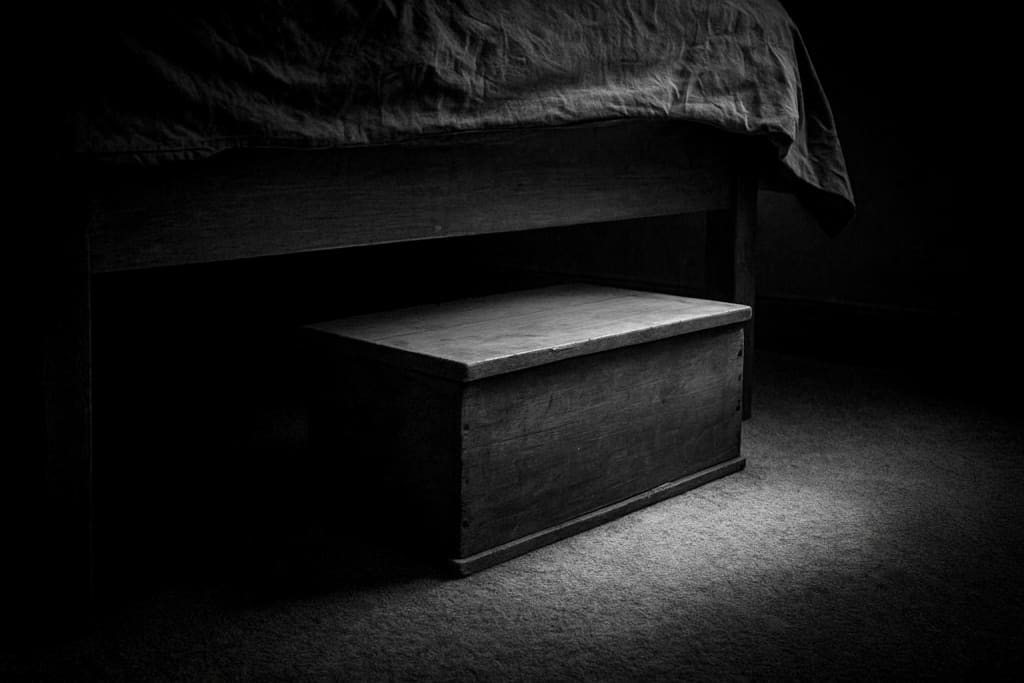
confinement in the dark

The Girl in the Box: The Chilling Ordeal of Colleen Stan
On May 19, 1977, 20-year-old Colleen Stan set out from her home in Eugene, Oregon, with nothing more on her mind than a road trip to visit a friend in Northern California. She was young, adventurous, and like many at the time, comfortable hitchhiking. What began as a routine ride soon spiraled into one of the most shocking and disturbing captivity cases in American history. For the next seven years, Colleen’s life would be stolen from her, locked away—quite literally—in a wooden box beneath a bed.
The Ride That Changed Everything
As Colleen thumbed her way down Interstate 5, several cars passed her by. Finally, a blue Dodge Colt stopped. Inside were a young couple—Cameron and Janice Hooker—and their baby. To Colleen, the family setting seemed safe enough. She had even declined earlier rides, trusting her instincts to wait for someone who “felt right.”
But appearances deceive. After chatting pleasantly for a while, the Hookers took a detour near Red Bluff, California. There, Colleen was threatened with a knife, blindfolded, gagged, and forced into a homemade wooden box that Cameron had built—small, coffin-like, with just enough air holes to keep her alive. This was the beginning of a nightmare that would last nearly a decade.
Life in the Box
For 23 hours a day, Colleen was kept inside the box beneath the Hookers’ waterbed. The confinement was absolute: pitch dark, unbearably hot in summer, freezing in winter, and barely large enough to move. She was fed scraps of food and allowed out only for chores, abuse, or controlled exercise.
Cameron Hooker, a lumber mill worker, was obsessed with domination and sadism. He devised elaborate psychological methods to keep Colleen compliant. Most sinister was the invention of “The Company,” a supposed shadowy organization that, he claimed, monitored her every move. According to Hooker, if she disobeyed, The Company would not only kill her but also target her family.
Terrified and isolated, Colleen believed him. This psychological cage became more binding than the wooden box itself.
The Brainwashing of Survival
Over the years, Colleen was forced into a slave-like existence. At one point, Cameron even had her sign a “slave contract,” stripping her of any identity or rights. She was referred to only as “K.”
Janice Hooker, Cameron’s wife, played a disturbingly complex role. Initially complicit in Colleen’s confinement, Janice later admitted that she, too, had been controlled by Cameron since her teenage years. In some twisted rationale, Janice believed that Colleen’s presence kept Cameron’s violent urges away from her and their children.
Incredibly, Colleen was sometimes allowed out in public with Cameron—she even visited her family once during her captivity. But such was the strength of Hooker’s psychological manipulation that she returned voluntarily, convinced escape would endanger everyone she loved.
Seven Years in Captivity
From 1977 to 1984, Colleen endured this unimaginable imprisonment. She cooked, cleaned, and lived under the Hookers’ complete control. Her confinement inside the box, day after day, year after year, is almost unfathomable: a young woman reduced to little more than an object of obedience and torment.
But in 1984, cracks began to form. Janice Hooker, overwhelmed by guilt and fearing Cameron’s growing violence, confided the truth to her pastor. Soon after, she told Colleen that “The Company” was a lie. At last, the psychological chains broke.
Colleen was freed, and with Janice’s cooperation, she went to the police.
The Trial of Cameron Hooker
Cameron Hooker was arrested and charged with multiple counts, including kidnapping and sexual assault. At his trial in 1985, the details of Colleen’s ordeal shocked the world. The defense attempted to argue that Colleen had consented to the arrangement, pointing to moments when she was seen outside with Hooker. But her testimony, combined with Janice’s cooperation, painted a harrowing picture of coercion and psychological imprisonment.
The jury convicted Cameron Hooker, and he was sentenced to 104 years in prison. In 2021, California’s parole board denied his early release, ensuring he remains behind bars.
Janice Hooker received immunity from prosecution in exchange for her testimony against her husband.
Legacy of the Case
The “Girl in the Box” case remains one of the most disturbing examples of psychological control in criminal history. Unlike other kidnappings, Colleen’s captivity wasn’t defined solely by physical restraint—it was her belief in The Company, the elaborate fiction Cameron created, that kept her from fleeing.
Experts in psychology and criminology continue to study the case as a chilling example of trauma bonding, coercive control, and learned helplessness. It highlights how abusers can manipulate victims into compliance, even when physical escape is possible.
Colleen Stan, remarkably, survived. In the years following her rescue, she has spoken publicly about her experience, turning her unimaginable ordeal into advocacy. Her courage in recounting the details has helped spread awareness about the insidious nature of abuse and control.
A Story That Still Haunts
The tale of Colleen Stan forces us to confront uncomfortable truths: that evil often hides in ordinary disguises, that captivity can exist even without visible chains, and that human resilience can endure even the darkest of boxes.
The image of a young woman trapped beneath a bed for seven years is one that chills the imagination and lingers in the collective memory. It is both a cautionary tale and a testament to survival.
About the Creator
E. hasan
An aspiring engineer who once wanted to be a writer .
One to See, One to Speak, One to Listen
Contains gore and horror some readers may find disturbing. Rated 14+ Author's Intro: This story is meant to revive the Gothic literature so famously crafted by one of my favourite writer's, Edgar Allen Poe, and as such, the language and style is deliberately antiquated. Thank you for reading my all time favourite work of horror - Les
By Call Me Les21 days ago in Horror
The Room That Answered Back
The room was never part of the house. At least, that’s what Sameer believed. He had lived in the rented apartment for almost a year before he noticed it. A narrow door at the end of the hallway, painted the same dull white as the walls, always closed. At first, he assumed it was a storage closet. Landlords liked hiding unfinished spaces.
By shakir hamidabout 7 hours ago in Horror



Comments
There are no comments for this story
Be the first to respond and start the conversation.