

Disclaimer: If you would like to know more about what 'folk' might be before you read this article on the sub-genre of 'folk horror' then please do not hesitate to explore my article entitled A Filmmaker's Guide to Folk here.
The Genre of Folk Horror
From the depths of ancient ritual and getting lost in the forest comes one of the greatest and most complex sub-genres of horror. Folk Horror is the greatest example of the manifestation of fearing our fellow human beings with course and action to believe they will commit acts of violence in the name of good judgement or 'the greater good'. I would therefore like to introduce you to my favourite sub-genre of all time...
What is Folk Horror?
"...part of folk horror’s role is to unearth forgotten barbarities and injustices and make us look at ourselves afresh..."
(Andrew Michael Hurley, 2019)
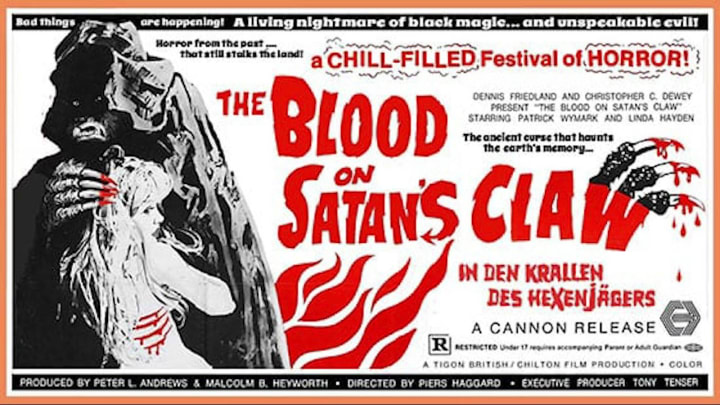
Folk Horror was a term developed in the 1970s by a reviewer named Rod Cooper who was, at that time, reviewing the film The Blood on Satan's Claw (at the time, the film was using its previous name: The Devil's Touch) for the magazine Kine Weekly. Many years later, for the Fangoria magazine, the director of that very film would use the term 'folk horror' in describing The Blood on Satan's Claw. Be that as it may, it is of my belief that folk horror as a genre predates the 1970s by quite a bit.
Folk horror is more commonly used when referring to films and yet, has grounds deeply rooted in literature. The literature of folk horror goes as far back as it can with rural settings being used to create terror for centuries. From Dante descending into hell after wandering through a forest and meeting the ghostly vision of Virgil the Poet all the way to Birnham Wood being used as a shady disguise to descending into war upon Macbeth sitting on Dunsinane Hill in Shakespeare's tragedy. There are litters and pieces of folk horror everywhere to be seen.
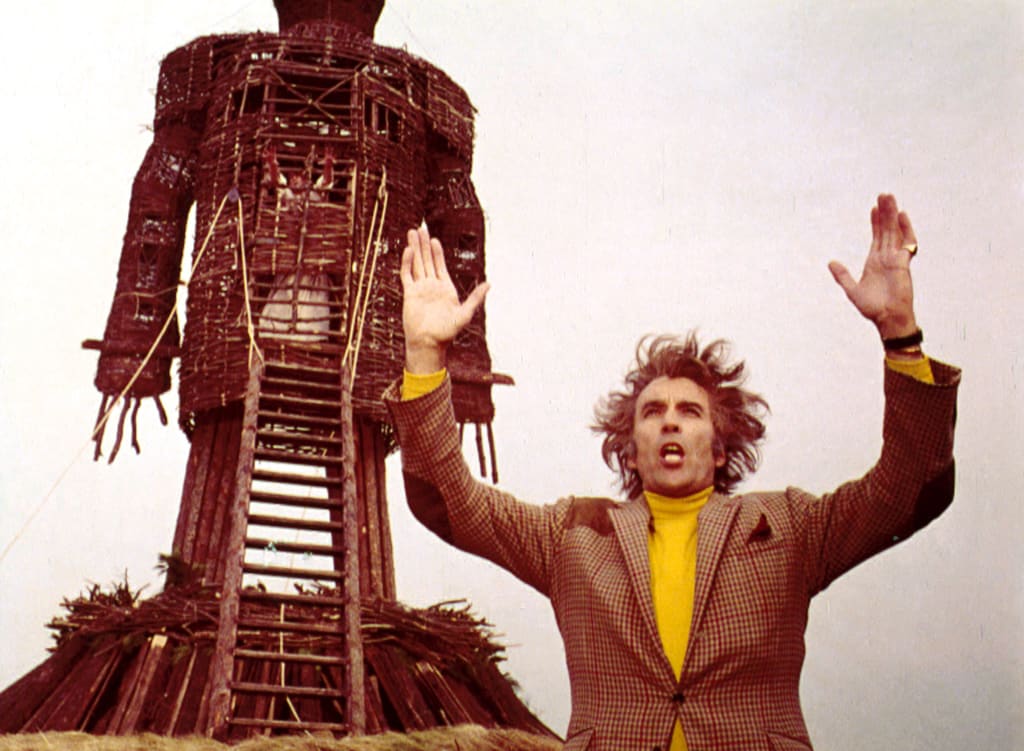
Developed through cinema, folk horror became a widening genre towards the latter part of the 20th century with The Wicker Man (1973) commonly being the standpoint for folk horror film fans to point everyone in the direction of when discussing the topic. In the M.J Simpson 2004 Fangoria interview, the director, Piers Haggard, of The Blood on Satan's Claw would describe how gothic horror and folk horror were two completely different things by referring to his own experiences of growing up on a farm. In part of this, he describes the 'darkness' of folk horror and how it drew him to create this type of cinema:
"As this was a story about people subject to superstitions about living in the woods, the dark poetry of that appealed to me." (M.J Simpson quoting Piers Haggard, 2004)
Ever since, Folk Horror has been met with different angles such as: post-modern literature told in a non-linear style with many different narrators, movies which do not always make sense upon first viewing and obviously, the mixture of daylight horror into the genre, which is perhaps one of the greatest and most difficult features of horror to achieve adequately let alone perfect.
Themes, Symbols and Criteria
"...the most paranoid urbanite's worst suspicion about the kinds of activities "those kind of people" get up to when left to their own devices are violently, and vividly, vindicated."
(Bernice M Murphy, 2019)
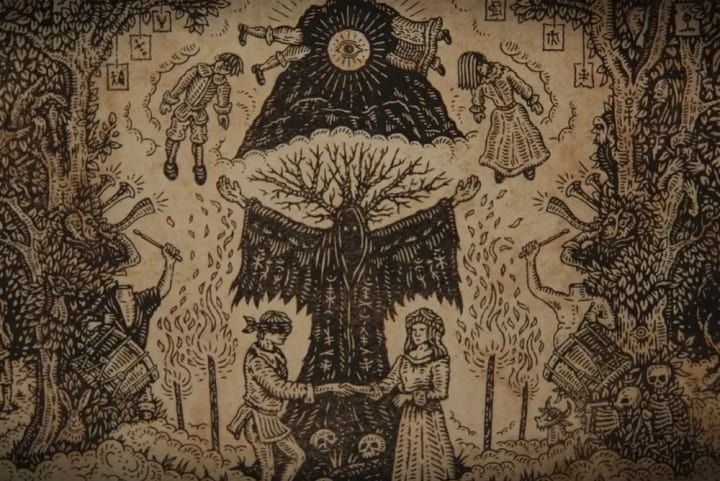
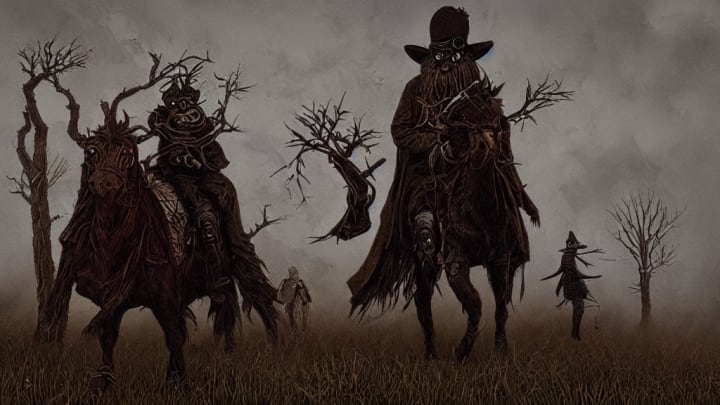
Folk Horror is inspired by the ritualistic, celtic practices of the old days, especially where superstitions, secrets and hauntings are concerned. Bernice M Murphy identifies some of the common themes in her article Beyond Midsommar: ‘folk horror’ in popular fiction (2019). These include, but are not limited to: superstition, folk religion, paganism, sacrifice and dark aspects of nature. There are of course, many more aspects that create a good Folk Horror, and these can include: rituals, isolation in nature, spritualism, curses, hauntings and remote natural locations.
In a 1918 book by J.G Frazer entitled: Folklore in the Old Testament: Studies in Comparative Religion, Legend, and Law - the author compares stories from the Old Testament with ones of other ancient cultures typically related to folklore. This is where it is identified that many of these stories had shared themes, ideas, symbols, messages and criteria and initially, when the folklores of different cultures began to band together under the folklore umbrella heading we are more commonly familiar with using upon these stories today. Identifying these among folklore allows the culture to translate that towards horror.
Bernice M Murphy does this the best, I believe. She identifies that Folk Horror can only exist if we, the urbanites, are terrified by the aspect of the primitive behaviours of these ancient culture themes that are pointed out as trends in Frazer's 1918 book. It is these that we all associate with being 'ritualistic' no matter which culture we are from - and therefore, it becomes more universal to any moviegoer or bookworm that the Folk Horror will be as 'other' as it is terrifying.
Therefore, the criteria for a Folk Horror book or film are pretty simple. We need a lot of isolation in remote locations, curses and spirituality, violence and justification, acts of terror committed out of 'the greater good' and ultimately, a cut-off or juxtaposition from the real world that we know and live in as urban city dwellers.
Examples in literature
"These are the settings of our ancestors, and therefore are carried somewhere deep within us now: remote villages and darkened lanes, lonely woodlands, obscure country houses and crumbling cemeteries. Places where the crepuscular light is eternally fading and in which the inanimate or the dormant is slowly stirring."
(Benajmin Myers in the Foreword for Damnable Tales: A Folk Horror Anthology by Richard Wells)
One of the most prominent examples of folk horror is the anthology Damnable Tales: A Folk Horror Anthology by Richard Wells but fortunately for us, I have to say that after reading this, there are more open doors than closed ones.
The Lottery by Shirley Jackson
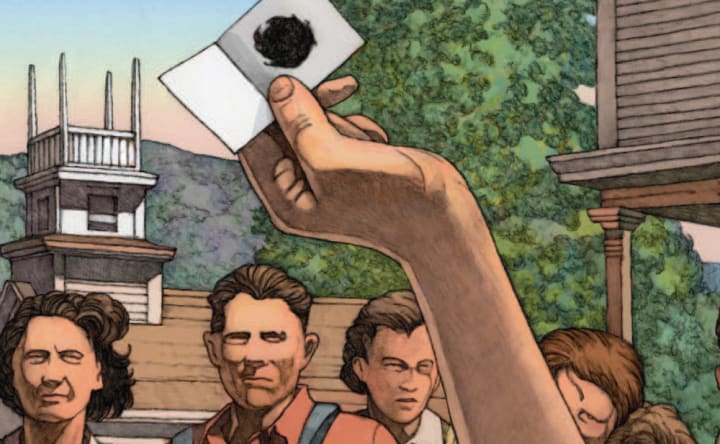
Shirley Jackson's story The Lottery is perhaps one of the most fascinating modern examples of folk horror that we have. Through an almost ritualistic manner resembling that of oppressive and cultish societies, a 'lottery' is played and ultimately, played out. Without going into too much detail, there is a definite amount of 'cult-like behaviour' (this includes the idea of justified violence as we move closer towards the final movement of the story) and country locations of isolation alongside a ritualistic ideal of supposed historical significance as the story states:
“Although the villagers had forgotten the ritual and lost the original black box, they still remembered to use stones.”
Alongside some intense details of sensory description and atmosphere, Shirley Jackson's example of modern folk horror depicts a moment of crisis in a larger and more extreme picture - forcing the reader to expand it in their own overactive imaginations.
Starve Acre by Andrew Michael Hurley
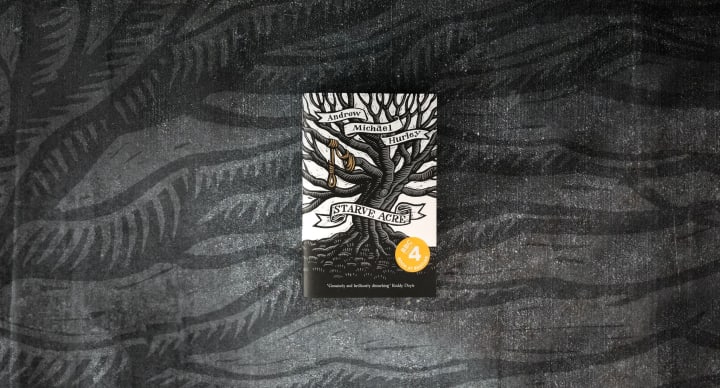
Andrew Michael Hurley is familiar with the folk horror tradition as we can see with his novels always having a quality of enchantment about them - an enchantment that is not necessarily wanted. Mixed with the deep emotional grief of losing a child, this book serves as an excellent example of the atmospheric folk horror which brings belief to us. Alongside the nature of Starve Acre itself being a location of isolation, this can make the relationship and tension feel claustrophobic inside the house but paranoid outside of it. A similar emotion we gain from the Eel Marsh House and the Causeway in The Woman in Black by Susan Hill. Starve Acre is a novel that does this very well through dichotomies. He states in the book:
“It seemed to Richard sometimes that Juliette had actually brought twins into the world: Ewan and Guilt. The latter had always been the stronger of the two. It fed more, weighed more, demanded more of their attention. When it had outlived Ewan, it had grown larger still.”
Thus we see the requirement to believe since there has been extreme tragedy involved in the story. The folk horror is therefore born out of this belief. Unlike The Lottery in which the belief structures are already established, as readers we see belief and non-belief tear through the relationships of this book and spit people out of the other end. This tug-of-war will have devastating results in classics folk horror fashion.
Through the Woods by Emily Carroll
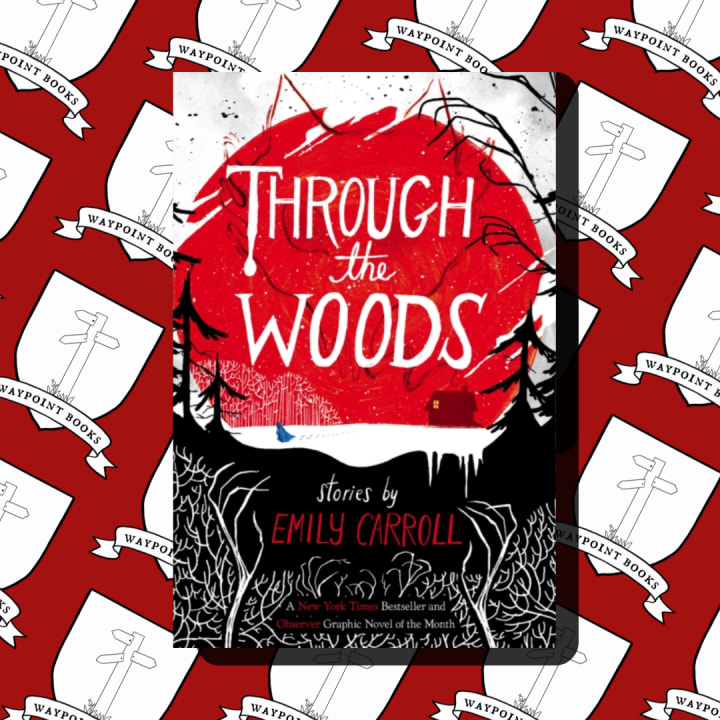
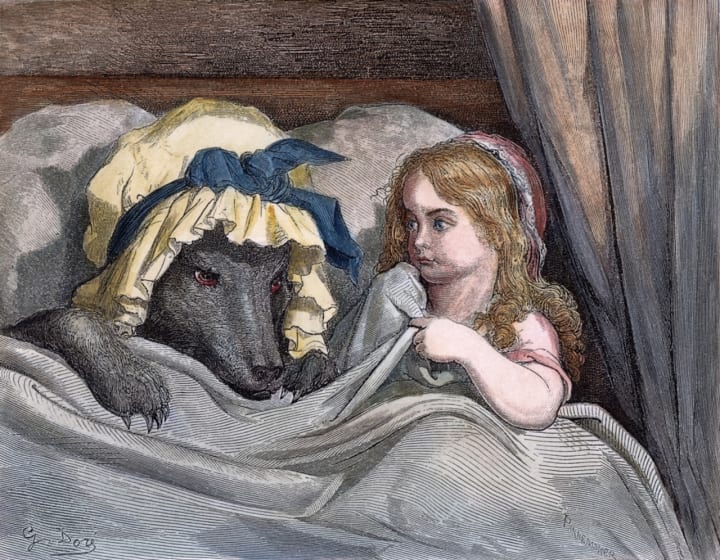
Unlike the other two that have already been covered, Through the Woods deals more viscerally with folk horror going back to the very roots of the genre: folklore. Inspiration has clearly been taken from the works of Charles Perrault and the Brothers Grimm for these illustrated tales of terror and they cover innocent characters such as children in strange and scared situations. Odd happenings that have a fairytale quality to them turn dark quickly as we are introduced to something intentionally frightening and unsettling as readers and we are forced to confront the mystery of the modern folktale. As Charles Perrault's Little Red Riding Hood ends with the young girl being eaten by the wolf, there is no room for a happy ending amongst these folk tales.
With strange wooded areas of weird happenings, this almost ritualistic and rythmic novel takes the reader into the essence of the genre with lines such as:
Oh, but you must travel through those woods again and again... said a shadow at the window... and you must be lucky to avoid the wolf every time...
Alongside the illustrations it can be difficult not to firstly mistake this for a children's book. With characters of the innocent class in dire situations it would not be a good idea to let a small child read this folk horror novel but, to explore the base of the genre expanded in a new and exciting way this could be the best example.
Examples in film
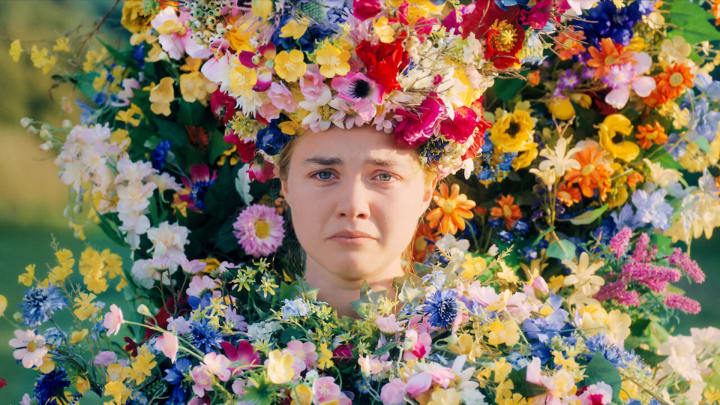
Original as a term created to refer to a film, folk horror has had many attempts at movies throughout the years with some being clearly better than others. Again, folk horror in cinema tends to open many doors on to different films whether they be blockbuster or independent.
The Wicker Man
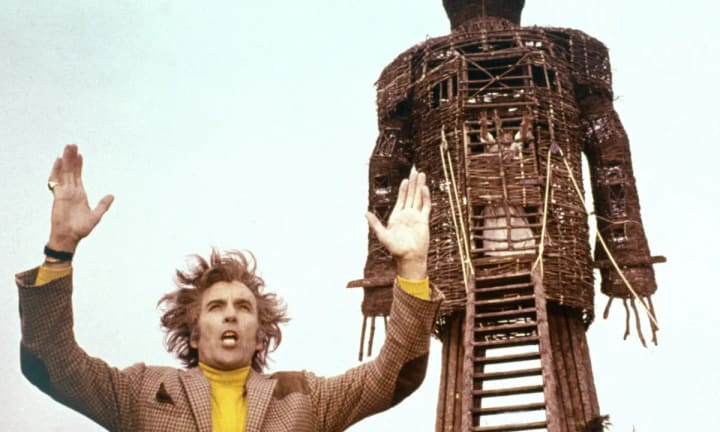
The Wicker Man (1973) is a film which is even more synonymous with folk horror than the film the term was originally created to refer to. Set on an island of so much isolation it seems almost impossible to leave, reflective of the rise of cult-behaviours in the 1970s and featuring extreme levels of justified violence. Oddities populate this film with even shots of people dressed as animals in an almost ritual method.
The folk practices that are relative to the destructive natures of the apocalyptic cult meant that this 1970s movie was dangerously relevant since movements such as the 1978 tragedy of the Peoples Temple were just around the corner. Alongside this societal fusion, The Wicker Man played on the current fears of how people sought to believe in wildly different ideals that did not always have their best interests in mind. Alongside the terror of the atmosphere of folk horror and the cult-like behaviours therefore, we have a definitive act of self-destruction which we see through the various members of the strange cult on the island.
Children of the Corn
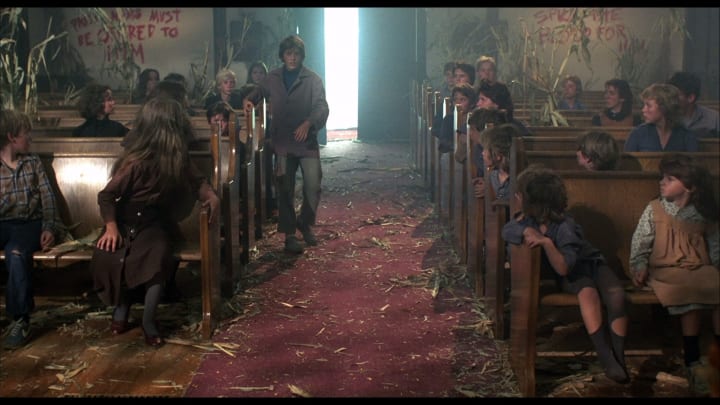
One of the most prominent films which features possibly the most aspects of folk horror since The Wicker Man (1973) is the adaptation of the Stephen King novel Children of the Corn. Featuring a biblical reference "and a child shall lead them", this cult-like mentality deals with the realities of absolutism. Set in the wide open spaces of the cornfields and in an off-the-grid style route, adults are sacrificed as the cult of the children grows. In a similar fashion to cults in which age is a reality not accepted, at the age of 18, the new young adult is killed by a monstrous force.
The different complexities of the cult-like behaviours featured in various cults throughout the 60s and 70s is viewed in this film as being led through children which creates a deep empathy in any adult watching this movie. However, the beahviours of the leaders is a detached notion which goes without saying, is almost psychopathic. The violence justified by ritual and belief is brutalised upon one then another adult and then, upon the children who have just turned adults and only when rationalised to the extreme is it inflicted upon the leaders themselves. It is a brilliant example of how dictatorships end in civil war but also a great example of how folk horror can show us the damages of the political system pinned against the people it is meant to serve.
Midsommar
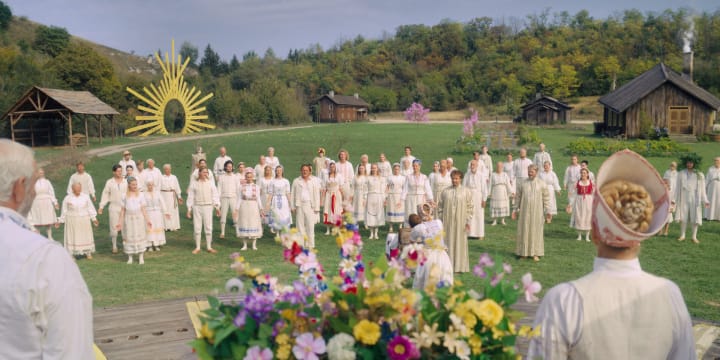
Possibly the most popular folk horror film in our own modern day and perhaps of the whole of the 21st century is Ari Aster's Midsommar. Featuring behaviours attributed to an actual Swiss cult which is rumoured to murder its followers above a certain age and sacrifice members on a regular basis it is about a group of friends who visit a festival they have in the wild only to be picked off one by one. Each one of them (bar the main character) dies in an act of justifiable violence by the cult and the mentality soon begins to take hold of the protagonist.
The daylight horror features the isolation of the outdoors including the secrecy of a pyramid style building reminiscent of folk tales to do with illuminati symbols which permeate our own lives, it also includes the images of various animals which brings to life the naturalistic imagery and the fusion between man and beast. Though many images in the film may be viscerally terrifying, the animals are almost too symbolic and have several meanings. Animals featured include bears and eagles and both seek to become icons of sections of the belief systems which perpetuate that very justiable violence they hold.
Ultimately, featuring old stories as a supposed history, secret societies of people and places, daylight terrors, violence of justifiable natures, graphic and symbolic horrors, folktales and tapestry stories and finally, the ending in which nature and human are fused together in two staunchly different ways - this film serves to be an excellent example of folk horror that helps us learn about the genre in wild and new ways.
Conclusions
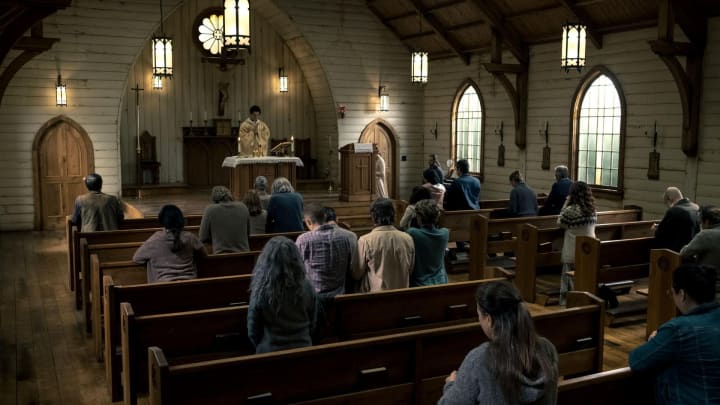
So, what makes folk horror so entertaining? Here is my take: folk horror is entertaining because it deals with our own fears of the past entering the present. We are constantly scared by the ideologies believed by our past generations from Christian Puritanism in the 1650s of England all the way down to Germany's horrifying acts of Anti-Semitism during the 1930s and 40s. We are frightened as a people by cult-like mentalities and belief systems which trigger violent responses and afraid ultimately, that we will end up like one of these people if we were to step out of the modern world. This is why, in my opinion, folk horror is normally set in isolated atmosphere of nature such as: countrysides, woods, forests, villages, parishes and large open spaces of greenery. They look like the exact opposite spaces that we are used to in our lives.
For example, we can observe a TV Series like Midnight Mass which is set in a village which is on a very isolated island but brings about a cult-like belief through general force. A brilliant example of modern folk horror, it takes on the church as its very source and the people's already strong belief systems being misdirected into a false god. Finishing in an apocalyptic style, this resonates with the modern audience who knows just what we should be afraid of when we see these common signs of oppression and old-world ideologies.
In conclusion, I believe that folk horror is possibly the best subgenre of horror if the reader or viewer would like to play with their inmost fears of the regressive and anti-modern world.
Works Cited:
- Aster, A. (2019). Midsommar [Film]. A24.
- Carroll, E. (2014). Through the Woods. UK: Margaret K. McElderry Books.
- Flanagan, M. (2021). Midnight Mass [TV series]. Intrepid Pictures.
- Frazer, J.G. (2010) Folklore in the Old Testament: Studies in Comparative Religion, Legend, and Law. UK: Kessinger Publishing
- Hardy, R. (1973). The Wicker Man [Film]. British Lion.
- Hill, S. (1983). The Woman in Black. UK: Vintage.
- Hurley, Andrew Michael. (2019). Devils and debauchery: why we love to be scared by folk horror. UK: The Guardian
- Hurley, A.M. (2019). Starve Acre. UK: John Murray
- Jackson, S. (2009). The Lottery and Other Stories. USA: Penguin Classics.
- Kiersch, F. (1984). Children of the Corn [Film]. Angeles Films.
- Murphy, Bernice M. (2019). Beyond Midsommar: ‘folk horror’ in popular fiction. Ireland: The Irish Times
- Simpson, M.J. (2004). The Blood on Satan's Claw: One Scary Skin Flick. USA: Fangoria
- Wells, R. (2022). Damnable Tales: A Folk Horror Anthology. UK: Unbound
About the Creator
Annie Kapur
I am:
🙋🏽♀️ Annie
📚 Avid Reader
📝 Reviewer and Commentator
🎓 Post-Grad Millennial (M.A)
***
I have:
📖 280K+ reads on Vocal
🫶🏼 Love for reading & research
🦋/X @AnnieWithBooks
***
🏡 UK
Keep reading
More stories from Annie Kapur and writers in Horror and other communities.
3 Great Horror Podcasts
I think everyone and their pet dog probably knows how obsessed I am with the horror genre by now and though it is no secret, I have not yet shared (though I do not remember sharing) my favourite horror podcasts. There are many that I listen to but there are also obvious ones that are better than others. Sooner or later I will do the same thing but for my favourite horror YouTube channels (though I have to admit I do not actually watch enough YouTube to have more than three horror channels that I like. It's more like a once a month proceedure). So, without futher discussion, let us go through my top three favourite horror podcasts.
By Annie Kapur2 years ago in Horror


Comments
There are no comments for this story
Be the first to respond and start the conversation.