
The Farm at the End of the Woods: The Hinterkaifeck Murders
unsolved mystery in silence

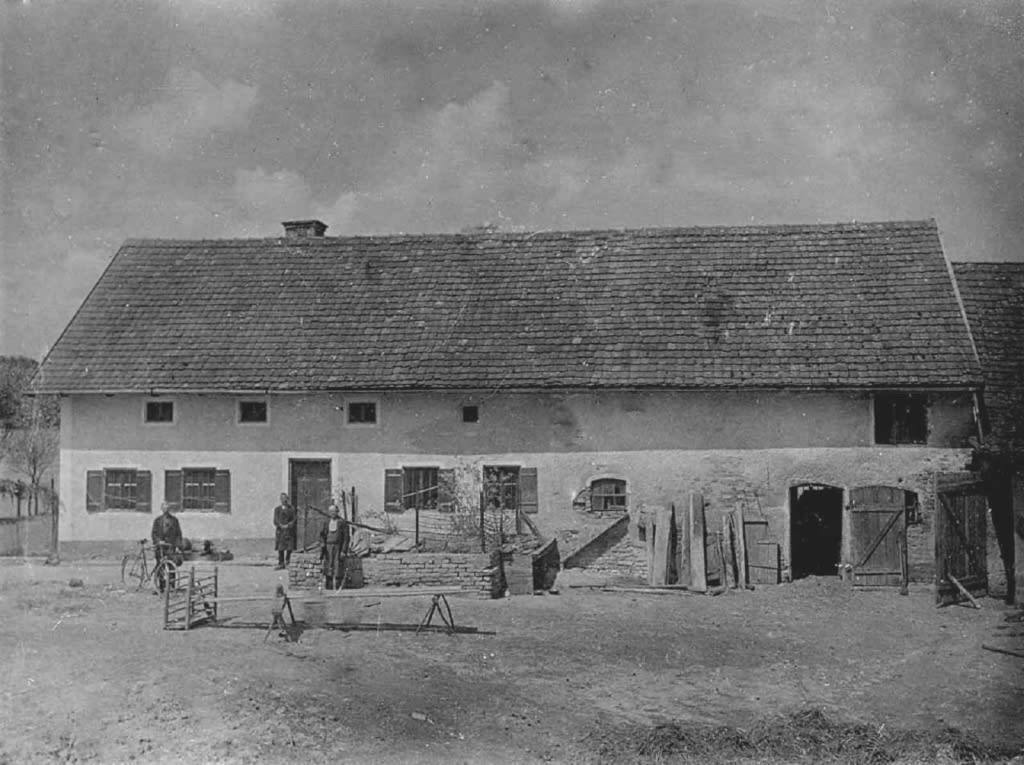
Snow still clung to the fields of Hinterkaifeck in late March 1922 when Andreas Gruber began hearing footsteps in the attic.
He was no stranger to the creaks and groans of the old Bavarian farmhouse — wood shifts in the cold, wind rattles the rafters — but these steps were deliberate. Measured. Human.
When he searched, lantern in hand, he found nothing but shadows and dust. Yet the feeling lingered that someone had been there… and might still be.
The First Signs
The Gruber farm stood alone, a patch of stubborn human habitation surrounded by pine forest and meadows glazed with frost. Inside lived six people:
Andreas and his wife, Cäzilia Sr.
their widowed daughter Viktoria,
her two children — Cäzilia Jr. (7) and Josef (2),
and the family’s new maid, Maria Baumgartner, who had just arrived for her first day on March 31.
The house had already begun showing signs of intrusion:
• A set of keys had disappeared.
• Tools went missing.
• One day, a newspaper appeared in the home that no one had purchased.
Most unnerving were the footprints Andreas saw in the snow — coming from the woods toward the farm… but with no prints leading away.
The Night
On March 31, evening fell heavy and cold. Maria unpacked her belongings in her small room. Upstairs, the children were tucked into bed.
At some point that night, the killer struck.
One by one, family members were lured or forced into the barn, where they were bludgeoned with a mattock, a farming tool with a heavy iron blade. The blows were merciless. Cäzilia Jr.’s jaw was shattered; strands of her hair were torn out, suggesting she had lived long enough to suffer.
Maria was killed in her bed. Josef was struck as he slept in his crib.
The Discovery
Days passed. The family did not attend Sunday mass. Neighbors grew uneasy. Smoke still curled from the chimney, but no one answered the door.
On April 4, several men from the village approached the farm. The barn door groaned open. Inside, under a neat stack of hay, they found Andreas, Cäzilia Sr., Viktoria, and young Cäzilia Jr.
The air was still. The hay smelled faintly of blood and metal.
Inside the house, the searchers found Maria and Josef, silent in their rooms.
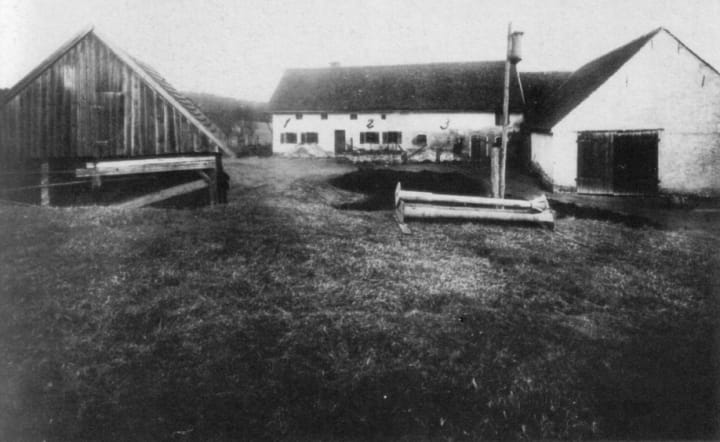
A Killer Who Stayed
Investigators soon realized the most chilling fact of all: the killer had remained on the farm for days after the murders.
The cows had been milked. The dog had been fed. Bread had been baked in the kitchen oven.
Somewhere in those nights, the killer had walked through rooms where the dead still lay — eating, tending livestock, keeping the house alive while its family lay cold.
The Investigation
Police questioned villagers for weeks. Rumors spread quickly.
Some claimed Viktoria had been involved in an incestuous relationship with her father, producing Josef. Others whispered about inheritance disputes and secret lovers.
The most prominent suspect was Lorenz Schlittenbauer, a neighbor who had once courted Viktoria and claimed to be Josef’s father. He was among the first to enter the crime scene, calmly moving bodies and unlocking doors no one else could open. But no hard evidence linked him to the killings.
Other theories emerged:
•A vagrant passing through the forest.
• A neighbor nursing a quiet grudge.
• A rejected suitor seeking revenge.
The truth refused to come forward.
Clues Without Answers
The crime scene gave little away. The murder weapon — the mattock — was eventually found hidden in the farm’s attic.
Nothing of value had been taken. The footprints in the snow remained unexplained. The killer’s methodical stacking of bodies hinted at a twisted sense of order… or perhaps a ritual.
But every theory ran into the same wall: no one had seen a stranger, and no suspect could be definitively tied to the crime.
A Town Haunted
The farm was eventually torn down. Locals avoided the spot, saying it felt cursed. Grass grew over the foundations, erasing all signs of the barn and the home.
Still, the story clung to the town like frost in winter. People lowered their voices when speaking of it. Parents warned children not to wander into the woods after dark.
In 2007, police re-examined the case with modern forensics. They quietly concluded they had a likely suspect — but chose not to release the name, out of respect for surviving family members.
Why It Endures
The Hinterkaifeck murders remain one of Europe’s most haunting unsolved crimes.
Perhaps it’s the isolation — a family alone at the edge of the woods.
Perhaps it’s the prelude — the attic noises, the footprints, the missing keys.
Or perhaps it’s the image of the killer, unhurried, sitting at the Gruber family’s table in the days after, eating their bread and feeding their animals.
It’s a horror without a clear ending, a crime that feels as if it could happen again.
The Last Word
Today, nothing stands where the Gruber farm once did. Wind moves through the grass, and the pines still loom at the field’s edge.
On some winter nights, locals say, if you listen closely, you can hear the crunch of footsteps in the snow…
leading toward where the house once stood —
and never returning.
About the Creator
E. hasan
An aspiring engineer who once wanted to be a writer .
Stories Told At Twilight
A 300-word flash fiction regarding the above image: She never realized the pale blue of her eyes until now. Pressing the palm of her hands against the cold porcelain sink, she sank deeper into her own gaze. Her eyes were not only pale but striking.
By JB Inglandabout 18 hours ago in Horror
Wild Card Weekend Recap: What Happens Now?
I think I figured out why I love Wild Card Weekend so much. It's because it's the first playoff anything of the calendar year. The NFL season starts in the fall, and once upon a time, the champion was crowned either on or slightly before New Year's. The evolution of the NFL schedule has resulted in the playoffs starting just into the New Year, and currently, the final week of the season falls on the first weekend of the New Year, with Wild Card Weekend coming a week after that. So yes, chronologically, the NFL's Wild Card Weekend serves as the first playoff anything of the calendar year.
By Clyde E. Dawkins6 days ago in Unbalanced



Comments
There are no comments for this story
Be the first to respond and start the conversation.