
The Devil's Horns
Unraveling the Symbology Across Cultures and Beliefs
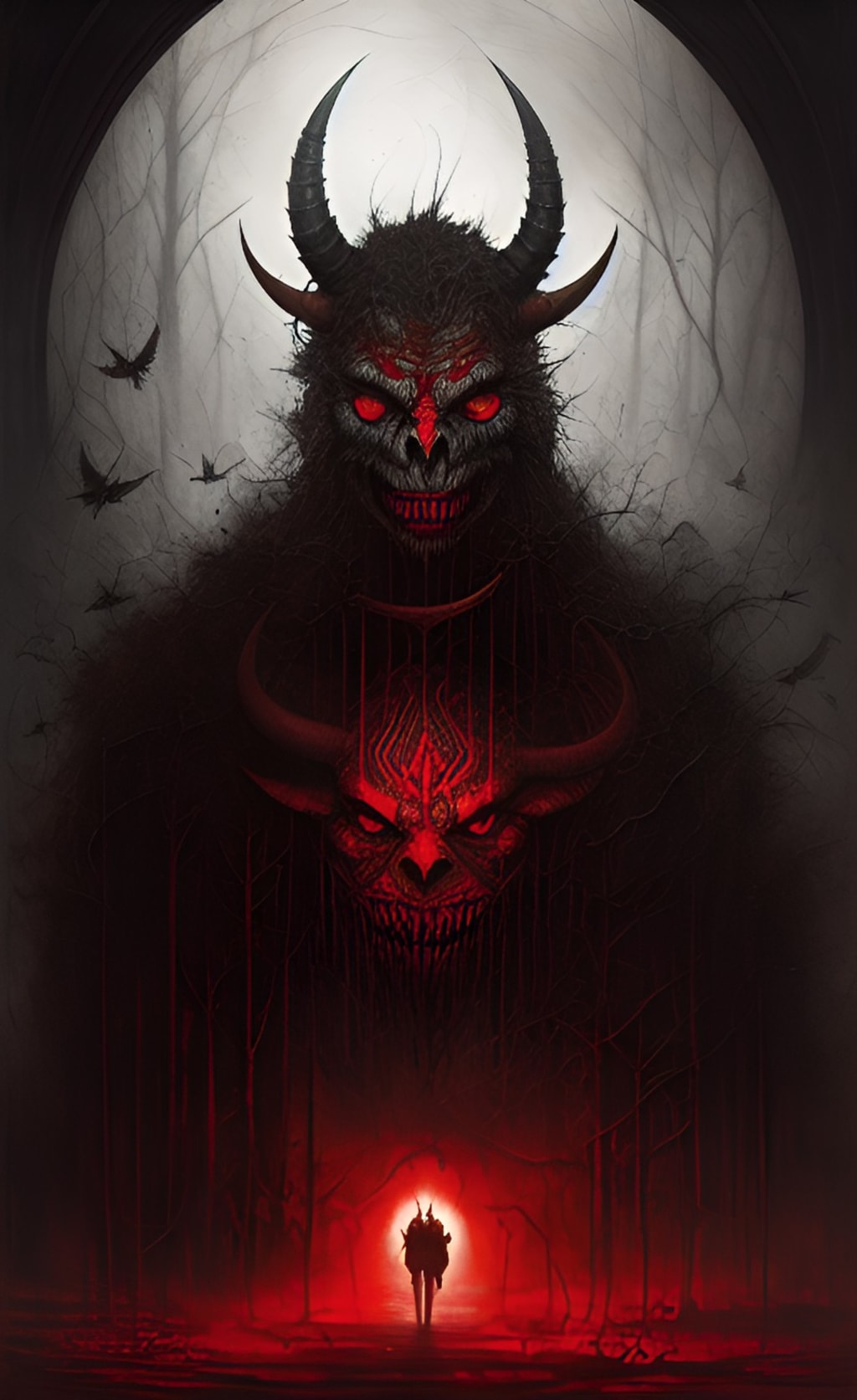
The Devil, Satan, Lucifer, Beelzebub, the Prince of Darkness – these are but a few of the names given to the archetypal adversary of good. For millennia, various cultures and religions have depicted this character in many forms, yet a strikingly common motif that transcends time and place is the presence of horns. Why is it that the Devil is so often depicted with horns? This article will explore this symbol's roots in ethnicity, culture, and belief.
A Horned Heritage: From Prehistory to the Present
Horns, as natural appendages on the heads of numerous creatures, have been seen throughout human history as symbols of power, strength, and virility. In prehistoric cave paintings, horned animals were often depicted, suggesting their importance to early human societies.
Yet, it wasn't until the early civilizations of Mesopotamia that horns began to be ascribed with more abstract and metaphysical concepts. Many Mesopotamian gods and demigods were depicted with horned crowns, symbols of divinity and dominion over the natural world. This symbolic representation was also seen in Ancient Egypt, where several deities like Hathor and Khnum bore horns.
The Devil and Paganism: Cultural Appropriation and Demonization
The inception of horns as symbols for evil beings, specifically the devil, has its roots deeply entwined with the rise of Christianity and the subsequent demonization of pagan deities.
In Europe, many pagan religions venerated horned gods. Notably, the Celts worshiped Cernunnos, the "Horned God," representing nature, fertility, and the cycle of life. Similarly, the Greeks and Romans revered Pan and Faunus, deities with human torsos and the legs, ears, and horns of goats.
However, as Christianity spread across Europe, it often sought to supplant pagan religions. This led to a campaign of demonization, where previously venerated pagan symbols were reinterpreted as signs of evil. In this cultural struggle, the image of the horned pagan gods was appropriated and morphed into the Christian devil's symbol.
Horns and Ethnicity: Demonization of the Other
The depiction of the devil as horned also has a grim relationship with xenophobia and racism throughout history. Horns were often used to demonize the 'Other,' which, in many cases, were people from different ethnic backgrounds.
In the Middle Ages, Jews were often depicted with horns in antisemitic caricatures. The origins of this can be traced back to a mistranslation in the Latin Vulgate Bible, where Moses was described as having "horns" when he descended from Mount Sinai, instead of his face "shining" or "radiating light". This harmful stereotype propagated fear and hatred against Jews, contributing to their persecution.
Similarly, during the era of European colonialism, indigenous peoples worldwide were often depicted as devilish, complete with horns. Such dehumanizing imagery served to justify the violent subjugation of these cultures, framing it as a battle against evil.
The Psychology of Horns: Our Fear of the Unknown
From a psychological perspective, horns may represent the unknown, the uncontrollable, or the animalistic aspects of human nature. Horned creatures are often large, potentially dangerous animals, and their image naturally evokes fear and awe. The devil, as a symbol of all that is evil and chaotic in the world, is depicted with horns to evoke these emotions and highlight its inhuman nature.
Conclusion
In summary, the depiction of the devil with horns is not a random aesthetic choice. Instead, it's a potent symbol, the result of millennia of cultural evolution, religious beliefs, ethnic interactions, and psychological implications. Understanding the devil's horns' origins provides a window into the history of human culture and belief systems. Furthermore, it offers a cautionary tale on the potential consequences of cultural appropriation, misinterpretation, and fear of the 'Other'.
In the modern age, where multiculturalism and diversity are celebrated, it is crucial to understand the origins of such powerful symbols. Only by doing so can we hope to break away from their historical connotations and work towards a more inclusive and understanding society. The devil may wear horns, but in understanding why this is so, we might just find a way to unmask the real demons within our societies and ourselves.
About the Creator
Alpin Karagozoglu
Details coming soon ...
Keep reading
More stories from Alpin Karagozoglu and writers in Horror and other communities.
Imprints of Identity: A Detailed History of Tattoos and Their Cultural Significance
Introduction Tattoos have punctuated human existence for thousands of years, serving as silent witnesses to our shared history. They have provided a canvas for personal narratives, cultural beliefs, societal norms, and artistic evolution. This piece takes a detailed look at the history of tattoos and their varying significance across cultures and ages.
By Alpin Karagozoglu3 years ago in Humans



Comments (1)
Spooky