
The best horror movie "Psycho(1960)"
directed by "Alfred Hitchcock"


Alfred Hitchcock's 1960 psychological suspense thriller "Psycho" is a masterpiece. Robert Bloch's 1959 novel of the same name served as the basis for the movie. This is a synopsis of the tale:
Synopsis of the plot:
Marion Crane, portrayed by Janet Leigh in the film, is a secretary who embezzles money from her employer before escaping. She stays in the Bates Motel, run by Anthony Perkins's eccentric character Norman Bates, a young man controlled by his controlling mother.
1. The Motel Bates:
*Marion checks into the Bates Motel in hopes of finding lodging for the night. When she first meets Norman Bates, he seems uncomfortable yet kind. According to Norman, his mother is ill and doesn't get to see many people.
2. The Scene in the Shower:
*In one of the most famous movie moments ever, a shadowy figure mercilessly kills Marion in the Bates Motel shower. This scene's surprising and shocking elements become a defining feature of the film.
3. Research:
*When Marion vanishes, Lila Crane (Vera Miles), Marion's sister, and Sam Loomis (John Gavin), her lover, look into it. Their curiosity stems from the fact that Marion was last seen at the Bates Motel.
4. The Impact of Mother:
*As the inquiry progresses, it becomes clear that Norman Bates, his mother, has a big impact on what he does. Norman appears to be controlled by his mother's presence, which is causing him much distress and struggle.
5.Convolutions and Disclosures:
*It becomes clear during the story that Norman's mother has been deceased for a long time. Norman had become a dual personality, representing his mother who had passed away and himself. He killed people while pretending to be "Mother."
6. Resolution
*Norman is institutionalised at the end of the film, and his doctor explains the psychological basis of dissociative identity disorder. Marion's automobile is recovered from a nearby marsh in the last scene, signifying the finding of the stolen money.
Legacy: "Psycho" is praised for its avant-garde use of tension and surprise, its inventive storytelling, and its influence on the horror genre. The film's enduring popularity was largely attributed to Bernard Herrmann's renowned musical soundtrack and Alfred Hitchcock's skillful direction.
Twist and Turns:
1. Murder of Marion Crane:
* The most famous plot surprise of the movie happens early on when Janet Leigh's character, Marion Crane, is shockingly killed in the well-known shower scene. Her abrupt and unexpected demise defies the audience's preconceptions about the protagonist.
2. The Actual Offender:
*At first, the movie gives the impression that Norma Bates, the domineering mother of Norman Bates, is the killer. The big surprise, though, is when it becomes clear that Norman created the character of "Mother" all by himself. It is discovered that Norman had dissociative identity disorder and had developed a completely other personality for his mother who had passed away.
3. Why Norman Did It?
*When the narrative progresses, it becomes evident that Norman Bates killed Marion and other victims while acting in the guise of "Mother." Norman's motivation is a perverted mixture of envy and love since he couldn't stand to see his mother develop emotional bonds with other men.
4. Concluding Disclosure:
*In the closing moments of the movie, Dr. Simon Oakland, the psychiatrist, discusses Norman's psychological state and offers a clinical interpretation of what happened. The story becomes more intricate as Norman's multiple personality is revealed.
5. Symbolism and Closure:
*The movie ends with Norman being placed in an institution. A terrifying sequence shows Marion Crane's automobile being dragged out of a swamp, signifying the money that was taken being recovered. In addition to providing viewers with a feeling of closure, the story's frightening conclusion highlights the story's profundity on the psychological level.
The unexpected story turns and brilliant directing of Alfred Hitchcock in "Psycho" transformed the thriller genre and raised the bar for psychological terror and suspense in films. The influence of the movie is still evident in the way that contemporary directors handle narrative.
About the Creator
Keep reading
More stories from Mohammed Asik and writers in Horror and other communities.
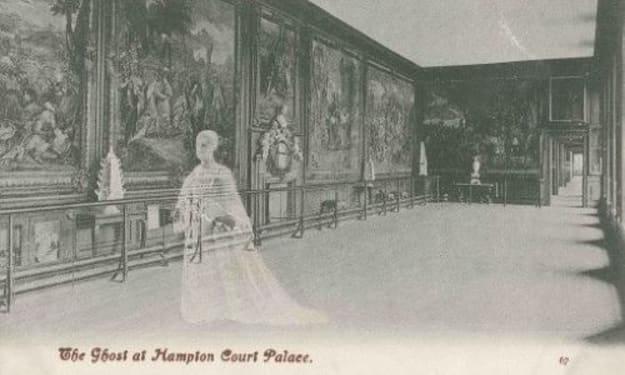
The Ghost Story of "The Grey Lady of Hampton Court Palace (United Kingdom)"..
The history of Catherine Howard, King Henry VIII's fifth wife, is the source of the Grey Lady of Hampton Court Palace legend. Even if the historical details are known, folklore and legends describe the spectral features. This is a more thorough description
By Mohammed Asik2 years ago in History


Comments
There are no comments for this story
Be the first to respond and start the conversation.