urban legend
Urban legends have captivated us from ancient eras to the modern day; a deep dive into scary lore and 'could be true' tales about Bigfoot, Slender Man, the Suicide Forest and beyond.
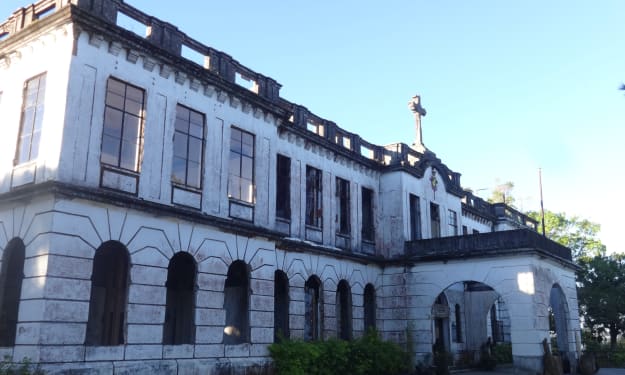
The Haunting of Diplomat Hotel (Chapter 4-6)
Chapter 4: The Whispers Begin In the stillness of the Diplomat Hotel's decaying halls, where the echoes of World War II still reverberated, strange and unsettling phenomena began to take root. Chapter 4 explores the eerie whispers, ghostly apparitions, and unexplained occurrences that marked the hotel's transformation from a place of ruin to a hotspot of paranormal activity.
By Christian Domine2 years ago in Horror
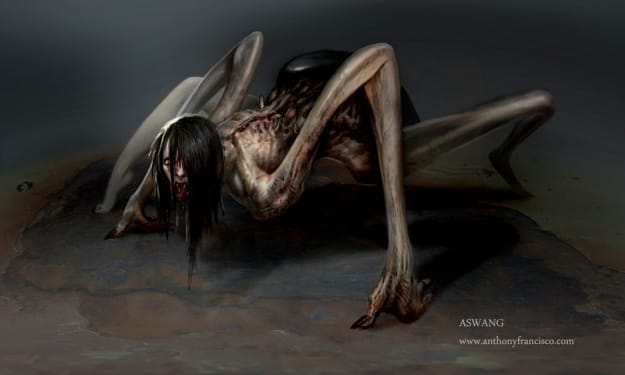
Aswang: Philippines Famous Mythical Creatures
Nestled in the heart of the Philippines, the sleepy barangay of Poblacion was known for its tranquil rice fields and friendly villagers. But beneath the calm surface of this rural paradise lurked a sinister legend that sent shivers down the spines of those who dared speak its name: the dreaded Aswang.
By Raymark Marcos2 years ago in Horror
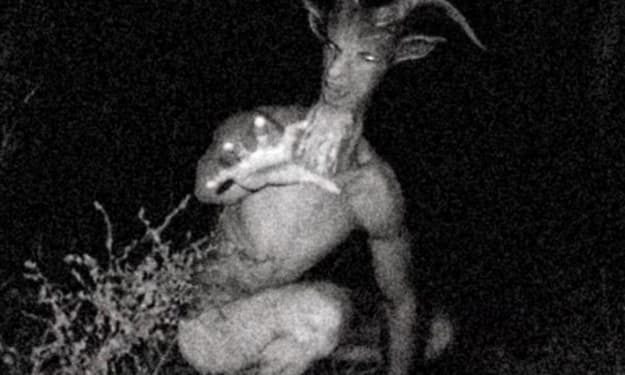
The Rise of The Skinwalkers Among Us
The Skinwalker, an ancient legend originating from Native American culture, assumes diverse forms within different tribes. In Navajo mythology, the skin-walker, also referred to as (yee naaldlooshii), is a malevolent sorcerer possessing the ability to transform into, possess, or disguise themselves as an animal. Despite the Skinwalker myth being frequently dismissed as a fabrication, attributed to the influence of hallucinogenic substances, or regarded as oral traditions ingrained in a culture's beliefs, the Navajo Skinwalker possesses profound origins within indigenous American folklore. Other tribes in the vicinity, such as the Pueblo people, Apache, and Hopi, also present their distinct interpretations of this enigmatic entity.
By Mohminah Gauraki2 years ago in Horror
We Never Left The Mountain
A Grey blanket of fog covers the road in which I have not found any end. I look for the mist to clear. In my search for the bottom of this blasted mountain, That you could have fooled me and said it was the sea, and I wouldn't know no difference….
By Valentine Vampire2 years ago in Horror
Garden of Nightmares
The old Victorian house at the end of Willow Street was a place of rumors and whispered legends. In the overgrown garden that surrounded it, there grew a sinister flower known as the "Venom Blossom." Its delicate petals, a dark shade of crimson, concealed a malevolence that few could resist. Once the Venom Blossom took root, it ensnared your soul, and you would be forever tormented by the darkest nightmares and consumed by sinister urges.
By Austin J. Knox2 years ago in Horror
Dev's Haunting Symphony
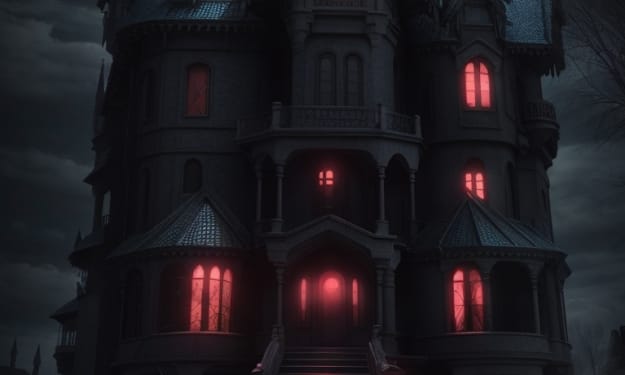
An ancient, decaying home had long been abandoned in the calm, scenic hamlet of Willowbrook, situated deep behind a lush forest. Locals told of horrible tragedies that had transpired within its crumbling walls, earning it the dark title "The Devil's Manor." It had stood as a testimony to dread and superstition for years, wrapped in an eerie quiet that sent shivers down the spines of those who ventured to approach.
By DEVASENAN SUBRAMANI2 years ago in Horror
Forgotten Scarecrow. Content Warning.
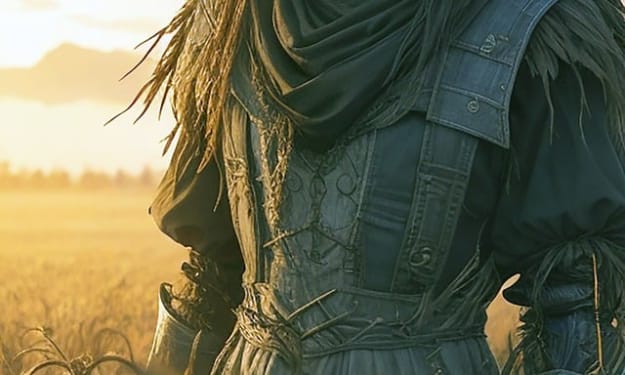
A Scarecrow guards our fields, protecting our crops from crows and birds. He is made with such care to be as scary to the birds as possible. His clothes are stuffed to the brim with straw. He is brought in from the fields after harvest, stored in a dry place to be refreshed each spring, and placed back in his spot when the crops are planted.
By Mother Combs2 years ago in Horror
History of shaka zulu
Born in 1787, also known as Shaka Zulu, Shaka was the esteemed king of the Zulu Kingdom from 1816 to 1828. During his reign, he implemented extensive reforms that restructured the military into a formidable force. Shaka is credited with the creation of the Zulu impi, a disciplined and highly effective fighting force that successfully conquered a significant portion of southern Africa. Shaka was the son of Zulu King Senzangakona kaJama and Nandi, the daughter of Chief Alangeni. As a sickly child, he often faced mistreatment from his father. At the age of 12, Shaka experienced rejection as an illegitimate son and was subsequently exiled to the Methewa clan. It was during this time that he received mentorship from Inkosi Dingiswayo, the Methewa king. Under Dingiswayo's guidance, Shaka acquired knowledge in warfare and military strategy. He was initiated into an ibutho lempi, a fighting unit, and further refined the ibutho military system. Shaka also formed alliances with neighboring chiefdoms to counter and defend against raids from the north, primarily through diplomatic means and occasional strategic assassinations. In 1816, Shaka returned to the Zulu Kingdom and seized power from his father. Immediately, he initiated a series of reforms that revolutionized the Zulu military. He introduced new weapons and tactics, such as the short stabbing spear, ikwa, and the buffalo horn formation. Additionally, Shaka established a system of military training that emphasized discipline and obedience. Shaka's reign coincided with the onset of the Mfecane/Difaqane, a period characterized by widespread disruption and warfare in southern Africa during the early 19th century. While Shaka preferred employing social and propagandistic political methods, he also engaged in battles. Under his leadership, the Zulu Army became one of the most dominant forces in southern Africa, conquering numerous neighboring tribes and expanding the Zulu Kingdom to its greatest extent. Shaka was known for his ruthless rule, resulting in the death or enslavement of many of his enemies. However, he also possessed diplomatic skills and successfully forged alliances with other tribes. Shaka's reign came to an end in 1828 when he was assassinated by his half-brother, Dingane.
By Rotondwa Mudzweda2 years ago in Horror