psychological
Mind games taken way too far; explore the disturbing genre of psychological thrillers that make us question our perception of sanity and reality.
The Haunting of Jangmuarinnakorn House: Thailand’s Most Notorious Ghost Mansion
The Spooky History and Phantom Tradition of Jangmuarinnakorn House (White Lion House), Chiang Mai Situated in the northwest corner of the ancient city walls of Chiang Mai, the crumbling majesty of Jangmuarinnakorn House, or the White Lion House, is a terrifying reminder of ambition, tragedy, and the paranormal. Its baroque facade, with snarling lion statues guarding either side, is jarring against its surrounding tropical landscape, attracting both fascination and terror. This is the tale of its ghostly heritage, a mix of historical fact and spooky legend.
By Kyrol Mojikal10 months ago in Horror
Frankenstein
Frankenstein by Mary Shelley is one of the most famous horror and science fiction stories ever written. But it's more than just a tale of a scary monster. It's a powerful story about science, ambition, loneliness, and what happens when we try to play the role of God.
By Muhammad Hayat10 months ago in Horror
Beloved
Beloved by Toni Morrison is one of the most emotional and unforgettable stories ever written. It is a novel that speaks about slavery, motherhood, memory, and the pain that people carry with them long after their suffering is over. Even though the story is deep and sometimes heartbreaking, it is told with such beauty and truth that it stays with you forever.
By Muhammad Hayat10 months ago in Horror
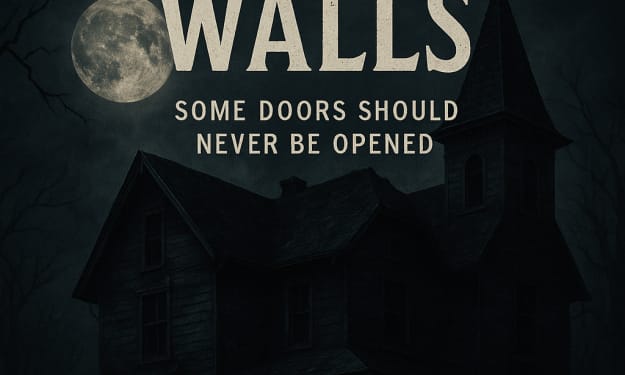
Whispers in the Walls
Rain lashed against the crooked windows of Black Hollow Manor, each drop sounding like a faint tap on a coffin lid. The manor had stood for over two centuries, long abandoned and buried in the woods of Raven’s Hollow, where even animals refused to tread. Locals called it cursed. Stories of missing hikers, disembodied screams, and the faint glow of lanterns in the dead of night haunted the nearby village. No one dared approach after sunset.
By Sakibul Islam Sakib10 months ago in Horror
Whispers from the Old Calcutta Hotel
Chapter I: The Forgotten Ledger In the heart of Kolkata (formerly Calcutta), hidden away between the bustling Burrabazar lanes, stands an old, crumbling colonial structure—the Hotel Monsoon Haven. Built in 1913 by a wealthy English trader named Albert Weathersby, the hotel once sparkled with opulence. But now, it’s a fading relic, its windows always shut, its wooden sign eaten by time.
By Tales That Breathe at Night10 months ago in Horror
The “Dark Forest”
One of humanity's most profound questions has long been a topic of discussion in science fiction: Are we the only ones in the universe? The paradox that physicist Enrico Fermi famously described in the 1950s is that the cosmos remains eerily silent despite decades of searching for extraterrestrial intelligence. Where is everyone, if intelligent life is statistically likely to exist elsewhere? The Dark Forest theory, which has captured the imaginations of sci-fi writers, thinkers, and fans worldwide, is one of the most unsettling responses to this question. The theory provides a terrifying explanation for the Fermi Paradox, and Chinese science fiction author Liu Cixin popularized it in his acclaimed novel The Dark Forest, the second book in the Remembrance of Earth's Past trilogy. According to Liu's vision of the universe, intelligent life is afraid, not because it is scarce but because it is silent. The Hypothesis: a cosmic disguise Liu Cixin depicts the universe as a vast, pitch-black forest in The Dark Forest. Every civilization is like a vigilant and armed hunter who creeps through the trees. This theory is based on the following fundamental assumptions: Civilizations want to stay alive. The universe has a finite supply of resources. It is impossible to fully comprehend another civilization's intentions. Any civilization could, with enough time, develop the means to harm other civilizations. In a universe where communication is slow and intentions are ambiguous, the safest course of action is to remain silent—or even worse, to eliminate potential threats before they can eliminate you. This disturbing conclusion is based on these four presumptions. In the same way that a hunter might shoot at the first sign of movement in the woods, an advanced alien species might decide to destroy any civilization that is detected as a precaution. versus the "Dark Forest" Other Perspectives on Life on Other Planets One of several answers to the Fermi Paradox is the Dark Forest theory, each with its own philosophical and scientific implications: In order to let humanity develop naturally, the Zoo Hypothesis proposes that advanced civilizations are deliberately avoiding contact with Earth. The Great Filter suggests that intelligent life may self-destruct before reaching the stars, a stage in the evolution of life that is extremely unlikely or catastrophic. According to the Rare Earth Hypothesis, conditions comparable to those found on Earth are so uncommon that intelligent life is virtually nonexistent elsewhere. The Dark Forest theory stands out thanks to its unadulterated psychological realism. It is based on a fundamental distrust and the logic of survival, not technological barriers or natural rarity. It portrays the universe not as a hopeful frontier but rather as a high-stakes space cold war in which extinction is the price of a mistake. The Development and Origins of Literature The Dark Forest concept's philosophical underpinnings have previously appeared in Western science fiction, despite the fact that Liu Cixin brought the theory to prominence. Similar ideas were explored by authors like Fred Saberhagen, Greg Bear, and Vernor Vinge—where advanced alien civilizations might act ahead of time or hide out of fear. As an illustration of interstellar Darwinism, for instance, in Saberhagen's Berserker series, self-replicating machines destroy intelligent life across the galaxy. However, Liu's interpretation distills these concepts into a coherent metaphor. The forest is dark not because it is empty, but rather because it is full of watchers who don't want to be seen or hunted because they don't want to be heard. Reflections from the Real World: Should We Be Broadcasting? The theory has serious repercussions not only for science fiction but also for actual endeavors like SETI and METI (Search for Extraterrestrial Intelligence). Should we actively reveal our location by sending messages into the cosmos? Or would that be like starting a campfire in a dark, predator-infested forest? Stephen Hawking and other scientists, including him, argued that contact with a more advanced civilization might not go well for us, so they advised against active broadcasting. Hawking believed that civilizations with the ability to travel across galaxies might view us as insignificant or disposable, drawing comparisons to past encounters on Earth, such as European colonization. Conversely, proponents of METI argue that our atmospheric composition or radio leakage would likely have already informed any civilization capable of receiving our signals. Additionally, they argue that a species that was truly intelligent would not have evolved into an aggressive species. However, the Dark Forest theory challenges this assumption, arguing that pacifism may be a fatal error if survival is the top priority. Implications for Ethics and Philosophy The Dark Forest theory has a powerful emotional impact not only because it is practical but also because it psychologically reflects our own fears. It forces us to answer unsettling questions: Is the default mode of intelligent life mistrust? Is communication necessary for cooperation? Are humans projecting their own conflictual past onto the universe? The Dark Forest is, in a way, not just about aliens but also about us. It is a mirror that shows our own war, colonization, and apprehension of the unknown history. This begs the poignant question, "Will we be ready to meet not just another species but ourselves?" if we ever do make contact. The Function of Storytelling The Dark Forest theory provides a fertile ground for tension, drama, and moral complexity in science fiction narratives. It allows for situations in which silence is the only way to stay safe, alliances are fragile, and trust is fatal. It proposes a universe shaped by paranoia, preemption, and existential dread rather than the utopian visions of peaceful galactic federations. This plays out on a grand scale in the trilogy by Liu Cixin: Earth faces an impending alien invasion, attempts to communicate or defend face unexpected consequences, and humanity must confront its intelligence and unity's limits. It's a story that shifts from a hopeful look at space exploration to a sobering look at how to survive in the universe. In the end, a cautious, lonely cosmos One of the most compelling and eerie explanations for the vast silence of the universe is the "Dark Forest" theory. It only cautions against the possibility of evil from extraterrestrial life. In doing so, it alters our conception of alien contact, portraying it instead as a risky wager in a perilous game of survival rather than a time of triumph or insight. The Dark Forest continues to be a potent metaphor for science fiction and science fiction, reminding us that while we may look into the stars with wonder, the stars may be watching back with fear.
By rasong nokrek10 months ago in Horror
Make It Make Sense
Verse I: Mumbo Jumbo "Please, sit and make yourself comfortable, as the reading will commence shortly." Two seats faced each other with a table in between, covered by a silky purple cloth pulled taut to remove any creases. Only an enchanted looking deck of cards sat on top of it, placed neatly beside a jeweled box where they probably came from.
By Leon Warczak 10 months ago in Horror
The Girl Beneath the Bell Tower
Chapter I: The Toll That Never Ended The town of Monteclare in southern Italy wasn't on any tourist map. It clung to the edge of a crumbling cliff, half-swallowed by time, the other half by silence. Once, it rang with the sound of laughter, trade, and most famously—the bell tower of Santa Lucía.
By Tales That Breathe at Night10 months ago in Horror
The Last Letter from Ashmere Lane
Chapter I: The Whisper in the Mailbox Elena Griggs never meant to move back to Ashmere Lane. But after her divorce and her father's passing, the old Griggs house stood empty—an echo of memories, dust, and grief. The town hadn’t changed much, but the street she once called home now felt unnervingly... watchful.
By Tales That Breathe at Night10 months ago in Horror