monster
Monsters and horror go hand in hand; explore horrific creatures, beasts and hairy scaries like Freddy Krueger, Frankenstein and far beyond.
The Pendle Witch Trials (1612)
Introduction The Pendle Witch Trials of 1612 remain one of the most infamous cases of witchcraft persecution in English history. The trials, which took place in England's Lancashire during a time of superstition, religious strife, and social unrest, resulted in the execution of ten people who were accused of witchcraft. The events were meticulously documented by the clerk of the court, Thomas Potts, in his book The Wonderfull Discoverie of Witches in the Countie of Lancaster, providing a chilling insight into 17th-century legal proceedings and societal fears. The Pendle Witch Trials, their key players, the allegations leveled against them, the trial itself, and the long-term effects of this tragic incident are the subject of this article. Context: Witchcraft in England in the 17th century Belief in witchcraft was widespread in early modern Europe, fueled by religious conflict, economic hardship, and fear of the supernatural. King James I's personal obsession with witchcraft is reflected in his book Daemonologie (1597), which makes practicing witchcraft a capital offense. The Pendle trials took place in Lancashire, a poor area with strong beliefs in folk magic and religious dissent (with Catholic sympathies despite Protestant rule). These factors created an environment ripe for accusations of witchcraft. The Accused: Families at the Heart of the Trials The Demdikes and the Chattoxes, two rival families led by elderly matriarchs reputed to be witches, were the primary focus of the Pendle Witch Trials. The Demdike Family Elizabeth Southerns, also known as "Old Demdike," was regarded as the region's most powerful witch. She was an elderly, blind widow. She allegedly taught witchcraft to her family. Elizabeth Device – Demdike’s daughter, accused of using witchcraft to kill multiple people. James Device – Elizabeth’s son, whose testimony under pressure implicated many others. Alizon Device – Elizabeth’s granddaughter, whose encounter with a peddler sparked the initial accusations. The Chattox Family Anne Whittle (aka "Old Chattox") – A rival of Demdike, accused of using witchcraft to harm others. Anne Redferne – Chattox’s daughter, accused of murder through witchcraft. Other accused individuals included Alice Nutter, an unusually wealthy woman whose involvement remains mysterious, and Jane Bulcock and her son John, who were caught up in the hysteria. The Beginning of the Trials: The Spark When Alizon Device met a peddler by the name of John Law in March 1612, the events that led to the trials began. After he refused to give her pins (possibly for use in folk magic), Alizon cursed him, and he subsequently suffered a stroke. Alizon admitted to the accusations made against her by Law's son and named members of her family and others in the plot. Authorities, led by Justice Roger Nowell, began arresting suspects. The accused were held in Lancaster Castle, where some, including James Device, provided damning confessions—likely under torture or coercion. The Infamous Meeting at Malkin Tower A key element of the prosecution’s case was a gathering at Malkin Tower, the Devices’ home, allegedly held on Good Friday, 1612. Witnesses claimed it was a witches’ meeting to plot the destruction of Lancaster Castle. Despite the possibility that it was simply a family gathering, this "evidence" was used to establish a conspiracy. The Trial: Justice and Injustice The trials took place in August 1612 at Lancaster Assizes, presided over by Sir Edward Bromley and Sir James Altham. The account by Thomas Potts reveals an extremely flawed legal procedure: Confessions Obtained Under Duress: Numerous "confessions" were most likely obtained through intimidation, torture, or lack of sleep. Use of Child Testimony – Jennet Device, Alizon’s nine-year-old sister, testified against her own family, sealing their fate. Spectral Evidence – Claims of supernatural harm were accepted without physical proof. Ten people were found guilty and hanged at Gallows Hill on August 20, 1612: Elizabeth Equipment James Device Anne Whittle (Chattox) Anne Redferne Alice Nutter Katherine Hewitt Bulcock, John Jane Bulcock Alizon Instrument Robey, Isobel While Margaret Pearson, one of the accused, was given a pillory rather than an execution, Old Demdike passed away in prison prior to the trial. Why Did the Pendle Witch Trials Happen? Several factors contributed to the witch hunt: Religious Tensions – Lancashire was seen as rebellious, with Catholic sympathies clashing with Protestant rule. Economic Hardship – The poor accused the poor, often over disputes or grudges. King James I’s Influence – His writings and laws encouraged witch hunts. Local Disputes: It's possible that the Demdike and Chattox families were the targets of personal resentment. Legacy of the Pendle Witch Trials The Pendle Witch Trials remain a symbol of injustice and mass hysteria. Scholars of today see them as a product of their time, shaped by fear, superstition, and brutality on the part of the law. Tourism & Memorials – Pendle Hill is now a tourist destination, with plaques and museums commemorating the victims. Cultural Impact – The trials have inspired books, plays, and TV shows, including The Lancashire Witches by William Harrison Ainsworth. Legal Reforms: As skepticism grew over time, the number of witch trials decreased, which led to the repeal of witchcraft laws in 1736. Conclusion The Pendle Witch Trials were a tragic example of how fear, superstition, and judicial corruption could lead to devastating consequences. The victims—mostly poor, marginalized individuals—were scapegoated in a society gripped by paranoia. Today, their story serves as a cautionary tale about the dangers of mass hysteria and the importance of fair justice.
By Silas Blackwood8 months ago in Horror
The shadow of the sun.
1998 Corridor moved my family to a Victorian style home in New York. Built in 1906, with high windows, narrow stairs and all round balconies. Despite his age, we were dressed to his charm. My parents got it for an incredibly low price. Later, I learned that the house had been empty for almost seven years.
By Shohag Ahmed8 months ago in Horror
Big Bad Wolf
It was fierce, epic in proportion and ultimately terrifying to behold. The big bad wolf was grey, full of muscle and had an unquenchable hunger that could never be satisfied. Her eyes were a bright yellow in that darkness, shining like blinding beacons in the moonlight. You saw this wolf on a holiday in Canada, exploring the snowy mountains with your mother and father. You were an only child and didn't have many friends to play with, so you explored the countryside and forests a lot on your own. That's when you soon found yourself alone, facing this threatening creature. It was beautiful yet horrific. With majestic fur and handsome features. However, its teeth were as sharp as razor blades, with drool dripping down its frightening fangs. The monster was real, somehow far more horrifying than any horror movie beast because the wolf was a real animal, in the real world. Now here it was, staring at you, your parents almost five miles away, you shouldn't have ventured off too far from the cabin too late at night. It was only natural for a kid your age to want to explore, but now all you wanted to do was get the plane back home to jolly old England. Yet, you couldn't move a muscle as the wolf stared you down. It was a game of chess, where the reward was life and the failure was death. You couldn't lose, so you kept calm and stared back. This lasted what felt like hours, you blinked rarely, so did the wolf. If you ran, you were sure it would chase, if you yelled, you were sure it would strike and if you cried, you were sure it would see easy prey and try to eat you. It was hard holding in your bladder, you may not have even needed to go, it was likely your body telling you to run to a private bathroom to escape this intense situation, but you knew deep down that wasn't an option. Eventually the wolf neared forwards, you remained stood, paralysed with fear. Then as it began to growl, sneer and snap its teeth, you knew the big bad wolf wanted to eat. So you spun and ran from her, almost automatically, you couldn't think straight, you just ran and ran, running out of breath, vision going blurry, heart beating madly in your chest, as the wolf roared and chased behind you. Somehow you still kept running, faster than you ever thought you could, like the wind. You had gone into flight not fight, your brain that made the right decision, fighting that monster would have been suicide! Every second felt like a minute and every minute felt like an hour, except time also seemed to be going faster than ever. You were experiencing pure, relentless frantic terror! Even though your body begged desperately for rest, you simply kept running, faster and faster, beyond what you thought was ever conceivable. In that frightened state you could have easily outrun the world's greatest Olympic runner. You may have even raced alongside a bicycle and still won. The wolf was still gaining on you however, it eventually struck the back of your calves, knocking you forwards and then over onto your front. You cried in terror, as the wolf circled you, getting ready to eat. Then there was a loud bang, followed by a blinding torch light. The wolf yelped, whimpered and bled, a bullet had shot its leg and was wounded. It fled into the darkness. Somebody had saved you, it was your father. "Emma honey, I'm so glad you're all right!" He exclaimed, climbing down the slope with his hunting rifle in hand. "I'm so sorry, daddy!" You cried, holding onto him for dear life, "I'll never run off like that again, I swear to you I won't." And you never did.
By Joseph Roy Wright8 months ago in Horror
The Silence by Tim Lebbon: A Harrowing Tale of Sound-Based Apocalypse
Introduction: When Silence is the Only Survival Tim Lebbon's The Silence (2015) presents a terrifyingly original plot in a world saturated with zombie outbreaks and viral pandemics: a swarm of deadly creatures that hunt by sound. In this gripping horror-thriller, humanity is forced to choose between remaining silent and being eaten alive. One of the most unsettling apocalyptic novels of the last ten years is The Silence because of its relentless tension, emotional depth, and brutal survival stakes. A story like this forces readers to consider the question, "How long could you survive without making a sound?" In this in-depth analysis, we’ll examine: The terrifying sound-based apocalypse of the book How Lebbon creates uncontrollable tension Themes of family, sacrifice, and human fragility Comparisons to other survival horror films and A Quiet Place Why The Silence remains a must-read for horror fans The Premise: A World Where Noise Means Death The novel follows Ally, a deaf teenager, and her family as they navigate a sudden global catastrophe. The "vesps," a species that has never been seen before, emerge from underground caves blind, ravenous, and extremely sensitive to sound. The Crucial Aspects of the End Times: Within a matter of hours, cities are reduced to slaughterhouses as the vesps attack anything that makes noise. Governments collapse as emergency broadcasts only worsen the carnage. Survivors must learn absolute silence or die. Ally’s deafness gives her family a unique advantage—she’s already adapted to a silent world. But as society crumbles, they soon realize that other humans may be just as dangerous as the creatures. The Horror of Sound: How Lebbon Builds Dread Unlike traditional monster stories, The Silence derives terror from what you can’t do—speak, scream, or even move carelessly. The key to Lebbon's mastery of suspense is: 1. The Constant Threat posed by Noise Every action—a footstep, a whisper, a dropped object—could mean death. The tension is constant, forcing readers to imagine their own survival in such a world. 2. The Vesps: An Unlikely Threat They don’t stalk or play with prey—they swarm and consume. Their origin is never fully explained, making them even more frightening. They evolve, adapting to human tactics in horrifying ways. 3. The Psychological Toll of Silence Lebbon doesn’t just focus on physical survival—he explores how silence warps the mind. The following must be kept out: Grief (no crying for the dead) Fear (there are no terrified screams) Conflict (no arguing over decisions) The result is a suffocating atmosphere where even breathing feels dangerous. Themes: More Than Just a Characteristic of a Animal While the vesps are terrifying, The Silence is ultimately a story about humanity under pressure. 1. Family Bonds vs. Survival Instinct Ally’s father, Huw, makes increasingly brutal choices to protect his family. The novel asks: How far would you go for those you love? 2. The Fragility of Civilization Within days, society descends into mob rule, religious fanaticism, and cannibalism. Lebbon suggests that monsters don’t just exist outside—they’re inside us all. 3. Disability as Strength Ally’s deafness, once a challenge, becomes her greatest asset. The novel flips the script on traditional survival narratives, showing that adaptation is the key to endurance. Comparison to A Quiet Place: Similar Premise, Different Execution Many compare The Silence to A Quiet Place (2018), but the two diverge in key ways: Aspect The Silence A Quiet Place Creatures Vesps (evolving, swarm-based) "Death Angels" (stalkers) Tone Darker, more brutal More hopeful, family-centric Deaf Character’s Role Ally adapts but isn’t idealized Regan’s hearing aid becomes a weapon Human Threat Major focus (cannibals, cults) Minimal While both are excellent, The Silence leans harder into cosmic horror and societal collapse, making it the darker, more unsettling experience. Why The Silence Still Resonates Today 1. The Fear of Losing Communication The concept of forced silence is particularly terrifying in this day and age of constant digital noise. The novel explores what happens when language, music, and human connection are stripped away. 2. The Real-World Parallels Pandemic lockdowns (isolated families fearing invisible threats) Climate change (ancient calamities brought about by reckless human action) Echo chambers on social media (the vesps, a metaphor for viral hysteria) 3. The Unforgettable Ending Without spoilers, Lebbon delivers a finale that’s both heartbreaking and hauntingly ambiguous, leaving readers to ponder the true cost of survival.
By Silas Blackwood8 months ago in Horror
“Whispers in the Walls”
When Sarah and Daniel moved into the old house on Hollow Creek Road, it had been raining for days. It was isolated, covered in creeping ivy, surrounded by thick woods. The locals whispered about the place—how no one stayed there long, how strange things happened inside those decaying walls. But to the young couple, it was perfect: quiet, cheap, and full of character.
By Md Naim Khan8 months ago in Horror
Bird Box by Josh Malerman: A Terrifying Exploration of Fear, Survival, and the Unknown
The Book That Changed the Face of Apocalyptic Horror Bird Box, Josh Malerman's debut novel, captivated horror readers in 2014 with its chilling depiction of a world where seeing is fatal. The book’s premise—an unseen force drives people to violent madness upon sight—captivated readers and later inspired the hit Netflix film starring Sandra Bullock. However, Bird Box is not simply a viral sensation. It’s a masterclass in psychological horror, blending relentless tension, deep character study, and existential dread. It is still one of the most influential horror novels of the 21st century, nearly ten years after it was published. In this deep dive, we’ll explore: The terrifying premise of Bird Box How Malerman crafts fear without showing the monster The novel’s themes of motherhood, trust, and survival Why Bird Box still haunts readers today The Hypothesis: In a world where looking is fatal, Malorie, a woman who lives in a post-apocalyptic world where anyone who sees an unknown entity is driven to homicidal rage, is the protagonist of the book. Survivors must blindfold themselves to stay alive, turning every outdoor journey into a nerve-wracking game of sound and memory. Malorie, along with two young children she calls only "Boy" and "Girl," embarks on a perilous river journey to a rumored safe haven. The problem? They must do it blindfolded. Why This Concept Works So Well The monster is never seen – By never describing the entity, Malerman forces readers to imagine something far worse than any visual could provide. Survival depends on vulnerability – Characters must willingly blind themselves, heightening tension in every scene. The fear is universal – Unlike zombies or plagues, this horror exploits a fundamental human instinct: the need to see. How Malerman Creates Fear: The Horror of the Unseen Bird Box's moderation is one of its greatest assets. Unlike many horror stories that rely on gore or jump scares, Malerman’s terror is psychological, built through: 1. Lack of Perception With characters blindfolded, every sound, touch, or whisper becomes a potential threat. Readers experience the world as Malorie does—uncertain, disoriented, and hyper-alert. 2. The Madness of Others Flashbacks reveal how society collapsed, with infected individuals describing beautiful visions before turning violent. The unseen force is made even more disconcerting by the contrast between wonder and horror. 3. The Paranoia of Trust In a world where opening your eyes could mean death, who can you rely on? The novel explores how fear erodes human connection, leading to betrayal and isolation. Themes: More Than Just a Monster Story While Bird Box is undeniably terrifying, its deeper themes elevate it beyond standard horror fare. 1. Motherhood and Survival Instinct Malorie’s journey is as much about protecting her children as it is about survival. Her decision to train Boy and Girl in extreme discipline—forcing them to rely on hearing alone—raises ethical questions about love and necessity in a broken world. 2. The Fragility of Sanity The infected don’t just die—they lose themselves in ecstatic visions before turning violent. This suggests that the entity doesn’t just kill; it reveals something horrifying about human nature. 3. The Fear of the Unknown By never explaining the creatures, Malerman taps into Lovecraftian horror—the idea that some truths are too terrible to comprehend. The novel’s power lies in what it doesn’t show. Comparing the Book to the Movie on Netflix The 2018 Netflix film brought Bird Box to a wider audience, but there are key differences: Aspect Novel Film Malorie’s Character More introspective, haunted More action-driven The entity was never described and was only briefly depicted (controversial). Ending Ambiguous, open to interpretation More concrete, hopeful While the film is effective, the book’s unseen horror and deeper psychological exploration make it a richer experience. Why Bird Box Still Haunts Readers Today 1. It appears strangely plausible. In a post-pandemic world, the idea of an invisible, unstoppable threat resonates more than ever. The themes of survival, isolation, and false information come across as unsettlingly familiar. 2. The Horror Lingers Because the monster is never seen, readers keep imagining it long after finishing the book. This lingering dread is a hallmark of great horror. 3. It Reinvents Apocalyptic Fiction Unlike zombie or virus stories, Bird Box presents a threat that can’t be fought, only avoided. This makes survival feel even more desperate. Final Verdict: A Modern Horror Classic Bird Box isn’t just a scary story—it’s a brilliant exploration of fear itself. By forcing characters (and readers) to confront the unknown, Malerman crafts a horror novel that’s as thought-provoking as it is terrifying. Have you read Bird Box? Could you survive blindfolded?
By Silas Blackwood8 months ago in Horror
"The Silence in Cellar Hollow"
When Clara Bell inherited the decrepit farmhouse in Cellar Hollow, When Clara Bell inherited the decrepit farmhouse in Cellar Hollow, she almost laughed at the irony. Long thought to be insane, her estranged great-uncle Elijah had died there alone, whispering to the walls and writing in unintelligible symbols. Everyone said the place was cursed. But Clara, a rational woman, didn’t believe in curses.
By Md Naim Khan8 months ago in Horror
The Terrifying Pandemic Horror Twist in Your Shadow Half Remains
How Sunny Moraine’s Novel Reinvents Apocalyptic Fear In an era still reeling from real-world pandemics, horror fiction has evolved to reflect our deepest anxieties—not just about disease, but about the collapse of human connection. Sunny Moraine’s Your Shadow Half Remains (February 2024) takes pandemic horror to a chilling new level with a simple, devastating premise: what if eye contact made people violently insane? This is not another Bird Box imitation. Moraine’s novel strips survival horror down to its most primal fear—the inability to trust anyone, even yourself—and crafts a claustrophobic, psychological nightmare that lingers long after the last page. In this deep dive, we’ll explore: The terrifying premise of Your Shadow Half Remains How it differs from other horror stories about pandemics The real-world fears it exploits Why this could be 2024’s most unsettling horror novel
By Silas Blackwood8 months ago in Horror
The Black River Orphan: A Cursed River in New England in the 19th Century
Introduction In the shadowy corners of 19th-century New England folklore, few tales are as chilling as that of The Black River Orphan—a cursed river said to whisper the names of the drowned and lure the unwary to their doom. This spectral waterway, shrouded in Puritan guilt and whispered legends, embodies the region’s deep-rooted fears of the supernatural and the unresolved sins of the past. This article explores the origins of The Black River Orphan, its ties to historical anxieties, and its lasting influence on horror literature. We’ll examine: The real-life New England history that shaped the legend Tragic drownings, eerie apparitions, and forbidden rituals are all part of The River's Curse. Puritanical Dread: Why 19th-century New England was a good place for these kinds of stories Literary Legacy – How the curse echoes in modern horror.
By Silas Blackwood8 months ago in Horror
**The House That Remembers**
Atlanta is a city of trees and old ghosts. In the Druid Hills neighborhood—where the oaks bend low and seem to whisper to one another—there is a house that no longer exists on any maps. Google Street View blurs the lot like a censored memory. But if you walk down Wisteria Avenue on a foggy day, you might sense it: a wrongness in the air, a pressure behind your eyes, as though something invisible is leaning toward you. Locals call it the Whitmore Vanish. They say a family disappeared there in 1943. No bodies, no notes—just a perfectly set dinner table, untouched, and music still playing on a phonograph. The case was closed as a missing persons incident. But in hushed circles, people whisper about something else—something the family brought back from the Appalachian trails months before. Something that followed them home.
By Md Sohanur Rahman8 months ago in Horror
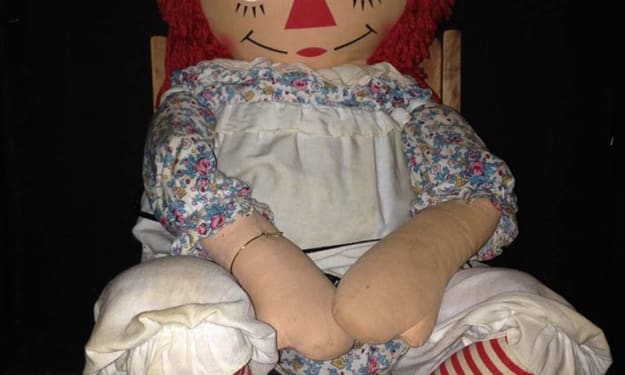
The horror of the Annabelle Doll. Content Warning.
The Horror of the Annabelle Doll: A Tale of Terror and Possession Few objects in the world of horror carry as much chilling notoriety as the Annabelle doll. Made infamous by the real-life accounts of paranormal investigators Ed and Lorraine Warren, as well as popularized by a series of films within The Conjuring universe, the Annabelle doll embodies pure malevolence wrapped in an innocent, vintage exterior.
By raven kade8 months ago in Horror
The Best Brand-New Horror Reads for 2024
Rolling Stone’s Must-Read Picks for the Year’s Scariest Stories In 2024, horror literature is doing well because authors are pushing the boundaries, combining genres, and creating new nightmares that will keep readers up until midnight. This year's lineup includes everything from folk horror to cosmic dread and supernatural hauntings to psychological thrillers. Here are Rolling Stone’s picks for the best new horror books of 2024—each one guaranteed to send chills down your spine.
By Silas Blackwood8 months ago in Horror