
Soumya Abu Al-Jinn: Unveiling the Origins of the Djinn Realm Through the Lens of the Three Abrahamic Faiths
Exploring the Enigmatic Legacy of Soumya Abu Al-Jinn and the Hidden History of Djinn Across Judaism, Christianity, and Islam

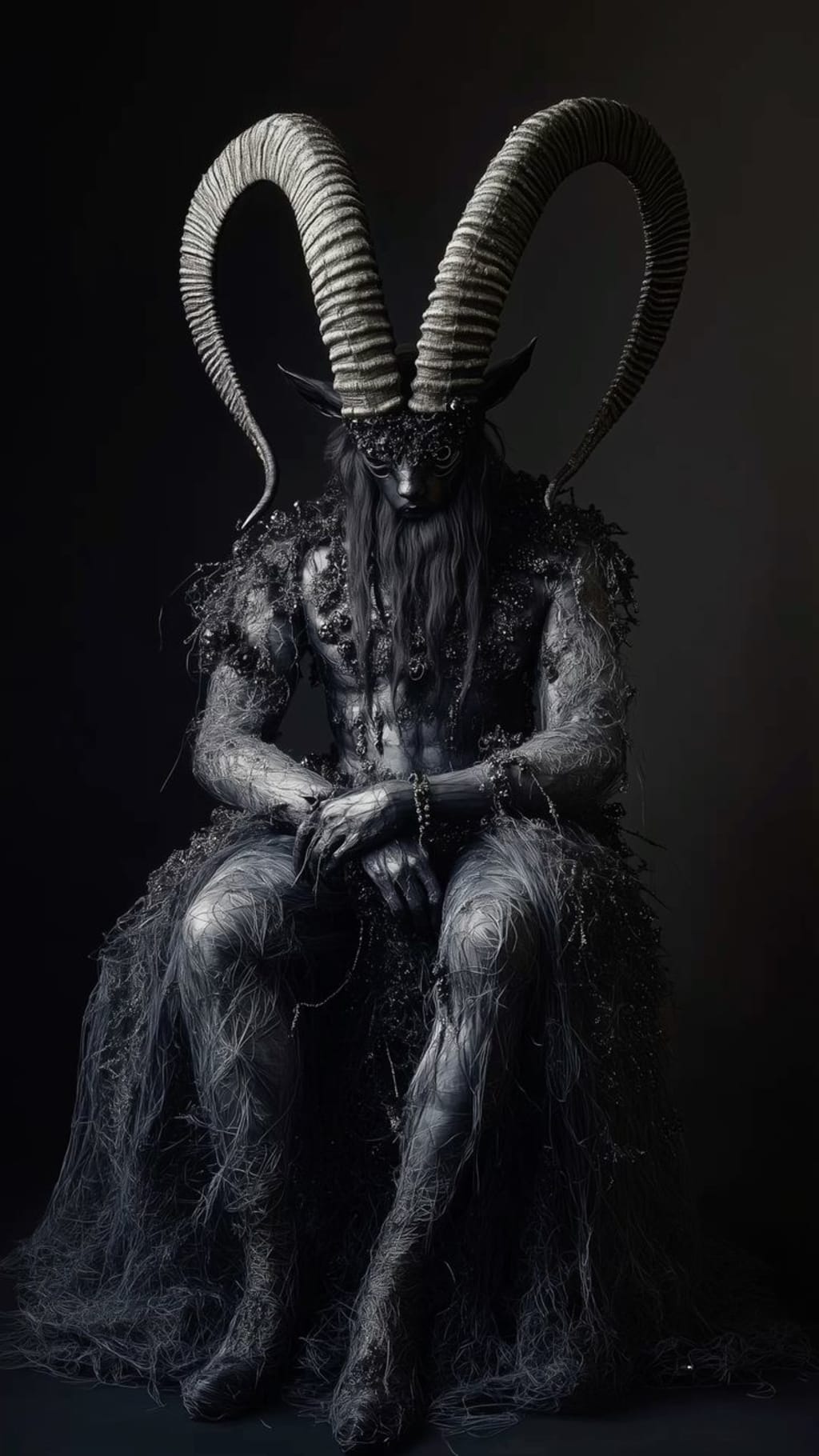
In the shadowed corridors of esoteric lore, few names echo with such spectral resonance as Soumya Abu Al-Jinn—a figure cloaked in mystique, tethered to the ancient chronicle of the djinn, and intricately woven into the theological tapestries of Judaism, Christianity, and Islam. His legend breathes across veils of belief, where fire-born entities move silently between dimensions, touching the peripheries of mortal consciousness and celestial edict alike.
The Genesis of the Djinn: A World Forged from Smokeless Flame
Long before the dominion of humankind, when the cosmos was still murmuring its primordial hymns, the djinn emerged—fashioned from smokeless fire, flickering in shadows unseen. This elemental birth, whispered through the sacred scrolls of the Abrahamic religions, defines them not as myths but as sentient agents with will, emotion, and complex morality.
In the Torah's obscure passages, spectral beings resembling djinn—though unnamed—move surreptitiously, mirroring the more detailed accounts later articulated in Islamic doctrine. The Christian canon, too, speaks in veiled parables of wandering spirits and tempters cloaked in intangible forms, resonant with the djinn's elusive essence. Yet it is in Islam where their narrative is most vivid—commanded by divine decree, tested with choice, and split between virtue and defiance.
Soumya Abu Al-Jinn: Keeper of Forbidden Realms
The appellation Soumya Abu Al-Jinn carries a cryptic weight, conjuring visions of a figure both guardian and exile—an intermediary whose chronicles pulse with riddled truths. His presence is not merely that of a participant in the lore of djinn, but as a cipher whose legacy speaks of primordial covenants, divine rifts, and the arcane languages once spoken between worlds.
Legends ascribe to him a realm deep within the unseen—the Akhfa, a liminal dominion where exiled djinn whisper their regrets into spiraled winds. It is said that Soumya did not merely dwell among them, but ruled—wielding ancient glyphs and elemental sigils that could fracture illusions and summon truth from beneath layers of deception.
The Djinn in Judaic Thought: Shadows Between Words
Though the term “djinn” is absent from Hebrew scripture, echoes of them shimmer in the guise of shedim and se’irim. These beings, half-glimpsed, inhabit the margins of Jewish folklore—creatures neither angelic nor demonic, existing in tension between creation and chaos. Rabbis of old spoke in murmurs of entities banished from Heaven but not tethered to Hell—spirits with autonomy, inhabiting ruins, deserts, and the frayed edges of human imagination.
It is whispered that Soumya’s name was known to the Kabbalists, etched in arcane texts and concealed in numerical codes—his essence a cipher to those seeking to pierce the divine veil without shattering it.
The Christian Encounter: Spirits and Strangers
In Christianity, the djinn do not walk with clarity but hide beneath layers of interpretation—categorized often as unclean spirits, tempters, or lost souls. Yet Soumya’s tale finds echoes in apocryphal manuscripts, particularly among the Desert Fathers, mystics who spoke of entities that neither belonged to angels nor demons, but something more ancient, more deliberate.
To some Gnostic sects, Soumya was a harbinger—neither damned nor sanctified, but a herald of balance amidst celestial polarity. His lore, though fragmented, survives in whispered fragments, often dismissed as folklore but revered in esoteric circles.
The Islamic Tapestry: The Djinn’s True Chronicle
Of the Abrahamic triad, Islam offers the most crystalline insight into the world of the djinn. They are not merely spirits; they are nations unto themselves—thinking, loving, warring. Within this cosmos, Soumya Abu Al-Jinn stands not as a myth, but as an ancient sovereign—a jinn whose allegiance to truth led him to rebellion not against the Divine, but against the tyranny within his own kind.
Surahs and hadiths weave stories of djinn listening to the Qur’an, of their divided beliefs and tribes. Among these tales, some narrate the tale of Al-Malik al-Mazloom, the unjustly dethroned king—many scholars equate this title with Soumya. He is described as luminous and stern, a figure of paradoxes—neither fully loyal nor treacherous, but always watching.
Soumya’s Legacy: Beyond Myth, Into Human Psyche
To reduce Soumya Abu Al-Jinn to mere folklore is to ignore the gravitational pull his name exerts across spiritual history. He is more than a relic of belief; he is an archetype—the watcher, the exile, the prophet of the unseen. His saga invites inquiry into the blurred demarcation between the seen and unseen, the sacred and the accursed.
Whether studied as theology, mythology, or metaphor, the imprint of Soumya persists—a sentinel in the interstice between human understanding and divine mystery. His tale is not finished. It echoes still, behind closed eyes and in forgotten dreams, waiting to be retold.
Frequently Unasked Questions
Q: Is Soumya Abu Al-Jinn a historical figure or mythological construct?
A: He occupies a liminal space—more than myth, less than verifiable history. His narrative intertwines with spiritual traditions, suggesting both symbolic and metaphysical relevance.
Q: Why is Soumya not widely known despite his deep connections to religious narratives?
A: His story resides in occulted texts, esoteric traditions, and oral lore often marginalized or deliberately concealed from mainstream theology.
Q: What is the significance of smokeless fire in the creation of djinn?
A: Smokeless fire symbolizes a form of pure, intangible energy—untethered by the limitations of the physical world, reflective of the djinn’s volatile and elusive nature.
Q: Do the three Abrahamic faiths agree on the existence of djinn?
A: While Islam presents a detailed ontology, Judaism and Christianity contain analogous entities. Their interpretations diverge but reflect shared mythopoeic roots.
About the Creator
Avatar
Legend lover
Author of Legends of the Past and Present The Skies and The Earth Testify
A dive into the world of mystery and imagination
The Devil's Cut
“Comrade, finally you’re awake.” The voice was smooth, sensual. A flickering incandescent bar was all that lit the white, sterile room. All Vladimir remembered was everything going black. He tried to move his arms and found them strapped to the gurney.
By Matthew J. Fromm6 days ago in Fiction


Comments
There are no comments for this story
Be the first to respond and start the conversation.