
Several supernatural customs in Chinese folk culture, it turns out that ghost marriages really exist!
Aiden Wang

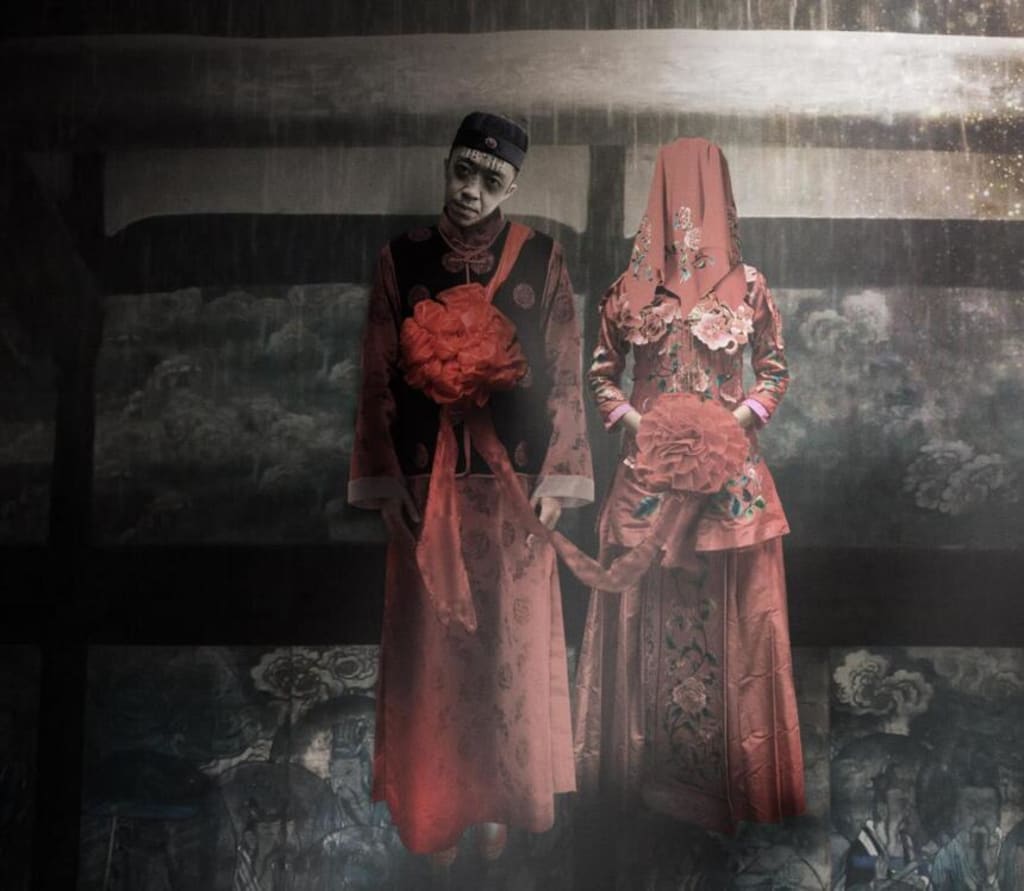
There are many supernatural customs in Chinese folk culture, which are also the result of thousands of years of cultural accumulation. Among them, the most surprising ones are undoubtedly the Western Hunan corpse hunting, ghost marriage, witchcraft, sky burial, and of course, there are also other very supernatural customs. Let's take a look at several major supernatural customs in Chinese folk culture together.
1. Xiangxi Corpse Driving (湘西赶尸)
A mysterious practice in western Hunan, where a Taoist priest leads corpses tied with straw ropes at night, using gongs to warn bystanders. Originating from impoverished regions, this method allowed transporting deceased migrants back to their hometowns across rugged mountains when conventional means were impossible. Its exact mechanics remain unexplained, blending folklore and practicality .
2. Ghost Marriage (冥婚)
A ritual where deceased unmarried individuals are symbolically "wedded," either to living partners or other deceased persons. Rooted in Han Dynasty traditions, it aimed to appease familial grief or feng shui concerns. Historical records note its prevalence among nobles, such as Cao Cao arranging a posthumous marriage for his son Cao Chong. The custom peaked during the Song Dynasty, involving "ghost matchmakers" and joint burials, later declining by the late Qing era .
3. Hanging Coffin Burials (悬棺葬)
An ancient burial method where coffins were placed on cliffs, cave niches, or wooden stakes high above rivers. Practiced in southern China (e.g., Sichuan, Fujian), it symbolized respect for the dead. Historical texts like Records of the Lands and Customs of Linhai (Three Kingdoms period) and Tang Dynasty documents describe its cultural significance and technical challenges .
4. Gu Magic (蛊术)
A feared practice in Hunan, where "Gu" (poisonous creatures like snakes or insects) were allegedly cultivated by Caoguipo (Grass Ghost Women) to harm others. Miao ethnic communities widely believed in variants like "snake Gu" or "frog Gu," viewing it as a parasitic force that could backfire on the practitioner. Its secrecy and mythical status parallel Thailand’s "降头术" .
Other Notable Customs:
Sky Burial: Exposing remains to vultures in Tibetan regions.
Ritualistic Puppetry: Using figurines in ancestral worship.
Zhongyuan Festival: Honoring ghosts during the "Hungry Ghost Month."
These traditions reflect China’s rich cultural tapestry, blending animism, Daoist rites, and ethnic beliefs. For full historical sources, refer to classical texts like Yuan Shi and Ming Shi.
About the Creator
Aiden Wang
I love writing. Whether it’s crafting stories, journaling, or simply letting my thoughts flow, writing clears my mind, fuels my creativity, and helps me make connections. It is more than a passion—it’s a part of who I am.
Keep reading
More stories from Aiden Wang and writers in Horror and other communities.
The Book That Eats People
In an ancient and mysterious town, there was a dilapidated bookstore nestled in the depths of a quiet alley, seldom visited by anyone. The store was run by an old man with a stern expression and deep, inscrutable eyes. He always wore a black robe and silently organized the books in the dim corners of the shop.
By Aiden Wang8 months ago in Horror


Comments
There are no comments for this story
Be the first to respond and start the conversation.