
PAUSE: A Closer Look at Bergman's 'Hour of the Wolf' (1968)
Lost in the shadow of its predecessor 'Persona' (1966), 'Hour of the Wolf' is arguably Bergman's forgotten masterpiece. Swirling with nightmarish imagery and captivating symbolism, the film deserves a second look. This article explores the movie, its plot and its major successes.
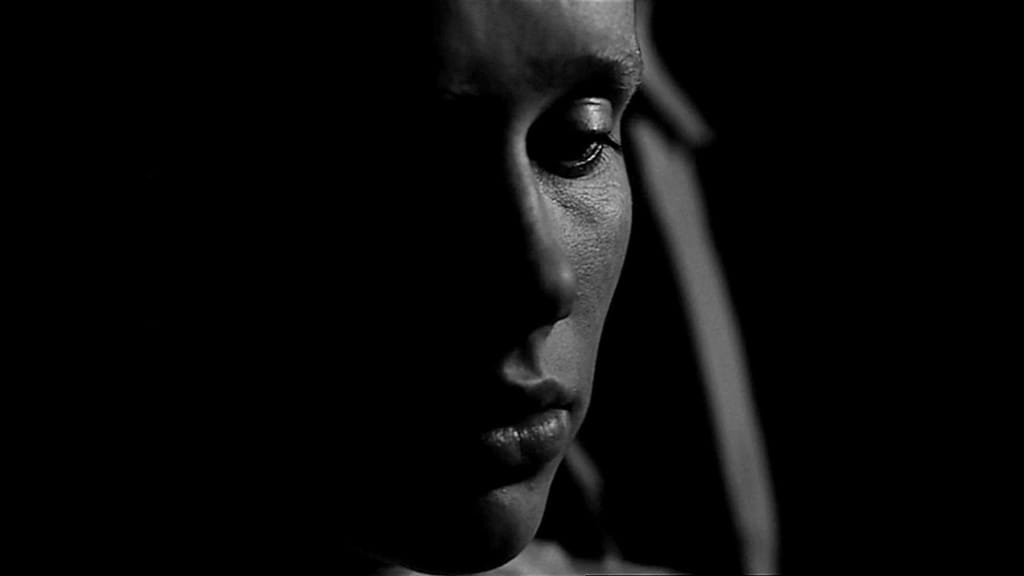
Many have heralded Bergman’s films ‘The Seventh Seal’ and 'Persona' for their unflinching look at dark, subjective themes like mentality, death, belief and sexuality. However, there is one film that is seemingly left trailing in the wake of these titans by viewers and critics alike. Exploring the theme of isolation, both mental and physical, as well as other Bergman-esque themes, 'Hour of the Wolf' is nothing short of a forgotten masterpiece. While it is ambiguous, muddled and at times, hard to follow, the film is an enthralling depiction of one man's spiral into madness, and the ineptitude of his wife in knowing how to save him. 'Hour of the Wolf'' has brilliance in its ambiguity; the dream-like feeling of the film adds to the sense of one's sanity crumbling at the foundations. Its imagery, dialogue and cinematography are dazzling in their gloomy, melancholic brilliance.
The film surrounds a married couple who come to an island cottage so that Johan (Max Von Sydow) can focus on his artistic pursuits. They seem utterly alone, until Alma (Liv Ullmann) discovers a strange diary while tidying the house. There begins our descent into comprehending the full extent of Johan’s madness. Shadows from his past begin appearing on the island, slowly drawing Johan away from the comforting embrace of his wife, who remains grounded in reality.
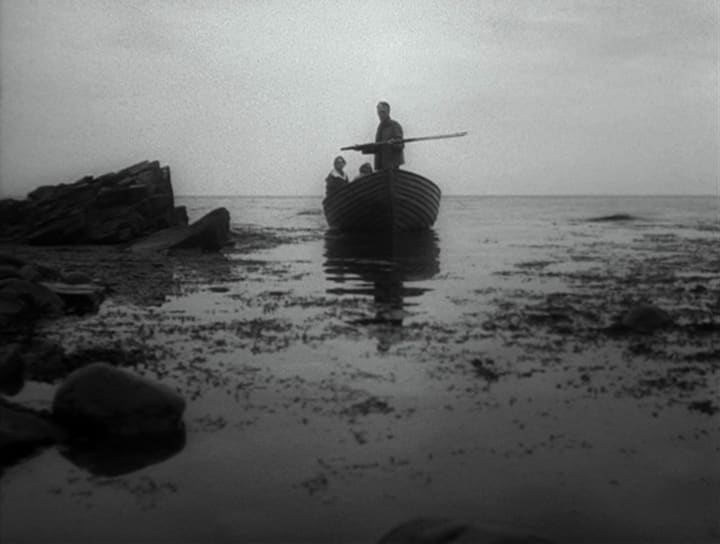
The film opens with a solitary Alma recounting the breakdown of her marriage with Johan. The image of the two of them arriving ominously on the small wooden boat parallels a more recent cinematic portrayal of isolation in Robert Eggers' recent indie hit 'The Lighthouse' (2019). Certainly, it's not hard to see where Eggers scooped a great deal of his inspiration.
With the picturesque island cottage we are introduced to and the initially sweet dynamic between Johan and Alma, it seems nothing could possibly go wrong. However, as the film progresses we see Johan recede further and further into a world from which he cannot return.
It is a tragedy to watch the two slowly enter two different worlds. In one scene Johan remarks he cannot sleep as he stares glassily through the cottage window into the stormy night. He calls the hour in which they reside ‘vargtimmen’ or the ‘hour of the wolf’, as this is the time at which most births and deaths occur.
Johan, addled by his relentless insomnia and psychosis, feels trapped in an endless cycle of nightmarish visions. His ‘hour of the wolf’ is never-ending. The lines between waking and dreaming have merged. Bergman successfully conveys the dream-like quality of Johan’s mind, culminating in a castle-based plight against demons who take the form of aristocrats, and even manifesting as Johan’s former lover, Veronica.
It may sound like a strange plot to digest from the bland medium of text, but when watching the film one becomes totally absorbed. Bergman bends the mind with images of men walking on walls, the dead becoming reanimated and leer at Johan like crows from castle windows, to the point where the even viewer knows not what is real and what is an illusion anymore. Thus, we are indicted into the terrifying vargtimmen of Johan’s mind; a world which Alma cannot see.
Alma confesses to the camera in a solemn monologue that she feels she and her husband were becoming similar – so why then did they fall apart? It seems that, despite sharing their trauma with one another, they could not fully assimilate themselves into each other’s worlds. Therefore, despite living together and bonded in marital union, the two become isolated even in company. They cannot quite reach one another from their polarised positions. Though Alma tries to understand how he is plagued by ‘Man-Eaters’ as she names his inner demons, she laments she is unable to protect him.
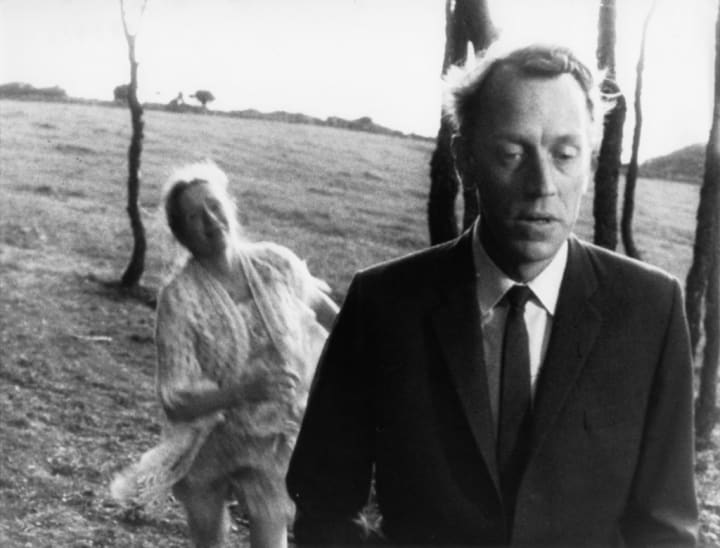
Despite being an eerie watch, Bergman’s ‘Hour of the Wolf’ serves as a tragic examination of the gulf that can exist between two people without them even knowing it. Much like his earlier revered work of ‘Persona’ (1966) Bergman’s analysis of the complex interplay between humans and their psyches is gripping and drenched in subliminal themes of sexuality, mental illness and, most prominently, the manifestations of trauma.
While Johan absorbs himself in his art, trauma from his childhood manifests in odd behaviour and frightening hallucinations. The story may be taken as the classical descent of an artist disintegration into madness. Yet the character of Alma is instrumental in providing the film with an even more poignant layer that depicts the sad reality of mental health and the fragility of human relations. Alma, as much as she loves her husband, becomes isolated from him. Even though they are the only people who appear to be living on the rock at first instance, they can no longer connect. Alma’s frustration at Johan’s increasing introversion, quietness and aloofness is a natural human reaction to seeing a change in a loved one. And though, throughout the film, she tries to empathise with him, he cannot be saved. All her empathy is for nought; his mind is estranged from her.
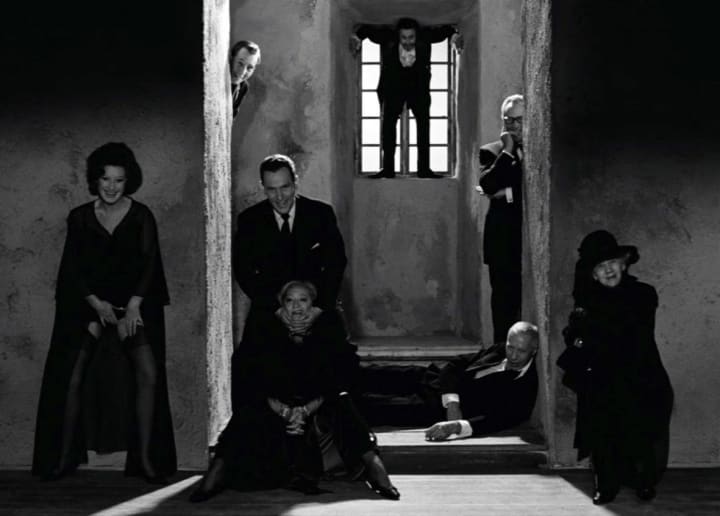
Met with negative reviews upon release from Swedish critics in its country of origin, the film has since been hailed as an art-house masterpiece. Bergman, defending the film against the argument that it was a regression from his earlier work, noted the piece builds on ‘Persona’ and that it was a deeply personal film based on exploration into the unknown. Indeed, to label the film as ‘boring’ ignores its subdued brilliance. The film is like one giant Henry Fuseli painting, packed with gothic imagery and neo-expressionism in a fever dream of personal demons and plagues of mental shadows. Yet the film is not pretentious. Rather, it explores the brooding power of mental isolation and its consequences in a genuinely unnerving way. Bergman is not simply pouring empty philosophy into the film to appear avant-garde. Instead you can feel his very heart and soul behind every frame and flash of imagery.
This phantasmagorical flick is quiet in its genius. While often labelled with some accuracy a ‘psychological horror’, it is far more than that. It tackles its themes in a nuanced, dark and frightening way, with its resonating message one of solemn implication for its audience. Its harrowing result is the realisation that we can be isolated from one another even in total closeness. Isolation, as the film brilliantly shows, need not necessarily be physical, but can adopt a mental form.
About the Creator
Dani Buckley
Pennings of the dark and cinematic. Phantasmagoria abound.
Keep reading
More stories from Dani Buckley and writers in Horror and other communities.
Belial
When I was little, we held a séance. Not for any old reason, but because of the hole in our attic. It was the late '70s, and in our house the most advanced form of technology we had was a polaroid camera. Huge thing, it was, with a flimsy strap to hook round your neck so your hands wouldn't tremble with the weight of holding it up. Mum had nabbed it at a car boot sale down by the market. She was pleased with the discounted price she had been able to haggle it down to. I bit my tongue, afraid to tell her the reason why it had been so cheap was because it was just under a decade old. I had seen it on the back of an old catalogue from 1969.
By Dani Buckley6 years ago in Horror



Comments
There are no comments for this story
Be the first to respond and start the conversation.