
Nosferatu (1922) - A Haunting Classic That Defined Horror
I sat transfixed at this eerie spectacle.

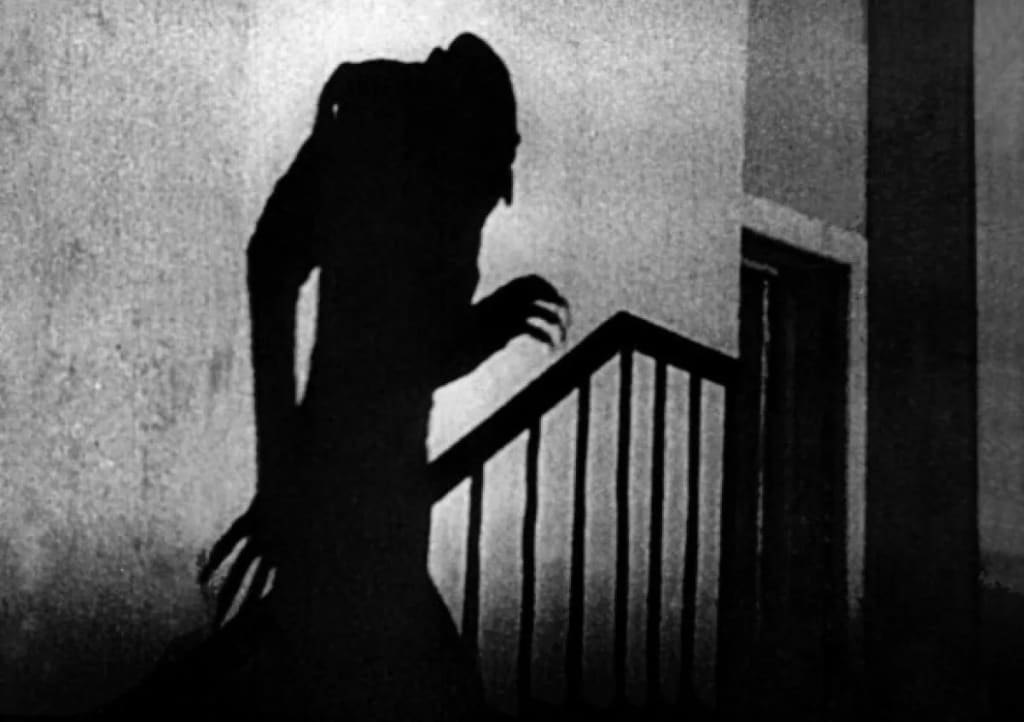
Beware Count Orlok - he’s out for blood.
Nosferatu frightened audiences when it was first released to cinemas in 1922. Upon the exciting news of a new town resident, a young man named Hutter travels to Transylvania to meet the mysterious Count Orlok. He discovers the terrifying truth that Orlok is a vampire. Orlok terrorizes victims and puts a curse on the town.
I was first introduced to Nosferatu in an infamous episode of Spongebob. Watching this 1922 film was like taking a step back in time. Nosferatu defined a generation of terror when it was first released. Like I was in a trance, I sat transfixed at this moving spectacle of a notorious vampire out for blood.
Casting includes Max Shreck, Alexander Granach, Gustav von Wangenheim, Greta Schroder, Georg H. Schnell, Ruth Landshoff, and John Gottowt. Movies had only been starting at this point, making every actor involved with this feature lucky.
Sound was still processing, leaving actors to emphasize their feelings in expressive and often over-the-top faces. Their eyes looked like they were about to pop out of their sockets from terror!
He didn’t realize it at the time, but Max Shreck is one of the first horror villain icons as Nosferatu. His performance is startling as the menacing vampire with a hypnotic stare. Nosferatu’s slow and deliberate movements were portrayed effectively by the 6 '3 Shreck.
The makeup team designed a horrifying makeover for Shreck that deserves more praise. His creepy elongated fingernails made my skin shiver.
This movie was made over 100 years ago from April-October 1921! The technical work for Nosferatu is commendable. Unlike how filmmakers rely heavily on CGI and computer effects, they didn’t have this technology in 1922. Filmmakers utilized creative edits, like when the vampire is translucent.
The soundtrack is so gothic that I felt chills, intensifying as the story progressed. Actors mimed actions and dialogue appeared in separate frames. Letters are also given time to read.
Thanks to F.W. Murnow’s masterful direction of Nosferatu, the film is rich with layers of history and depth. He creates an eerie atmosphere using light and shadows in ways that were groundbreaking for the time. Murnow preferred to use archways to frame characters to achieve the desired effect he was looking for.
Nosferatu was filmed in Wismar and Lubeck which still stands today. You can take a walking tour of the old movie set! The warehouses used for Orlock’s new home were preserved and still stand today!
Of course, no film is ever perfect. The picture is so grainy and there are noticeable jump cuts. The film has spent time in restoration across a century. The restoration was able to fix one crucial lighting blooper since most scenes were filmed during the day. These films need proper care due to their age.
Nosferatu was banned in Sweden until 1974 due to excessive horror. I didn’t believe I was going to get scared because the film was over a century old. That’s no excuse! Horror is horror. The sequence where Nosferatu stands unnervingly in the doorway or his shadow slowly approaching upstairs is absolutely frightening.
What was it like to experience this film in 1922? You have to watch every second of this movie to admire the craft. Keep older movies in the mainstream.
Some theaters have been granted permission to show this old movie on the big screen. If you have the opportunity, see it on the screen. Nosferatu is also streaming on various platforms. Take a look at Nosferatu this Halloween season and marvel at the cinematic galore of this old horror film.
About the Creator
Marielle Sabbag
Writing has been my passion since I was 11 years old. I love creating stories from fiction, poetry, fanfiction. I enjoy writing movie reviews. I would love to become a creative writing teacher and leave the world inspiring minds.
Keep reading
More stories from Marielle Sabbag and writers in Horror and other communities.
Vampires Drain the Life from Salem's Lot (2024)
Watch out for the vampires in Salem’s Lot. Salem’s Lot is a 2024 HBO adaptation of Stephen King’s suspenseful novel. A writer returns to his old town of Jerusalem's Lot in research for his latest novel. As townsfolk mysteriously fall ill, they are threatened by a blood-thirsty creature.
By Marielle Sabbagabout a year ago in Horror


Comments
There are no comments for this story
Be the first to respond and start the conversation.