
Movie Review: 'Saw 4' Showed How a Great Series Maintains Momentum
Most horror franchises are direct to video by their 4th entry, Saw however, showed no sign of slowing down in popularity or quality.

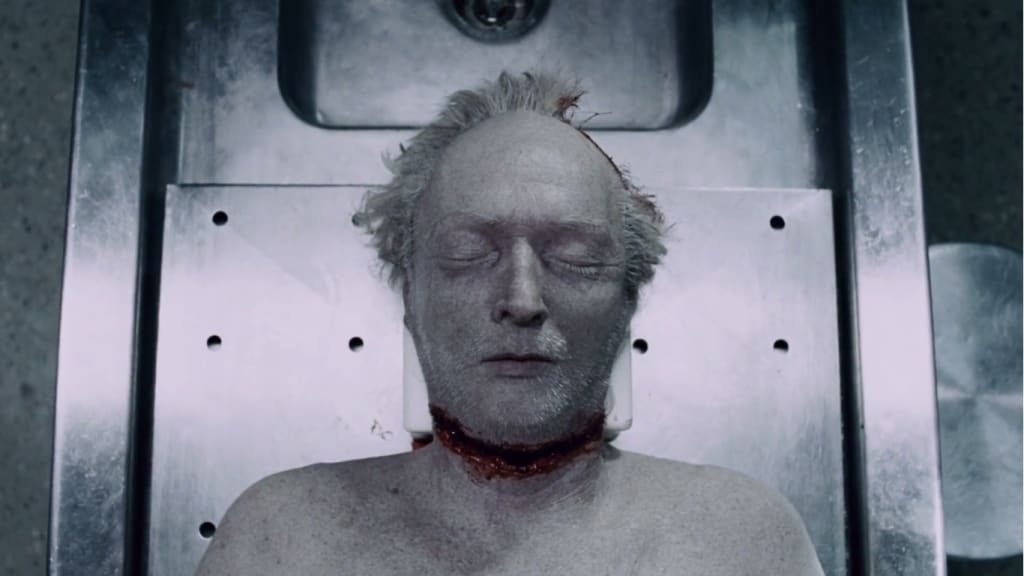
Saw celebrates humanity while exploring its degradation and destruction. The point of the series has always been about the character of Jigsaw, played by Tobin Bell, teaching the lecherous and lethargic to appreciate the gift of life. It's a bizarre and ingenious idea for a horror film and, in its fourth installment, Saw brought both closure and new beginnings to its stories of human misery, sadness and redemption.
As we rejoin the multiple running storylines of the Saw series in Saw 4, Jigsaw (Tobin Bell) is dead. The film makes this point quite clearly as we witness his autopsy in graphic detail. Of course death is not entirely a barrier for Jigsaw and his teachings. No, he is not supernatural, nor does he return in non-corporeal form. Rather, Jigsaw, aka John Kramer, has left one more message and a series of tests for people who have failed to appreciate their lives.
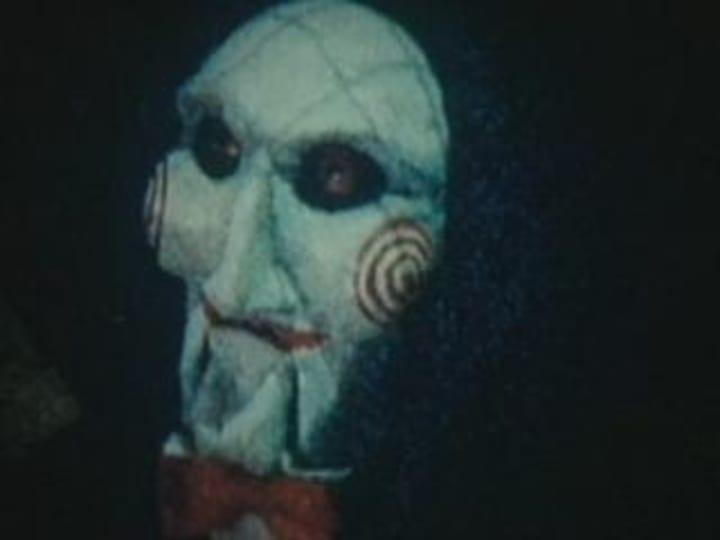
One of those men is Officer Rigg (Lyriq Bent). Having witnessed the disappearance and death of his closest friends, detectives Matthews (Donnie Wahlberg) and Kerry (Dina Meyer), Rigg is obsessed with the Jigsaw case and the idea that Matthews may not be dead. Keep in mind, Matthews' body has never been found. Rigg's pal detective Hoffman (Costas Mandylor) is more certain of Matthews' death and tries to encourage Rigg to take time off.
Naturally, and because his story drives the plot of Saw 4, Rigg doesn't take time off and thus begins Jigsaw's newest lesson plan. Meanwhile, a pair of FBI agents, Strahm (Scott Patterson) and Perez (Athena Karkanis) join the investigation and are soon swept up following Rigg on his path to Jigsaw's ultimate lesson.
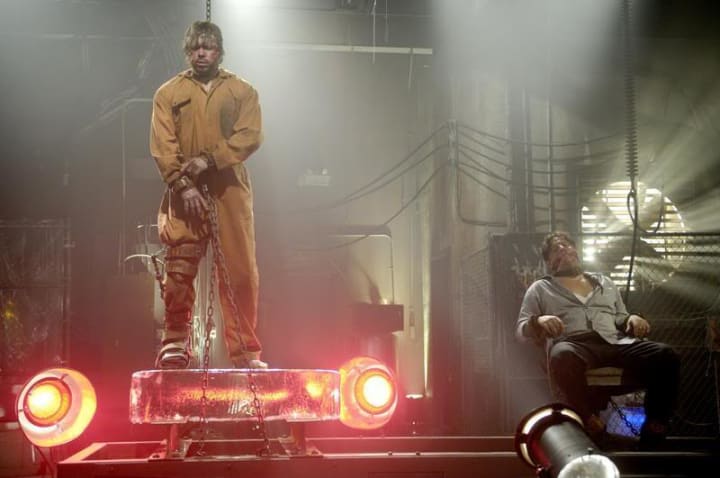
What makes the Saw movies so exceptional is the canny way they challenge the audience to confront moral questions. Jigsaw teaches lessons to his victims and offers them the opportunity to save themselves if they are willing to give up something of themselves. That something is often a pound of flesh, but those brave enough to do it come out the other end forever changed.
The screenplay by Patrick Melton and Marcus Dunstan, like the ones crafted by Leigh Whannell before them, never asks the audience to identify or agree with Jigsaw and his extreme rehabilitation techniques. Rather, they are all about challenging the audience and these characters to make tough moral decisions about right and wrong and good and evil. The 'what would you do' scenarios are frightening, challenging, and amp up the tension in already suspenseful scenes.
If I have a quarrel with Saw 4 it is that the film is lighter on the Saw philosophy than the previous sequels. Saw 4 asks challenging questions and places difficult roadblocks in front of its characters but the moral questions aren't quite as tough and torturous as in the previous films. Director Darren Lynn Bousman makes up for it by increasing the suspense but I do wish the film were a little smarter about it's moral quandaries.
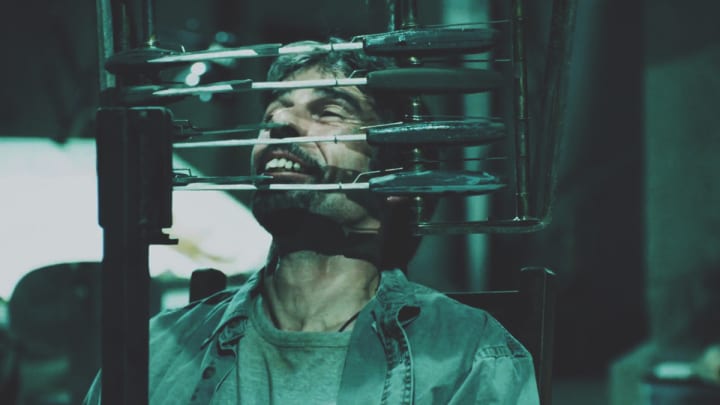
While I have always highlighted the unique and challenging philosophy of the Saw series, I have undersold the suspense and scares of the franchise. The implements of torture crafted in Saw 4 aren't as ingenious as in previous Saw films but as captured by director Darren Lynn Bousman they have a great deal of suspense and surprise.
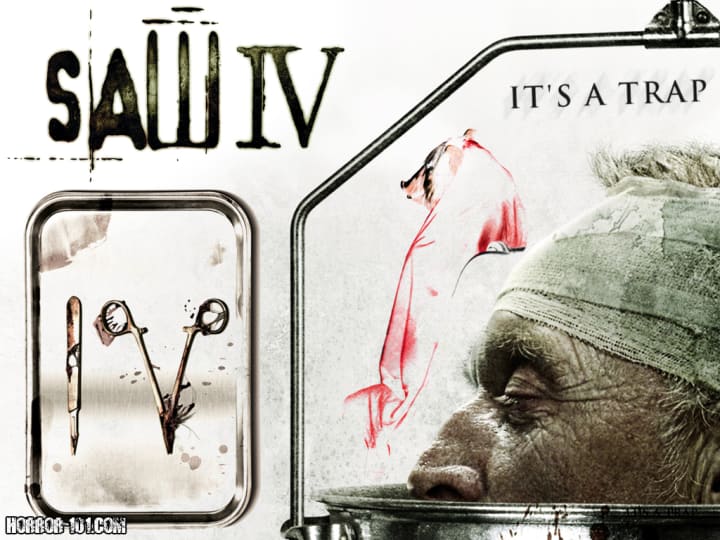
Nothing that happens in the Saw movies that doesn't have some kind of payoff. There are no extraneous plots, nothing that won't come back later and that is one of the things that makes these movies so brilliant. The attention to detail in the plot and the way all of the movies have been tied together is extraordinary and unlike anything we've seen in a genre known for repetitive bloodletting with little care for storytelling.
Some could argue quite fairly that the shifts in timeline that each of the Saw films have used is something of a cheat. You cannot, however, argue with the results. The tricks work, leaving audiences gasping and trying almost in vain to put the pieces together in their proper order. The twists in each of the Saw films are as strong as anything M. Night Shyamalan has pulled off and you can see from his recent work how difficult it is to fool audiences.
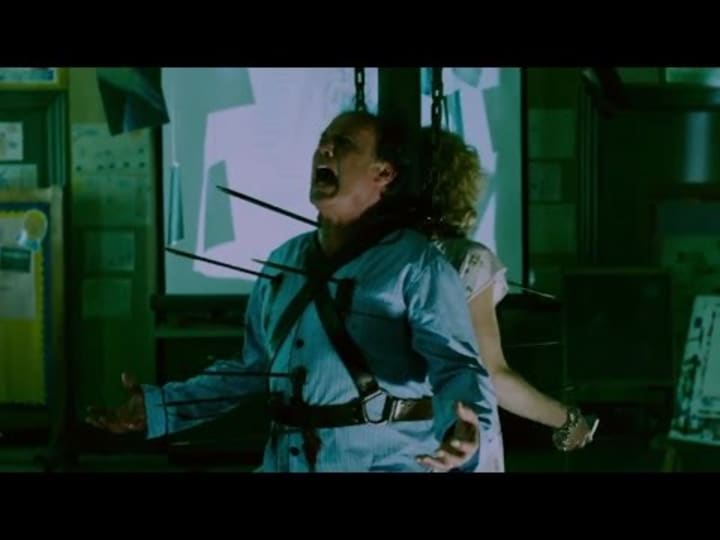
Saw 4 is a little light on the Saw philosophy but director Darren Lynn Bousman showed in Saw 4 that he was becoming more comfortable than ever behind the camera and works this material into, arguably, the most suspenseful film of the series. The scares are as strong or stronger than in previous Saw movies and as a long time fan I enjoyed the clever ways Bousman paid off old storylines and sets the possibility for future stories.
About the Creator
Sean Patrick
Hello, my name is Sean Patrick He/Him, and I am a film critic and podcast host for the I Hate Critics Movie Review Podcast I am a voting member of the Critics Choice Association, the group behind the annual Critics Choice Awards.
Keep reading
More stories from Sean Patrick and writers in Horror and other communities.
Movie Review: 'Nobody'
Hutch is a rather diffident fellow, a serious normie, on the surface. Hutch's life rarely changes from day to day. He has a routine like clockwork, a seriously boring marriage, on the brink of collapse from the weight of apathy, and two normie kids. It appears, again, on the surface, to be a painfully normal existence. And yet, something in Hutch’s manner causes you to wonder about him. His workouts are rather intense for a man whose life is spent behind a bean counter desk.
By Sean PatrickExclusive • 5 years ago
The Vanishing Lighthouse Keepers
The Flannan Isles Lighthouse stands on the largest of a group of remote islands in the Outer Hebrides of Scotland, built in 1899 to warn ships away from dangerous rocks that had claimed countless vessels over the centuries, and it was staffed by teams of three lighthouse keepers who rotated in shifts to maintain the light and keep detailed logs of weather conditions and everything that occurred during their watch, following strict protocols established by the Northern Lighthouse Board that governed every aspect of their duties and responsibilities. On December 26, 1900, the relief vessel Hesperus arrived at the island to bring supplies and rotate the keepers, but when Captain James Harvey approached the landing area, he immediately sensed something was wrong because there was no flag flying on the flagpole as there should have been, no storage boxes waiting on the platform for the supplies being delivered, and no keepers waiting at the landing to help secure the boat and unload the cargo as protocol required, and when he sounded the ship's horn repeatedly and fired a flare to signal their arrival, there was no response from the lighthouse despite the fact that someone should have been on duty and watching for the relief vessel.
By The Curious Writer2 days ago in Horror


Comments
There are no comments for this story
Be the first to respond and start the conversation.