
Most Scary Japanese Urban Legends
By Soman Goswami


1. Kuchisake-Onna (The Slit-Mouthed Woman)
Kuchisake-Onna, or "The Slit-Mouthed Woman," is Japan's most infamous urban legend. Her story dates back to Japan's Edo period but gained notoriety in the 1970s when people testified that they saw her, causing panic across the country. According to the legend, she is an avenging spirit of a horribly disfigured wife, whose husband, suspecting her of adultery, slit her mouth from ear to ear, giving her the haunting, permanent grin.
Her Terrifying Pursuit
Kuchisake-Onna is supposed to emerge at night on desolate streets wearing a surgical mask. She will accost her victims, typically children or young adults, and ask, "Am I beautiful?" When the victim responds in the affirmative, she will remove her mask to reveal her grotesquely scarred visage and then repeat the same question again. The second "yes" usually leads to a horrific death, as she cuts up the victim to make her look the same. Answering "no" also ends in violence. To escape, one must confuse her with ambiguous answers like "you’re average" or distract her by throwing candy.
Cultural Impact
The legend of Kuchisake-Onna has inspired many films, novels, and even studies on the psychology of society in terms of their focus on appearance and fear of the grotesque. Her legend remains a haunting lesson on how jealousy and violence may leave deep, physical and emotional scars.
2. Teke Teke
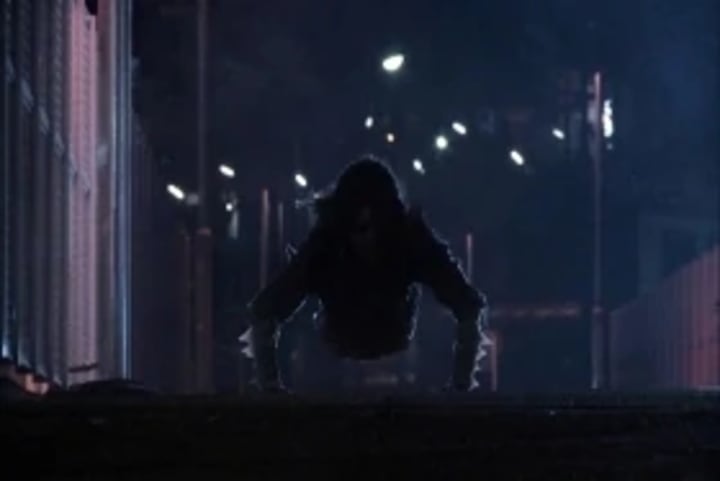
Teke Teke is a tragic horror story based on a betrayal and death through accident. The tale is about the ghost of a young woman who was cut in half by a train after falling (or being pushed) onto the tracks. She died so violently and abruptly that her spirit remained restless, looking for revenge.
Her Terrifying Pursuit
Teke Teke is said to roam the railways and urban areas during dusk. She runs dragging her upper torso along with her hands or elbows as she goes about while making a scary "teke teke" sound. In other versions, she carries a sickle or blade and runs extremely fast; she's so fast that mere running is useless. She chases the victims and cuts them into half, a sad reminder of her own butchering end.
Regional Variations
Some versions of the legend claim that she was bullied and roughly pushed onto the tracks and therefore, she is the symbol for what has been called the result of cruel society.
Her legend also warns against loitering near the train tracks, or alone at night .

3. Aka Manto (The Red Cape)
Aka Manto, or "The Red Cape," is said to haunt public toilets, especially schools. His legend goes like this: There is a dreadful choice that seals the fate of the less unfortunate person who encounters him.
The Legend of the Choice
Aka Manto Materialises in front of anyone using the last toilet in a set of toilets. An disembodied voice asks, "Do you want red paper or blue paper?" Red: you die violently, throats slashed so that your clothes resembles red paper. Blue: you suffocate or bleed to death, leaving you pale and lifeless. Failure to answer, or an ambiguous reply such as "no paper", is the only way to get out.
New Symbolism
It is an urban legend that deals with the fear of enclosed spaces and inability. A toilet setting is taken to heights of vulnerability; something mundane becomes a nightmare. Aka Manto is also one of the Japanese staples taken to an iconic status.

4. Hanako-san
Hanako-san is a more lighthearted and yet as disturbing of a myth. She's said to be a ghost girl who terrorizes school bathrooms, especially in the third stall of the restroom located in the third floor. She's indeed a widely popular myth among children, rendering curiosity with fear.
How to Summon Hanako-san
To invoke her, one has to knock three times on the door of the stall and ask, "Are you there, Hanako-san?" If she replied weakly with, "Yes, I am," then the door opens to supposedly reveal a ghostly girl in a red skirt. Some accounts tell it to be innocent, while others say she drags the summoner into the toilet, where she is never seen again.
Origins of the Legend
The history of Hanako-san is different. Some say she was an air raid victim during the world war in a school bathroom. Others claim she was one of the victims of bullying or an accident. Her tale reminds one on how unended sorrow and innocence are lost in tragedy.
5. Gashadokuro
Gashadokuro is a large, bony spirit, also said to be composed of the skeleton of those who died from starvation or war. It is said to be roaming about at night, towering over buildings, crushing down unfortunate travelers under its gigantic hands.
What's a sign of Gashadokuro
The onset comes in the form of a ringing chill, which is called kanashibari. That is when you hear that and experience such intense fear, and by the time it happens, it has become too late. The spirit catches its prey, nipping their head off or crushing their brains.
Historical background
This legend has been as old as Japan's past, especially during times when people died in masses with many bodies left unwrapped. The Gashadokuro signifies the unresolved sorrow of these souls since in Japanese culture, proper burial rites are pivotal.

6. Kisaragi Station
One of the most interesting modern Japanese urban legends is Kisaragi Station, or "The Demon Station." It's actually a train station existing in another world, from which people cannot return back to our world.
Legend of Ghost Station
The legend gained momentum from an Internet post in which a user recounts first-hand experience in boarding a train at night and, upon reaching an unknown station called Kisaragi, there is eerie silence with no signs of life, and like getting caught in a trap. They tried all types of contacts but nobody knew such a station. It just ended, and readers got to imagine what had happened to the user.
Themes of Isolation
Kisaragi Station is depicted as fear of the unknown and vulnerability that entails being lost in a strange place because one is alone. The modern-day fears that the legend employs are such aspects like technology breaking down when it is supposed to act in the most crucial times and feeling one is not attached to reality.
7. The Cow Head Story (Gozu)
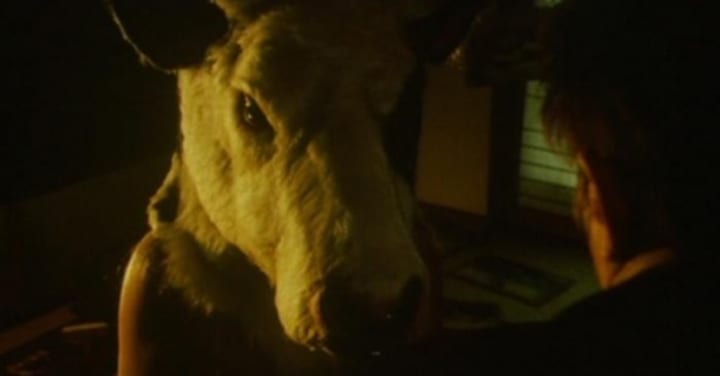
Legend of the Cow Head or Gozu. Origins unknown. It claims that the tale itself is so terrifying that anyone who listens to it eventually succumbs to uncontrollable fear, dying from a heart attack or insanity.
Why is it so dangerous?
The origin of the legend is unknown, but there is a belief that all there is now is the broken forms of the legend for the simple reason that those who tried to write it or read it en bloc mysteriously died.
Teaching figures in the legend who used the legend to teach the pupils somehow discovered that the whole classroom fell into a state of panic or frenzy.
Myth or Reality?
The Cow Head legend is another aspect of forbidden knowledge that plays on the natural curiosity of humans and tells them that some truths are better left undiscovered. Its elusive nature only makes it much more chilling.
Conclusion
Japanese urban legends are both frightening and interesting. They represent a kind of merger between ancient fears from old cultures with modern anxieties about living nightmares-like the vengeful spirits-Kuchisake-Onna, the supernatural eerie phenomenon of Kisaragi Station, and others that touch universal feelings-unknown fear, regret, or consequences of acts.
Through insightful social issues, historic events, and archetypical psychological consequences, the works throw a higher dimension to the factors that will make the chilling cool. They powerfully express the nation's story-telling tradition reminding us about the thin veil between reality and the supernatural.
About the Creator
Keep reading
More stories from soman Goswami and writers in Horror and other communities.
Top 10 Supernatural Activities in Horror Movie Sets
Horror movies have enthralled audiences avec leurs dreadful tales et spine-tingling visualizations. But what's there when the eerie experience transcends into the real world ? A myriad of horror movie sets have reported unexplained supernatural activities, sometimes spine-chilling ; thus, many believe it transcends the eye and goes straight into the soul. We delve into some of the most fantastic and hair-raising reports of paranormal activity on horror movie sets, asking if, indeed, art imitates life-or the paranormal.
By soman Goswamiabout a year ago in Horror
"Scream 7" (2026): Running out of Fresh Screams
This is the seventh time we’ve had a Ghostface crisis. Scream 7 is the latest edition of the Scream franchise. Sydney Prescott and her family are under attack by another anonymous killer dressed in a Ghostface costume. While having issues with her daughter, Tatum, they run from the bloody murders, trying to determine who is behind it all.
By Marielle Sabbag8 days ago in Horror
Architecture of the Scythe Pt. 4/5
The Geometry of a Fugitive Rain in the District of Rust doesn't wash things clean; it just turns the soot into permanent, oily stain. The kind of rain that feels like it’s trying to dissolve pavement, a slow-motion acid bath for a city that has already lost its soul.
By Nathan McAllistera day ago in Horror


Comments
There are no comments for this story
Be the first to respond and start the conversation.