
Inside Korea’s Most Haunted Place: The Chilling Mystery of Gonjiam Psychiatric Hospital
Abandoned halls, unexplained screams, and vanishing visitors—this asylum outside Seoul is more than just an urban legend.
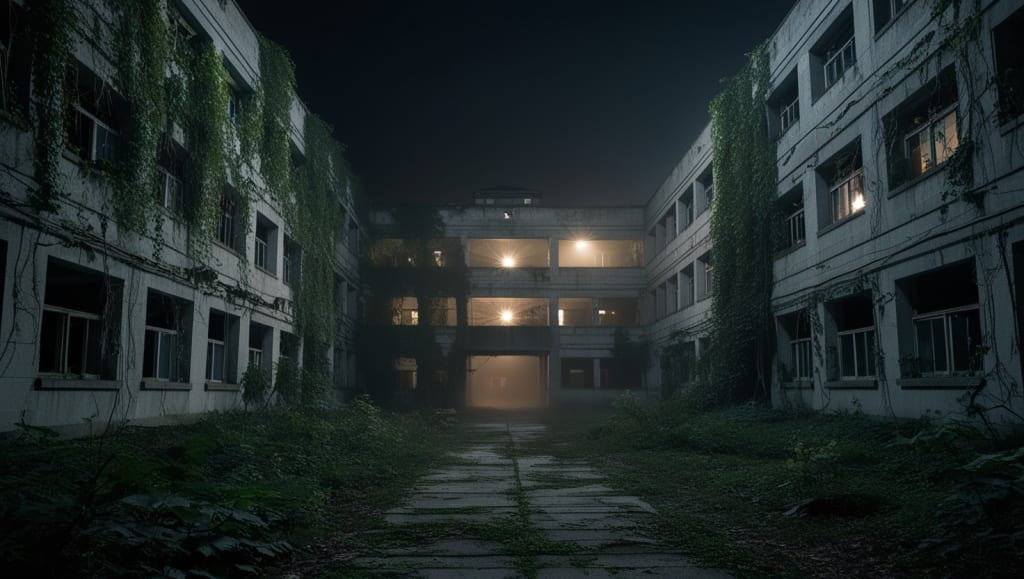
In the calm hills of Gwangju, South Korea, there exists a structure, shrouded by barbed wire and overgrown plants, that has frightened residents for many years. Its decaying walls, rusty bed frames, broken windows, and a silence that feels almost tangible create an unsettling atmosphere.
This scene is not from a horror film. Instead, it is Gonjiam Psychiatric Hospital, often described as the most haunted site in South Korea and one of the creepiest real locations worldwide.
The focus of this article is not on make-believe. It highlights the genuine echoes in vacant corridors, actual screams with no origin, and the true stories of individuals who entered and came out forever changed.
The Beginning: A Place for Healing?
The precise genesis of the hospital is still mostly a mystery for the public. Originally established in the early 1960s, Gonjiam Psychiatric Hospital served the local population as a mental health facility. For years it operated as a conventional psychiatric institution, discreet, clinical, and private.
About tales, though, started to surface in the late 1970s and early 1980s. Reports indicate that staff sometimes leave suddenly, sometimes without even taking their last paychecks. Patients were reported to vanish for no obvious reason. The family of the deceased said their loved ones had died behind closed doors under enigmatic conditions.
By the 1990s, locals had started calling the hospital the eerie name The Hell House.
Following that, in the late 1990s, the hospital closed suddenly with neither official notification nor media exposure. No reason was presented. Equipment was still available, and medical records were still lying on tables.
Gonjiam is so unsettling because of the strange break in time mid-shift. Someone—maybe something—appears to be getting ready, expecting the rest of the narrative.
The Legends: Where Fiction and Fear Collide
The stories about Gonjiam are genuinely terrifying.
Local legend has it that a deranged director managed the hospital with merciless tactics. Patients were shut away and tortured rather than getting medical attention. Some claim he conducted unethical experiments; others believe he lost his mind and vanished into the mountains.
Room 207 is said to be where the walls ooze blood and the air smells like rot and rust, Anyone who enters is said to be cursed; some come out with unexplained scratches, others never make it out.
Teenagers from neighboring towns often test each other to investigate the hospital after dark. Many log their travels in the hopes of online recognition. A few of these adventure seekers, nevertheless, vanished without a trace. Still recording, their voices cut off in mid-sentence, their phones were found.
Obviously, cynics claim all these stories are just myths and urban legends. They consider it a Korean version of "The Blair Witch Project." Still, standing in the eerie hallways of Gonjiam, surrounded by graffiti, ancient restraints, and the whispers in the air, the boundary between fantasy and reality starts to blur.
Paranormal Reports: Too Many to Ignore
Paranormal investigators, thrill-seeking vloggers, and even some journalists have visited Gonjiam over the years. Many report the same phenomena:
Sudden drops in temperature
Feelings of being watched
Disembodied voices, often crying or screaming
Doors slamming shut on their own
Camera batteries draining within seconds
Apparitions in hospital gowns drifting through corridors
One viral YouTube video by a Korean exploration group showed a team entering the building around midnight. Their camera caught a shadowy figure peeking from around a corner—only for the hallway to be completely empty seconds later. The video has since been analyzed frame by frame by experts. No explanation was ever given.
Some say the building acts like a sponge for trauma. That the agony once held within its walls still echoes, waiting to feed on the fear of the living.
Government Warning: Keep Out
The South Korean government is not renowned for entertaining ghost stories. They have attempted to limit Gonjiam's access, though.
This site is on private land, hence illegal trespassing is a criminal offense. Barbed wire surrounds the region, and caution signs in many languages are posted. Although authorities assert this is for "public safety," residents believe the government has secrets to conceal.
Gonjiam: Haunted Asylum, a horror film from 2018, reawakened world interest in the institution. Though it is a work of fiction, the film was shot in a place like to the actual one and drew on local legends. It became a commercial success, drawing a fresh flow of daring tourists wanting to visit the location.
One visitor in 2019 was allegedly discovered in a state of shock and needed medical care after having a panic attack in the basement of the hospital. Friends of hers said she started speaking in a voice unlike her own.
So, Is Gonjiam Really Haunted?
That depends on what you believe.
On one hand, it’s an abandoned mental hospital. That alone sets the scene for fear, imagination, and urban myth-making. On the other hand, there are just too many stories, from too many sources, over too many years, to write it all off.
What’s undeniable is that Gonjiam feels wrong. Even those who don’t believe in ghosts often report deep unease inside. Some say the building seems to breathe. Others say it’s watching you back.
Whether haunted by spirits, trauma, or the imagination of a fearful mind—Gonjiam remains a place where reality slips, and nightmares thrive.
Final Thoughts: A Dark Mirror to Our Fears
We often think of horror as fiction—jump scares and spooky tales we can leave behind when the credits roll. But Gonjiam Psychiatric Hospital forces us to face a darker truth: some places carry real pain. And sometimes, pain doesn’t leave when people do.
Would you dare to walk those halls? Listen for whispers in the silence? Peek inside Room 207?
Just remember: some stories don’t end—they wait.
About the Creator
Keep reading
More stories from Shahjahan Kabir Khan and writers in Horror and other communities.
What They Found on the Dark Web Will Haunt You Forever
Introduction: Welcome to the Internet’s Darkest Corner The internet, despite its many benefits, has a darker aspect. Beneath the shiny surfaces of Google, Instagram, and YouTube exists a concealed network of encrypted sites known as the Dark Web. This area is deliberately hidden from regular search engines. While some parts may be innocent forums or spaces for whistleblowing, others expose the terrifying depths of human nature.
By Shahjahan Kabir Khan7 months ago in Horror
Nightmare Navigation
Dressing room maze. Where is the exit? Room ✇- bad man, mirror mannequin. He’s looking into the mirror and through me. Keep moving. Lost. Lost. I wish this was a dream. This is a dream. Why can’t I get this tag off my wrist? Black tag. Call ⧫⌘⌘. “Hello?” Static, mumble. “Hello?” Don’t call here again. Keep moving. Shit- Room ◉ again. Stop. Stifled breaths. Choking. Gurgling. Wake up!
By Bride of Sound3 days ago in Horror



Comments (1)
It’s obvious the "author" or chatGPT bot doesn’t know what they’re writing about. The Gonjiam hospital was never haunted and nothing written there is true. It was simply a hospital that had to close quickly because of a poorly designed sewage system, and the people responsible fled abroad. No ghosts, no hauntings. I personally visited it before it was demolished. Because you do know it was demolished, right? Do your research better