
'Hereditary' and the Potential Beauty of Horror
A Spoiler-Free Examination of How This Film Took a Genre in Desperate Need of Revolution and Showed the World How to Perfect It
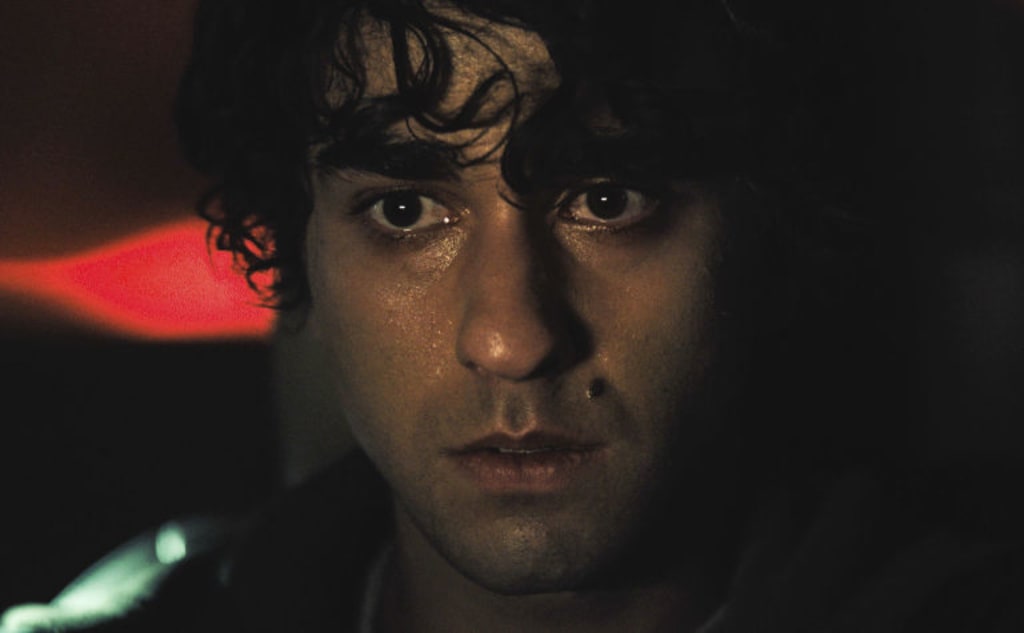
It's no secret that modern day horror is often lacking in true artistic value, genuine passion, and sound motivation. More often than not, directors and producers use horror films as a vessel to secure ticket sales by the disposable income Gods that are the teenage demographic, who they assume (an often correct assumption) will buy tickets no matter the true quality of whatever they're seeing. And this is fine, I suppose–film is an industry in which many have money as some kind of goal. But the sad part of this is that horror has begun to lose its true value as a storytelling genre and medium of creativity. Sure, in the modern day we've had stunning horror such as 2014's The Babadook or 2016's Raw, all of which have received critical acclaim for their artistry and production. But it is an undeniable fact that for every Get Out, there are a dozen The Bye-Bye Mans, Truth or Dares, or rehashes of old films that had absolutely no need to be remade.
This is why we so, so desperately needed Ari Aster's Hereditary.
Have you ever been watching a film, and you watch a scene, and you know at that instant you'll never forget it? There is one particular scene in Hereditary (I won't spoil it, but perhaps you'll know what I'm talking about if you've seen it) which mostly consisted of a still image which stayed on the screen for ten or so seconds. I remember thinking to myself: "Yeah, this is it. This is why they hyped up this movie so much. This is scarring me." And the kicker is, it wasn't a jump scare by any means. Hell, the movie barely had any jump scares. It was pure, imaginative, horrifying imagery.
This is the potential beauty of horror. Horror provides the means to some of the most imaginative situations known to film, and prevails among other genres in this category. While many genres (save for fantasy, science fiction and the like) are restrained by the physics and general manifestation of human behavior in the real world, horror has the ability to do more with it's plot. Further, horror is essentially the only genre that has permission to explore what may be the most prominent human emotion—fear. True fear. Fear of the unknown, fear of the psyche, fear of all things we have not encountered and essentially have no defense against. Fear drives every action people take, to some extent, at the very least. And oftentimes, this is the fear of loss. Hereditary manages to incorporate loss, grief, and the subjectivity of these experiences into each of its thematic elements as a sort of catalyst to the whole thing. Each event is sparked by loss itself, or the fear of loss—be it the loss of power, a loved one, or understanding of the very world each character has spent their entire life within.
Hereditary's medium is emotion. Its story was convoluted in the most beautiful and purposeful of ways, just as the true inner lives of people are. This film does to its viewers what every horror—hell, every film—should try and do to its viewers. If you were on the fence about seeing this movie, go. It will scare you, it will crawl into your skin and horrify you from the inside out. It is a work of art, a work of fear, a commentary on the human condition like none you've ever seen.
About the Creator
hannah brostrom
movies!
Keep reading
More stories from hannah brostrom and writers in Horror and other communities.
'Escape Room' and Low Expectations
There's something of a stigma that comes with PG-13 movies, and rightfully so. It's an extremely fruitful audience–attracting teenagers not yet seventeen, the heart of profit. PG-13 horror is practically a riskless market, and thus, houses some of the most passionless, terrible, cash-grab films of their respective years. And it works.Truth or Dare, a movie with a 15% on Rotten Tomatoes and an even more dismal average audience reaction, grossed almost a hundred million dollars worldwide. A hundred million. Ouija, sporting an even lower 6% on RT, made over a hundred million. You'll find similar examples littered through the past decade: Slender Man, Wish Upon (what is it with Joey King and these movies?), The Lazarus Effect—it happens incessantly. As much as I want to fault these filmmakers for their unending heartless production, I understand where they're coming from. It's a profitable market.
By hannah brostrom7 years ago in Horror
He wasn't Santa
He wore black instead of red and he had a gaunt face. His teeth were yellow and jagged. He spoke in a dialect not of this world. There was a lot of clicking of his forked tongue when he spoke. He handed little Judy Miller a shiny red box. She took it and watched as the creature walked out the front door. She stood there a moment or two looking at the package. She wanted to open it. The present was from Santa, or so she thought. She placed it under the tree and headed up to her bedroom. She curled up all nice and comfy in her bed. She fell asleep and entered a nightmare. She went downstairs to find her parents, Stacy and Jeff butchered beyond recognition. She also found her little brother Donny; he was dead as well. She woke up crying.
By DJ Robbins5 days ago in Horror


Comments
There are no comments for this story
Be the first to respond and start the conversation.