
Ghosts of the Secret City: The Haunted Caves of Viengxay, Laos
How a Hidden War Sanctuary Became Laos’ Most Eerie Ghost Site
The Secret City of Viengxay: A Ghostly Legacy of War and Survival
Deep in the mountains of northeastern Laos, shrouded in mist, is the Secret City of Viengxay, a ghostly testament to one of the 20th century's greatest atrocities. During the Vietnam War, this limestone cave city was a refuge for Lao civilians and thousands of communist Pathet Lao soldiers from daily U.S. bombing raids and thus it came to be "City of Victory." Now its history as a site of survival is combined with spooky tales of residual hauntings, so it is one of Laos' most historic and haunted locations.
A Hidden Fortress: The History of Viengxay
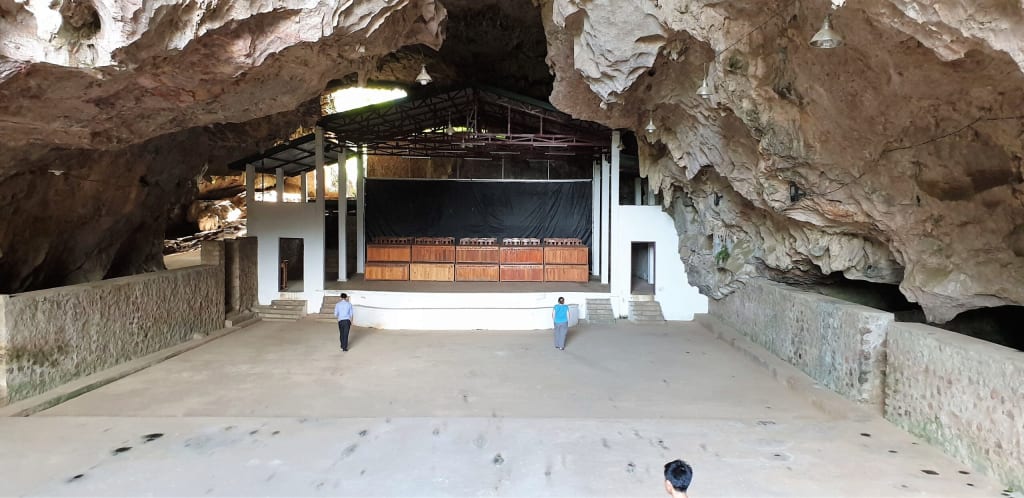
From 1964 to 1973, the Viengxay caves were an underground refuge for over 20,000 people, from political elite to soldiers and families fleeing the "Secret War"—a U.S.-led bombing campaign that rained down over two million tons of explosives on Laos, a quantity that surpassed all the bombs used in World War II. The Pathet Lao developed these natural caves into a complete city with hospitals, schools, bakeries, military barracks, and even a theater with purportedly world-class acoustics for morale-boosting performances. Life in the caves was a bleak balancing act of survival and resistance.
Farmers tended fields at night to prevent detection, and children went to school underground. The damp, claustrophobic confines of the caves were complemented by the ever-present threat of bombings. One bomb crater near Prince Souphanouvong's residence, a prominent Pathet Lao leader, was later reshaped into a heart-shaped pond to symbolize the "90% of Lao who loved their country". Despite all these hardships, Viengxay became a fountain of resistance, its residents living in siege-like conditions for nearly a decade until the 1973 ceasefire. Following the war, Viengxay caves were left behind, their history shrouded in secrecy. But since the start of the century, the Lao government has actively promoted the site as a memorial, comparing its significance to Vietnam's Củ Chi tunnels. Tourists now navigate the decaying infrastructure of the caves, where rusted oxygen pumps, improvised furniture, and torn propaganda posters are permanently suspended in time.
Whispers from the Past: Spooky Evidence
Trauma to Viengxay's past has left an indelible mark on its atmosphere. Visitors and locals tell of a crushing sense of sadness permeating the caves, best described as a "palpable weight" in the air. Guides tell of disembodied voices whispering through corridors, voices of those who perished due to bombing or disease in the unsanitary, cramped conditions.
Most poignant of all is the memory of the cave theater, where for a short while horror was suspended. People visiting today say they have heard disembodied applause or the faint sound of music drifting from the cavern, as though by the residual echoes of war-time defiance. Others experience sudden cold spots, particularly around the hospital caves, where rusted surgical tables and medical equipment presage the pain that had occurred within.
Symbolic gestures contribute to the macabre atmosphere. Red flowers called "blood leaf" are scattered throughout the entire landscape, planted as a memorial to bombing victims. At night, the wailing of stray dogs—a wailing locals associate with restless spirits—is added to the tension. Even the landscape is marred: karst hills, now miniature peaks, were sliced off by bombs, their rocky stumps remaining as sentinels like ghostly guards.
Between History and Haunting
Viengxay's phantom popularity is inseparable from its war trauma. For the Lao, the site is a collective memory of death and survival, where the divide between the living and the dead appears tenuously thin. Rituals, such as offerings by Khmu hill tribes to jungle spirits, tell of a cultural belief in appeasing disturbed dead. And in spite of this, the caves also continue to be a strong symbol of resistance, where people came together to create a network of shelters one of strength. Visitors to the caves today are faced with this paradox: the caves are both a historical site and a site where history is more uncomfortably real. As one visitor once put it, "Walking through Viengxay is like stepping into a shadow of history—one that still breathes". Whether the result is psychological reverberations of trauma or something more paranormal, the Secret City's grisly appeal is in bringing the wounds of war starkly to life.
Conclusion
The Secret City of Viengxay is a remnant of war but a living testimony to human resilience and a reflection of the violent past of Laos. Its haunting reputation, built on the collective grief of a nation, ensures that the tales of those who lived—and died—inside its caves remain written on the earth. For the intrepid who venture into its interior, Viengxay offers not so much a history lesson, but an encounter with the indelible scars of survival.
About the Creator
Kyrol Mojikal
"Believe in the magic within you, for you are extraordinary."
Keep reading
More stories from Kyrol Mojikal and writers in Horror and other communities.
Ghosts of the Death Railway: The Haunted Legacy of River Kwai & Hellfire Pass
The Haunted History of River Kwai Bridge and Hellfire Pass, Kanchanaburi A Legacy of Suffering River Kwai Bridge and Hellfire Pass, Kanchanaburi, Thailand, are etched in history as a testament to human endurance and war violence. During World War II, the Japanese Imperial Army forced over 60,000 Allied prisoners of war (POWs) and 200,000 Asian laborers to construct the 258-mile Thailand-Burma "Death Railway" under inhumane conditions. The railway was to supply Japanese troops in Burma, but its building came at a ghastly cost: Approximately 16,000 POWs and 90,000 Asian laborers perished from starvation, disease, torture, and exhaustion.
By Kyrol Mojikal9 months ago in Horror
OBLIT
This is me. My name is Oblit. It's odd, isn't it? I live on an island. Well, at least I think I do. I haven't seen anyone else in a long time, so I assume I do. I live inside a little house - it's quaint. A five-windowed bungalow, built on a street with only half-constructed houses all around. The lights don't light up at night - and the various concrete and plaster walls that decorate the plain green field only serve as props to my living. I live inside 1557 Rangolin Street. One front door, one back. A modest little backyard with benches and various plants sprouting from scattered pots. Two sets of gardening tools, one for me, one in case I forgot the other.
By Albert Xiong6 days ago in Horror


Comments
There are no comments for this story
Be the first to respond and start the conversation.