
Feminist Film Theory in a Meta Horror Film
An Essay on The Cabin in the Woods

**Spoilers**
American teen horror films have a set formula. Characters fall into infamous tropes; jock, slut, voice-of-reason main character who always lives, etc. These overused tropes show up again and again, to the point where audiences and even filmmakers want a change.
Originally marketed as a comedic horror, Joss Whedon and Drew Goddard’s film, The Cabin in the Woods, challenges these overused notions in the greatest way possible, poking fun at them in a way that makes the audience wonder if the film is just a self-aware body of excellence or a shout of defiance to its original movie studio.
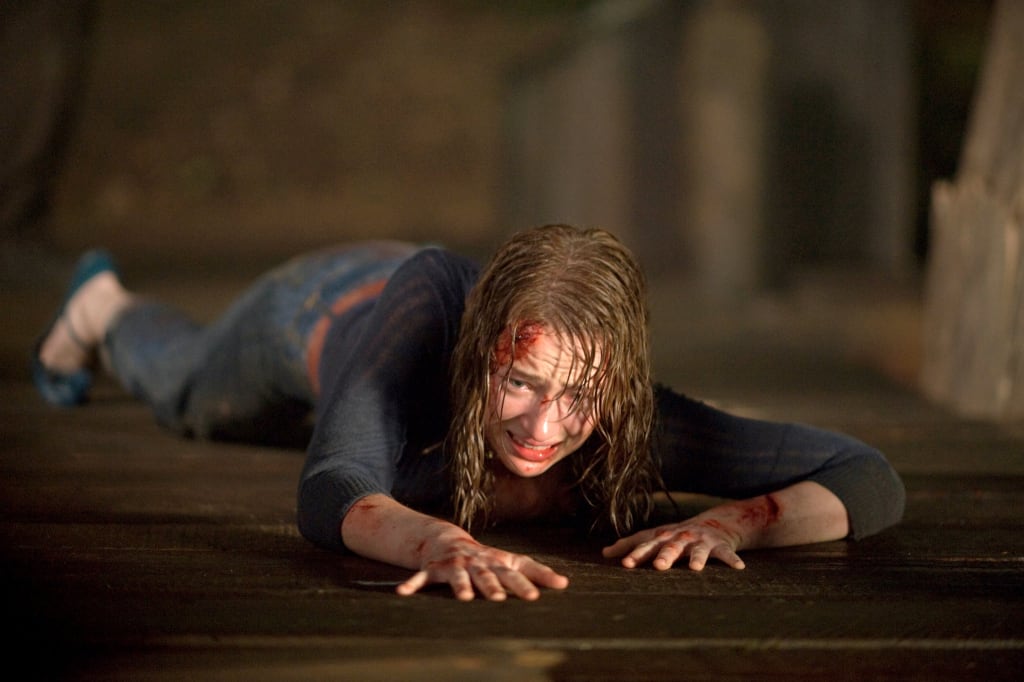
The Cabin in the Woods challenges the negative perceptions of female sexuality seen in teen American horror. Several minutes into the film, the main character Dana packs for her upcoming trip wearing a tee-shirt and underwear. Next, Dana's outgoing friend Jules suggests she should bring a bikini in hopes of getting lucky with Holden, Dana’s love interest. Through their conversation, it is stated that Dana is sexually active and it is implied that these characters have previously had sexual experiences. This throws off the contrasting ‘virgin vs slut’ dynamic seen in many American horror films.
Once the group of friends has arrived at the cabin (as planned), they are gradually tricked into identifying with these archetypes. Dana is the ‘virgin’, Jules is the ‘slut’, Curt is the ‘alpha-male’, Holden is the ‘scholar’, and Marty is the ‘fool’. The film interestingly challenges the negative perceptions of female sexuality in Dana and Jules by allowing dissonance within the dialogue shared by the friends. Once the initial change has begun, Curt begins to refer to Dana as a virgin even though it was explicitly stated at the beginning of the film that she is not.
In another scene, during a slightly awkward conversation between Holden and Dana, she mentions Jules is studying pre-med, which establishes her scholarly ambition and intelligence. In the following scene, Jules is emotionlessly called a ‘dumb blonde’ by Sitterson, one of the mysterious lab workers not only is responsible for the behavior change among the friends but whose purpose is to help kill these characters to fulfill the film’s ‘prophecy’. This dumb blonde/pre-med student contradiction shows that The Cabin in the Woods is aware of this unofficial horror film rule: the ‘slut’ cannot be sexual and smart at the same time. She can only be one, which draws attention to the “woman as the image/ man as the bearer of the look” concept addressed in many feminist film theories. Further explaining the concept, film theorist Laura Mulvey states,
“The man controls the film phantasy and also emerges as the representative of power in a further sense: as the bearer of the look of the spectator, transferring it behind the screen to neutralise the extradiegetic tendencies represented by woman as spectacle”.
Jules is the image and Sitterson is the bearer of the look (as he watches her on the office monitors). The viewer automatically catches the sarcastic error made in Sitterson’s words because, no. Jules is not dumb, she’s a pre-med major. So, it makes no sense to demote her to unintelligence.
Throughout the film, Dana is sexualized in a virginal ‘off-limits’ way and Jules, being more sexual than the two, is sexualized in a more free-spirited way. Though Dana and Jules helplessly fall into these opposite roles, the cinematography of the film continues to hastily sexualize both of these characters, purposely showing that they ultimately do not differ from one another. To simultaneously sexualize the ‘virgin’ and the ‘slut’ conveys the notion that sexuality is normalized, no matter the circumstance. Dana is not perceived better than Jules because she is depicted as a virgin and vise versa. To simultaneously sexualize the ‘virgin’ and the ‘slut’ may also implicitly demonstrate how these overused tropes are stupid and are being visually made fun of as we watch.
Jules still dies like every ‘slut’ character does, as the plot purposefully uses the ‘promiscuous girls should be punished’ trope that horror films often do. This choice follows the traditional status of the ‘slut’ character in horror films as Linda Williams comments on in the text Film Bodies: Gender, Genre, and Excess.
“While male victims in horror films may shudder and scream as well, it has long been a dictum of the genre that women make the best victims. ‘Torture the Women!’ was the famous advice given by Alfred Hitchcock”.
Yes, Jules gets her head decapitated by a zombie, but since this is a fate that the mysterious lab workers set up to happen, the act is truly being made fun of by the film, giving light to its satirical nature.
The Cabin in the Woods also challenges the overused notions of American teen horror by using the film’s plot as a disguised complaint about the flawed formula so often used in many of these horror films. Watching it very closely, it is easy to notice that though this film is horror, it is first and foremost a satire of the American horror genre. Five friends take a trip to a sketchy cabin that no one in real life would spend the night in. They all start with complex personalities. After they’ve settled into the cabin, many strange things start to happen and they are coerced into specific roles by their controlled environment. Marty, supposed as the ‘fool’ archetype of the bunch, smokes so much pot throughout the film that he is completely immune from the lab workers' environmental coercion, which causes him to pay attention to what is actually happening. He tries to warn his friends that something weird is going on, but they don’t listen to him, assuming he’s just really high. In result, after Jules’s departure, Curt dies as the ‘alpha male’, Holden dies as the ‘scholar’, leaving Dana to realize that Marty was right all along. Joss Whedon and Drew Goddard allow these remaining characters to ‘break the fourth wall’, fighting against the horror teen genre by outsmarting the lab workers at their own ritual. Though they defeat every one of these lab workers with the lab’s database of monsters, mythical creatures, and creepy crawlies, these characters nonetheless still end up dying. But, their fight is considered more respectable, as they remain the last ones sitting before the world ends, staying true to their self-identities.
It’s symbolism at its finest. Dana and her friends symbolize many foreseen archetypes in American teen horror films, which is why they are coerced into acting more like these archetypes toward the middle of the film. Sitterson, Hadley, and the rest of the lab workers symbolize Joss Whedon, Drew Goddard, and the rest of the crew. This is conveyed in the film by the hilarious dialogue between the workers. In the scene where Jules is about to die, Sitterson remarks, saying she can’t die until she shows her boobs. Though this also properly secures the cliché of the ‘slut’ in horror film tropes, this dialogue gives light to the rigid box of requirements that horror films tropes are trapped in. As Sitterson begrudgingly makes sure the rules aren't broken in order to keep his mysterious lab worker job, Whedon and Goddard also make sure the film rules aren't broken so that movie studios are happy.
In another scene of the film, Hadley complains when seeing the characters killed by boring zombies, making a comment that it would have been cooler if they were instead killed by a Merman. This resembles the mind of a writer who is annoyed that he has to water down his awesome idea to get funded or paid by the film studio. According to the film's Wikipedia, “MGM announced that the film would be delayed indefinitely due to ongoing financial difficulties at the studio”. In an interview with Creative Screenwriting, Whedon straight-up says, “Lionsgate didn't make us change a frame and believed in what we were trying to do”. If this is the case, I highly doubt that financial difficulties were the only thing holding the film back from release.
The evil gods that the characters make copious references to symbolize the film’s studio, in this case, MGM. Last but not least, the ‘ritual’ symbolizes the familiar, American teen horror formula. We can guess that Whedon and Goddard wanted to make a different movie than MGM wanted them to make, which sounds to be true because Lionsgate picked up the film after 2 years of being shelved by MGM. Due to the extreme sarcasm in this film’s dialogue and plot simultaneously pairing with the lab worker character’s serious attempts of ‘not angering the evil gods', The Cabin in the Woods reveals itself as Whedon giving MGM the finger in the sense of ‘you wanted a horror film? Well, here ya go’.
In conclusion, The Cabin in the Woods does an excellent job of challenging the overused traditions of American teen horror films. The film’s self-awareness and witty humor add to the charm in the way that makes it a fun movie to watch because it introduces many familiarities to grab the audience in, allowing us to enjoy the film without being able to guess everything that will happen. Though Whedon and Goddard could never offically attest to this film being made with saltiness, it ultimately wouldn't matter if they admitted to it because the film grossed way more than its budget anyways.
References:
Corrigan, Timothy, and Patricia White. The Film Experience: An Introduction. Boston: Bedford/St. Martins, 2018
Williams, Linda, Film bodies: gender, genre, and excess. Film Quarterly (44:4) 1991, 2-13. 1991
Mulvey, Laura. Visual Pleasure in Narrative Cinema - Laura Mulvey - Print Version - Luxonline.
Williams, Linda. Film Quarterly 46, no. 2 (1992): 58-60. doi:10.2307/1213014
About the Creator
Mariah Mickens
linktr.ee/Mariah_Mickens
Keep reading
More stories from Mariah Mickens and writers in Horror and other communities.
How "The Graduate" Inspired the Future of Film
Like a funhouse mirror reflecting a distorted reality, Film often works as an adjusted reflection of its current history. It gives unique commentary on certain social-political views to shed light on new or seemingly hidden perspectives, attaching itself to its audience. Mike Nichol’s film adaption, The Graduate does a great job of this by portraying its time as well as it’s audience in a colloquial way. “There was already a growing dissatisfaction with the status quo and middle-class values, and the breakthrough film mirrored that anarchic mood perfectly for America's youth of the 60s during the escalation of the Vietnam War” says AMC’s Filmsite Review. However, the film also became a classic trope in pop culture, being alluded by many TV shows, such as The Wonder Years, Saved by the Bell, The Simpsons and more. The Graduate was marketed towards the youth of the late 1960’s, but the film surpassed it’s expectations, inspiring future generations of filmmakers and appealing to today's youth.
By Mariah Mickens4 years ago in Geeks
One to See, One to Speak, One to Listen
Contains gore and horror some readers may find disturbing. Rated 14+ Author's Intro: This story is meant to revive the Gothic literature so famously crafted by one of my favourite writer's, Edgar Allen Poe, and as such, the language and style is deliberately antiquated. Thank you for reading my all time favourite work of horror - Les
By Call Me Les20 days ago in Horror
Stories Told At Twilight
A 300-word flash fiction regarding the above image: She never realized the pale blue of her eyes until now. Pressing the palm of her hands against the cold porcelain sink, she sank deeper into her own gaze. Her eyes were not only pale but striking.
By JB Inglanda day ago in Horror



Comments
There are no comments for this story
Be the first to respond and start the conversation.