
David Cronenberg’s Scanners: A Haunting Dive into Telepathy and the Human Body
"Scanners," released in 1981, is a gritty, cerebral blend of science fiction and horror that delves deep into the powers—and perils—of the human mind.

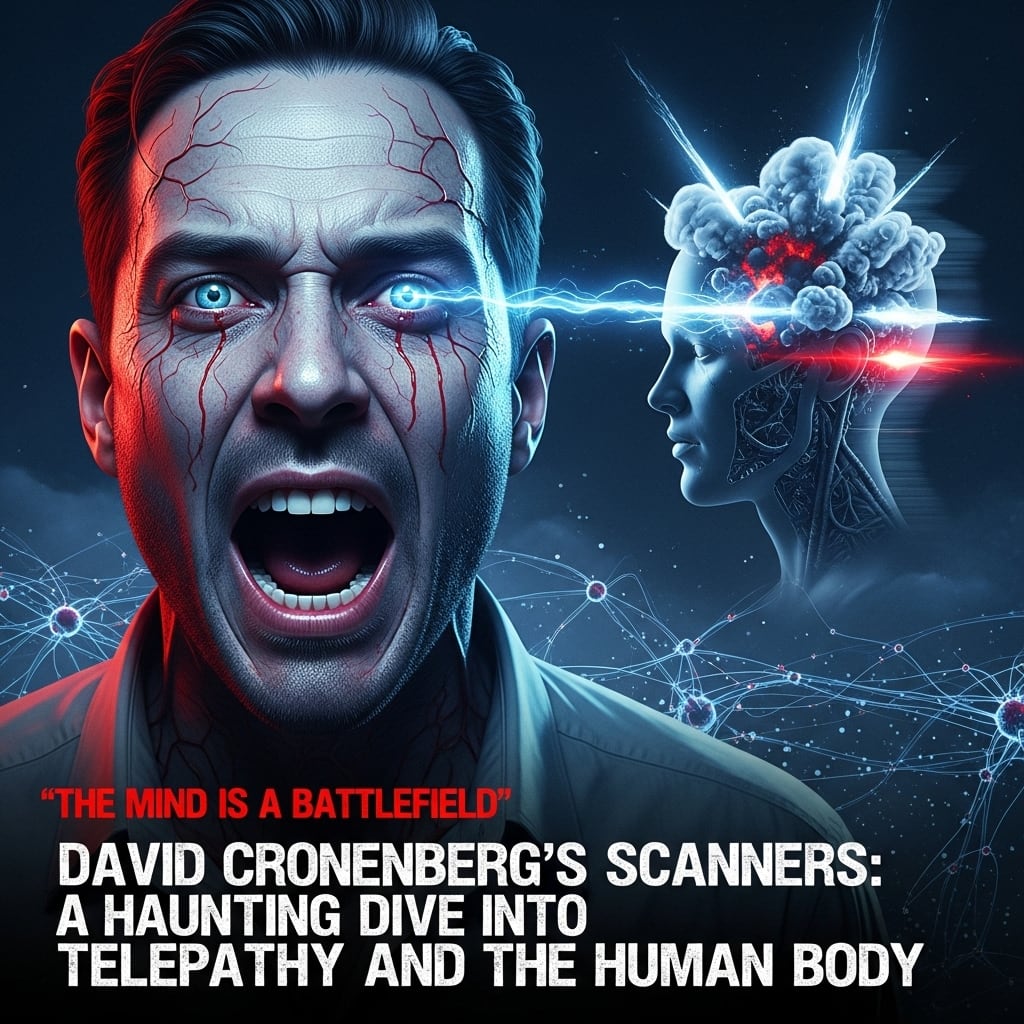
Overview of the film
"Scanners," released in 1981, is a gritty, cerebral blend of science fiction and horror that delves deep into the powers—and perils—of the human mind. Written and directed by the infamous David Cronenberg, this cult classic focuses on a secretive group of people known as "scanners"—individuals with powerful telepathic and telekinetic abilities. What begins as a story of mystery and strange talents soon morphs into a full-blown war of psychic warfare, corporate corruption, and the fragility of human identity.
At its heart, Scanners is a thought-provoking thriller that explores the consequences of tampering with the brain and manipulating consciousness. Unlike typical supernatural films of its era, it grounds its telepathy in the realm of science and pharmacology. This realism, combined with Cronenberg’s signature body horror, gives the film a chilling plausibility.
The movie is most famously known for its head-exploding scene, which has since become an iconic moment in horror and sci-fi cinema. But reducing Scanners to a single shocking visual undermines the film’s deeper narrative—a study of power, control, and what happens when the human body becomes the battlefield for invisible wars.
First impressions and cinematic impact
When Scanners hit theaters, it didn’t initially cause massive waves at the box office. However, over time, it embedded itself into the DNA of sci-fi and horror enthusiasts. Audiences were stunned by its unnerving atmosphere, eerie performances, and the infamous practical effects. For a relatively low-budget film, its ambition was enormous.
Critically, Scanners divided opinion. Some saw it as slow or confusing, while others praised its intellectual boldness and surreal intensity. Over time, however, appreciation for Cronenberg’s approach grew—especially as body horror became a respected subgenre and the psychological thriller took root in mainstream media.
Today, Scanners is recognized as a cornerstone of Cronenberg's early filmography, showing his early mastery in blending cerebral themes with visceral visuals. It’s studied, quoted, and celebrated not just for its thrills, but for what it dares to say about human evolution and control.
The Mind as a Weapon
The concept of telepathy in Scanners
Imagine being able to hear someone else’s thoughts—or worse, control them. In Scanners, telepathy isn’t just a quirky superpower; it’s a double-edged sword. The film introduces us to scanners as people born with the terrifying ability to tap into the neurological wiring of others. They can read thoughts, influence behavior, and in extreme cases, destroy someone from the inside out.
This depiction of telepathy is raw and invasive. Unlike the polished psychic abilities seen in many superhero films, Cronenberg portrays mind-reading as painful, isolating, and even grotesque. Scanners suffer because of their powers. Their existence is defined by mental noise, alienation, and loss of autonomy. Telepathy becomes not a gift, but a curse—one that isolates them from society.
What’s fascinating is how the film doesn’t dive into fantasy territory. Instead, it speculates how the human brain might physically respond to such abilities. These aren’t magic spells—they’re neurological catastrophes waiting to happen. The mind becomes a weapon, but also a prison.
How Cronenberg reimagines psychic power
Cronenberg doesn’t do "superpowers" in the Marvel sense. He takes concepts and asks: what would this really look like if it were biological, messy, and real? Telepathy in Scanners isn’t romanticized—it’s traumatic. It’s a condition that demands control, or it spirals into destruction.
In this world, psychic power isn’t a force for good or evil by default. It’s a tool—neutral, until someone wields it with intent. That’s where the horror kicks in. Scanners can be manipulated, controlled, weaponized. Governments want them. Corporations want them. Everyone sees potential in scanners, but no one sees the people.
Cronenberg’s innovation lies in blending the supernatural with the scientific. He turns the trope of the mind reader into a narrative about identity, vulnerability, and how technology or drugs can push the limits of the human experience. Scanners aren’t superheroes—they’re victims of evolution, experiments, and society’s hunger for control.
Cronenberg’s Obsession with the Human Body
Body horror as a storytelling tool
Body horror is David Cronenberg’s playground. From Videodrome to The Fly, his films are infamous for showing the body as something mutable, unstable, and terrifying. Scanners is no exception. Here, the horror isn’t just in what characters can do—but what their bodies are forced to endure.
The scanner’s brain isn’t just a mind—it’s a physical muscle capable of great violence. The visual consequences of this power—veins bulging, heads exploding, eyes bleeding—serve a bigger purpose than just shock value. They show the cost of such psychic pressure. The body buckles under the mind’s rage
This constant tension between mind and body is the beating heart of Scanners. The film suggests that our physical forms are not built to handle such psychic extremes. It’s like plugging a nuclear reactor into a toaster—something’s going to blow. And when it does, it’s not clean or clinical. It’s messy, horrifying, and unforgettable.
Signature visual elements in Scanners
Cronenberg doesn’t shy away from disturbing imagery. But every drop of blood or twitching nerve has meaning. The exploding head scene, arguably the film’s most famous moment, is a metaphor for the uncontrollable nature of power. It’s not just a shock tactic—it’s a statement: the mind can destroy more than just thoughts.
Close-up shots of veins, intense facial expressions, distorted camera angles—all these choices immerse the viewer in the psychic experience. We don’t just watch scanners do things; we feel the strain with them. The camera becomes a participant in the pain, tracking every spasm and tremor.
This visual language, unique to Cronenberg, makes Scanners not just a story about psychic warfare but a deeply visceral experience. You’re not just scared for the characters—you’re scared with them.
The Birth of the Scanner
Origin of the characters’ abilities
One of the film’s most unsettling revelations is that scanners didn’t occur naturally—they were created. The pharmaceutical company ConSec developed a drug called Ephemerol, originally meant to ease pregnancy symptoms. But the unintended side effect? Telepathic children.
This twist adds layers of commentary about medical ethics, corporate greed, and the unpredictable nature of scientific experimentation. It turns scanners into victims of circumstance—guinea pigs born into a world that sees them as mistakes or assets, not individuals.
The fact that these powers were an accident makes the horror more tragic. These people didn’t ask to be different. Their entire lives are shaped by a drug they never chose to take—a chilling parallel to real-world debates around pharmaceutical responsibility and unintended generational consequences.
Government and pharmaceutical interference
Cronenberg paints a bleak picture of institutional involvement in scanner abilities. Rather than helping them, the government and private corporations seek to control, weaponize, and profit from them. Scanners are tracked, tested, and trained like dangerous animals.
ConSec, the shady company at the film’s center, represents the worst of corporate ambition. They don’t care about the scanners as people—they care about what scanners can do. This echoes real-world anxieties about data mining, military experimentation, and how governments exploit the very people they’re meant to protect.
The result is a dystopian power struggle, where the scanners themselves are caught between rebellion and obedience. Their choices are few, and their futures are dictated by forces beyond their control—a terrifying, and unfortunately relatable, premise.
About the Creator
olxia10
Discover the power of financial success with The Wealth Signal Downloads! Get it now and enjoy a more prosperous
Miss Persephone's Manual to a Seemingly Ordinary Life
Miss Persephone was found at the dining table, her blue eyes swollen, her tears arriving and retreating like the tides of the ocean. Earlier that day, her family had visited her in the retirement home where she had lived for eight years. It was her eightieth birthday.
By Imola Tótha day ago in Fiction


Comments
There are no comments for this story
Be the first to respond and start the conversation.