
The Last Call from a Dead Phone
I recognized the ringtone before I understood what I was hearing.


I recognized the ringtone before I understood what I was hearing.
It was soft, tinny, wrong—an outdated jingle I hadn’t heard in years. The sound crept through my apartment at 11:43 PM, threading its way into my bones before my mind caught up.
My old phone was ringing.
The one I’d buried with my sister.
I stood frozen in the kitchen, sink running, a plate slipping from my fingers and shattering on the floor. The ringing came again, louder now, unmistakable. It was coming from the living room.
From the drawer.
I hadn’t opened that drawer since the funeral.
My hands shook as I walked toward it. Each step felt like I was moving deeper underwater, pressure building in my ears. The ringing stopped just as my fingers touched the handle.
Silence.
Then—buzz.
A vibration rattled the wood.
I pulled the drawer open.
There it was. The old phone, cracked screen, pink case faded from years of use. The same one the hospital nurse had handed me in a plastic bag, telling me gently that they’d cleaned it as best they could.
The screen lit up.
Incoming Call
Lena
I dropped the phone.
It kept ringing on the floor, her name flashing over and over like a pulse.
“No,” I whispered. “No, no, no.”
Lena had been dead for six months. Car accident. Instant, they said. Closed casket. I’d watched them lower her into the ground myself. I’d placed the phone in her hands before they closed the lid, because it felt wrong to take it back. Like stealing something that belonged to her.
The ringing stopped.
For a moment, I thought maybe—just maybe—I’d imagined it.
Then the phone answered itself.
“Hello?” Lena’s voice said.
It was faint, distorted, like a bad signal—but it was her. Same slight rasp. Same upward lilt at the end of the word.
My knees gave out. I collapsed onto the floor, staring at the phone like it was a loaded gun.
“Lena?” My voice broke. “This isn’t funny.”
There was a pause. Static crackled softly.
“Why didn’t you answer?” she asked.
Tears blurred my vision. “Because you’re dead.”
Another pause. Longer this time.
“That’s not what it feels like,” she said.
The call ended.
I didn’t sleep that night. I sat on the couch, lights on, phone in front of me like a bomb that might go off again. At 3:02 AM, it buzzed once.
New voicemail.
My hands hovered over the screen for a full minute before I pressed play.
At first, there was only breathing.
Shallow. Uneven.
Then Lena whispered, “It’s dark.”
The message cut off.
I called the number back.
This number is no longer in service.
The next day, I went to the cemetery.
I told myself it was grief doing this to me—that my brain was filling in the silence with echoes of her voice. Hallucinations weren’t uncommon, they said. Especially after sudden loss.
But when I stood in front of her grave, my phone vibrated.
Incoming Call
Lena
I answered.
“Where are you?” she asked.
“At your grave,” I said, my throat tight.
She laughed softly. “No you’re not.”
The ground beneath my feet felt suddenly unstable.
“I can hear you walking,” she continued. “But you’re too far away.”
A cold realization settled in my stomach.
“Where are you, Lena?”
The line crackled, then—
“Where you left me.”
The call dropped.
That night, the calls came every hour.
Sometimes she cried. Sometimes she was angry. Sometimes she spoke in fragments that made no sense—words overlapping, voices whispering behind hers, as if others were trying to speak through the same mouth.
“They won’t stop moving,” she said at 1:14 AM.
“Who?” I asked.
“The walls.”
At 2:47 AM, she whispered, “I can feel my phone vibrating, but I can’t move my hands.”
At 4:03 AM, she screamed.
I drove back to the cemetery at dawn.
I don’t know what I thought I’d do—dig her up, maybe. Prove to myself that this was real. That she was really gone.
Her grave was untouched.
But the soil felt warm.
The calls changed after that.
Lena stopped sounding like herself.
Her voice stretched, slowed, layered with something wet and heavy beneath it.
“You should come here,” she said one night. “It’s quieter when you’re not alone.”
“I can’t,” I said. “I won’t.”
“You already visit,” she replied. “Every time you answer.”
I tried to destroy the phone.
I smashed it with a hammer until the screen shattered completely. I snapped it in half, battery exposed, wires torn out like veins.
That night, my current phone rang.
Incoming Call
Unknown
I answered without thinking.
Lena breathed on the other end.
“You broke my voice,” she said.
I threw the phone across the room. It rang again the moment it hit the wall.
Again.
Again.
Each time louder, more insistent, until the sound filled the apartment, overlapping ringtones echoing from nowhere and everywhere.
“Stop!” I screamed.
Silence.
Then a soft click.
“Please,” Lena said, her voice clearer than it had been in weeks. “I’m running out of time.”
“Time for what?”
“To remember myself.”
The line filled with whispers—dozens of voices speaking at once, overlapping, desperate.
“She forgot her face.”
“He still has a name.”
“Answering helps.”
“What happens when you forget?” I asked.
Lena was quiet for a long time.
Then she said, “You stay.”
The next morning, I woke up in the cemetery.
I was lying beside her grave, dirt under my fingernails, my phone clutched to my chest. Missed calls filled the screen.
All from Lena.
People stared as I stumbled home, but none of them looked familiar. My neighbor didn’t recognize me. The barista at the café hesitated before asking my name, like she’d forgotten it halfway through.
When I checked my contacts, my sister’s number was gone.
So was mine.
That night, the phone rang one last time.
Incoming Call
Unknown
I answered.
“Can you hear me?” Lena asked.
“Yes,” I whispered.
“Good,” she said. “That means you’re close.”
The ground beneath my bed began to hum softly, like something vibrating just below the surface.
My phone slipped from my hand.
I don’t remember falling asleep.
But I remember waking up to darkness.
And the sound of a phone ringing somewhere above me.
About the Creator
Modhilraj
Modhilraj writes lifestyle-inspired horror where everyday routines slowly unravel into dread. His stories explore fear hidden in habits, homes, and quiet moments—because the most unsettling horrors live inside normal life.
"Scream 7" (2026): Running out of Fresh Screams
This is the seventh time we’ve had a Ghostface crisis. Scream 7 is the latest edition of the Scream franchise. Sydney Prescott and her family are under attack by another anonymous killer dressed in a Ghostface costume. While having issues with her daughter, Tatum, they run from the bloody murders, trying to determine who is behind it all.
By Marielle Sabbag3 days ago in Horror
The Bridge That Whispers
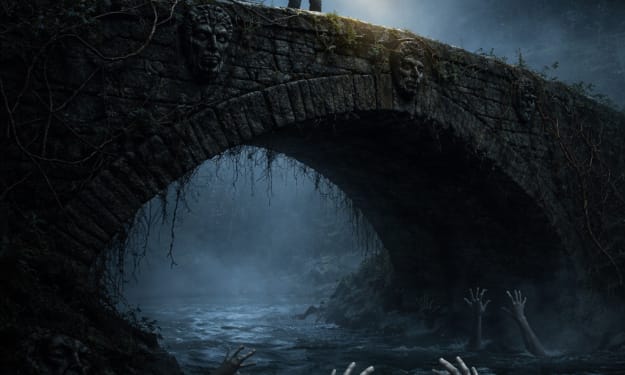
In bridge no one used anymore. It curved gently over a narrow river, its surface cracked and moss-covered, as if time itself had tried to bury it. Locals crossed the modern bridge downstream, leaving the old one to the fog, the wind, and the stories. Tourists were told the bridge was unsafe. Children were told it was haunted. Elena heard about it on her first night in Greyhaven. She had come from the city to catalog historical structures for a regional preservation project. Greyhaven was her last stop—quiet, remote, and perfect for work. The innkeeper, a thin man with pale eyes, hesitated when she mentioned the old bridge. “Don’t go there after sunset,” he said. “It talks.” Elena laughed politely. She had spent years documenting ruins, castles, and forgotten churches. Every village had a ghost story to protect a pile of stones. Still, she noticed how the innkeeper’s hand trembled when he handed her the room key. The next morning, Elena walked to the bridge with her camera and notebook. In daylight, it looked harmless—beautiful, even. Wildflowers grew between the stones, and the river below whispered softly. She took photographs, measured the arch, and noted the erosion. There were strange carvings on the sides: not words, but twisted symbols, worn almost smooth. That night, she dreamed of water. In her dream, she stood on the bridge in thick fog. The river beneath her was silent, black as ink. From the stones under her feet came a low sound, like breath passing through teeth. Come back. She woke suddenly, heart racing. Outside her window, the fog was rolling in from the hills. Elena told herself it was only a dream caused by fatigue. But the next night, it happened again. This time, the whisper was clearer. Come back to us. On the third day, she asked a woman in the village café about the bridge. The woman stopped stirring her coffee. “They drowned there,” she said quietly. “Long ago. When the river flooded, the bridge broke in the middle. A wedding party was crossing. Carriage, horses, music… all gone. People say the stones remember the weight of them.” Elena felt a chill run down her spine. “That’s just a story, right?” The woman looked up. “Stories begin somewhere.” That evening, driven by curiosity and something darker—something pulling at her—Elena returned to the bridge at dusk. Fog wrapped around the riverbanks like a living thing. The modern bridge lights glowed far away, safe and distant. She stepped onto the old stones. The air felt colder in the center of the bridge. Her breath became visible. Then she heard it: soft footsteps behind her. She turned. No one was there. The river below began to make a different sound—not water, but voices. Murmuring, layered and slow. Stay. Elena backed away, but her foot caught on a broken stone. She fell to her knees. The carvings along the bridge seemed deeper now, sharper. They formed shapes—faces, frozen in stone, mouths open in endless screams. Hands rose from the mist. They were pale, dripping, reaching for her ankles. Elena screamed and scrambled backward, tearing her coat on the rough stone. One cold hand brushed her skin, and in that moment, she saw it: a flash of the past. Horses panicking. A carriage tipping. People crying out as dark water swallowed them. And then silence. She ran. By the time she reached the inn, her legs were shaking so badly she could barely stand. The innkeeper saw her face and said nothing—only locked the door behind her. She left Greyhaven the next morning without finishing her work. Months later, her report mentioned “structural instability” and “severe erosion.” It said nothing about whispers or hands or memories trapped in stone. But sometimes, when Elena stands on bridges in other cities—busy ones filled with traffic and noise—she feels a vibration under her feet, like a distant echo. And in the sound of rushing water, she hears a familiar voice: Come back.
By Iazaz hussain2 days ago in Horror
Who is your "Person"?
It's important to recognize that you cannot go through life as easily on your own. My name is Elizabeth and I'm a survivor of child abuse and horrific trauma. Healing from trauma is not a quick fix and recognizing that it will take time, is part of the struggle.
By Elizabeth Woodsa day ago in Psyche



Comments
There are no comments for this story
Be the first to respond and start the conversation.