
Classic Movie Review: 'Candyman' 1992
With Candyman back on the big screen, here's a look back at the flawed original that inspired the sequel.

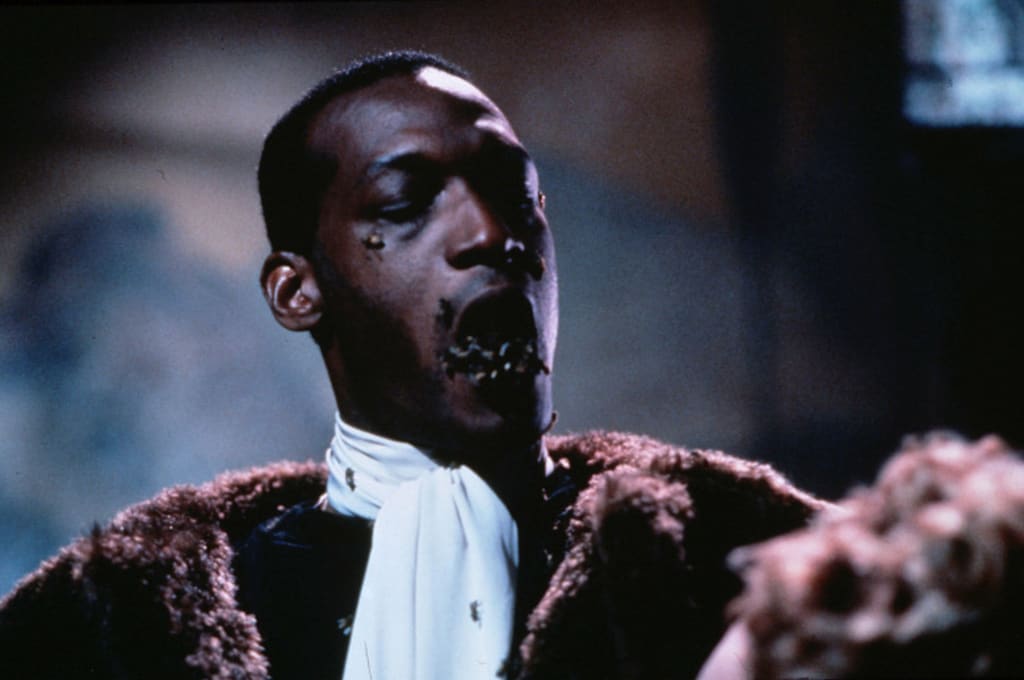
Candyman 1992 stars Virginia Madsen as Helen Lyle, a grad student working on a thesis on urban legends. With her best friend, Bernadette (Kasi Lemmons) co-writing the thesis, the two have begun to investigate a very particular legend, that of the Candyman. An exposition professor, played with righteous pomposity by Michael Culkin, explains that Candyman (Tony Todd) was a former slave turned painter who was lynched in the late 18th century after fathering a child with a white woman, the wife of a plantation owner.
Legend has it that his tragic death was so vile and his pain and anguish so great that he became the supernatural embodiment of black rage and vengeance. Recently, Candyman has become an urban legend passed around in hushed tones, his legacy living in whispers kept alive by fear. Helen however, being a skeptic, believes the Candyman is a myth that she can debunk with a rigorous academic inquiry.
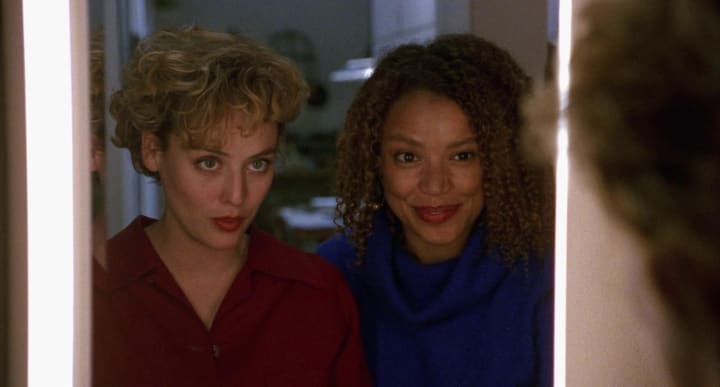
To achieve this academic rigor, Helen and Bernadette travel to the Chicago housing project known as Cabrini Green, a place of almost supernatural despair even without the spectre of Candyman lingering over it. Helen is looking for evidence that a series of murders in the project came from all too human hand. But, before they leave for Cabrini Green, academic rigor calls on Helen to use the ritual that the legend states will summon Candyman, reciting the name Candyman 5 times in front of a mirror. Helen goes through with it and seemingly escapes unharmed.
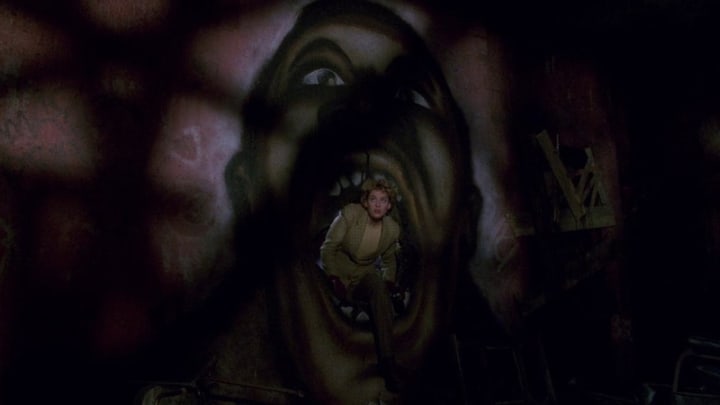
The scenes set at Cabrini Green are filled with striking graffiti images of Candyman that illustrate the legend. Helen gets pictures before she and Bernadette are interrupted by a project resident named Ann Marie McCoy (Vanessa Williams). A new mom, McCoy tells Helen and Bernadette the circumstances surrounding the death of the woman in the apartment they were just in. Ann Marie has a bigger role to play later in the movie when her son is taken by Candyman though she thinks Helen is the murderous kidnapper.

The middle section of Candyman is about Candyman toying with Helen rather than killing her. The rules of Candyman are malleable to a distracting degree. Some people who summon Candyman are killed almost immediately, sometimes Candyman kills people who had no role in summoning him and, in the case of Helen, Candyman doesn’t look to kill her. Instead, Candyman sets Helen up to take the blame for the murders he is committing.
This is one of many curious elements of the plot of Candyman. Tony Todd plays the human form of Candyman and through his dialogue we come to understand that he’s targeted Helen for trying to debunk his legend, thus taking power from his supernatural life force. The less people fear the Candyman, the weaker he becomes. Or so I think I am led to believe. But, then how does having Helen blamed for the murders he’s committing grow his legend?
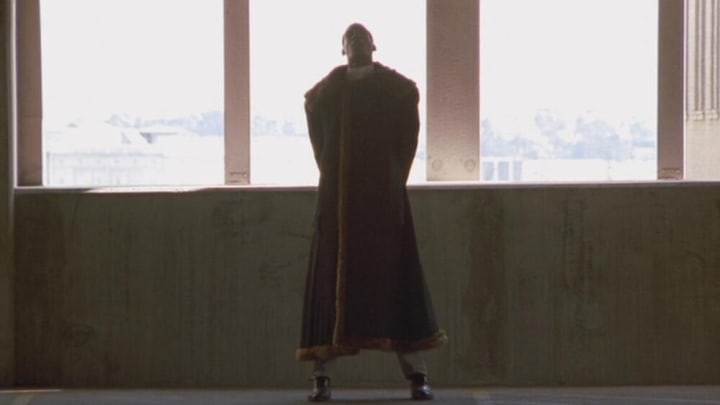
Later, the motivation becomes the notion that Helen may be the reincarnation of the woman Candyman loved and impregnated before he was lynched. He appears to explain that he wants to make Helen a legend as well so they can carry on a murderous legacy together. But again, how does turning Helen into a legend raise the legendary status of Candyman? Who’s going to be alive or aware to tell people the tale of Candyman and Helen?
While I am nitpicking, I am hung up on Candyman’s hook. (Ha, Get it, hung up, hook?) According to the legend discussed by exposition professor, the men carrying out the lynching cut off Candyman’s hand and replaced it with a hook before they poured honey on him so bees would attack him and then they set him on fire. Why a hook? What does the hook represent? Why if you’re lynching a man do you give him something that he could then use as a weapon?

I get that Candyman was a painter and that taking his hand would affect his profession but they just kill him immediately after that so any alleged significance of the hook is nebulous. The hook appears to be more of a marketing conceit than something anyone gave any considerable thought to. The bees make more sense, that’s torture, covered in honey and set upon bees before being set on fire, that’s torture, I get what the awful people enacting this are after there.
There are many other elements of Candyman I could get hung up on, problematic elements such as centering a story about a tragedy enacted upon a black man around a white protagonist. Virginia Madsen delivers a terrific performance but it is classically Hollywood to take something tragic that happened to a person of color and make it about a white protagonist and how they are affected by that tragedy.
That’s a much bigger sore thumb about Candyman than my being bothered by the lack of necessity for the hook. But both of those nitpicks speak to the structural flaws of Candyman. The movie isn’t built upon a strong frame. It has good ideas, the Phillip Glass score is Oscar level great, and Tony Todd is a wonderfully menacing presence, but in the end, Candyman feels too much like a market tested horror movie to fully succeed as anything other than a passable piece of genre work.
Candyman 1992 is the classic on the August 30th edition of the Everyone’s a Critic Movie Review Podcast which will also feature the new Candyman sequel from director Nia DaCosta. Candyman 1992 is available to stream for subscribers of Peacock. Candyman 2021 arrived in theaters on Friday, August 27th.
About the Creator
Sean Patrick
Hello, my name is Sean Patrick He/Him, and I am a film critic and podcast host for the I Hate Critics Movie Review Podcast I am a voting member of the Critics Choice Association, the group behind the annual Critics Choice Awards.
Keep reading
More stories from Sean Patrick and writers in Horror and other communities.
Movie Review: 'Old Man and the Gun' Starring Robert Redford
Robert Redford announced his retirement from acting in 2019. That means that his final performance is his role in the David Lowery helmed Old Man & the Gun. If that is indeed the case, that Mr. Redford is truly retired, he goes out on a pretty great note, playing a character that suits him. The consummate charmer, Redford plays bank robber Forrest Tucker with the kind of half-smile and glint in his eye which marked his all time greatest performances.
By Sean PatrickExclusive • 5 years ago
The Homes Flagged for Follow-up
By eight each morning, our office smelled of coffee, disinfectant wipes, and printer heat, which is to say it smelled like concern that had learned to invoice. I unlocked the care-management dashboard and began assigning fifteen people to the homes where they would bathe strangers, sort pills, warm soup, and sign for it in blue ink.
By Jesse Shelley5 days ago in Horror


Comments
There are no comments for this story
Be the first to respond and start the conversation.