
Between Saints and Shadows: The Haunting Legacy of Chernobyl’s Abandoned Fallout Church
Faith, Radiation, and the Unquiet Dead in the Heart of the Exclusion Zone

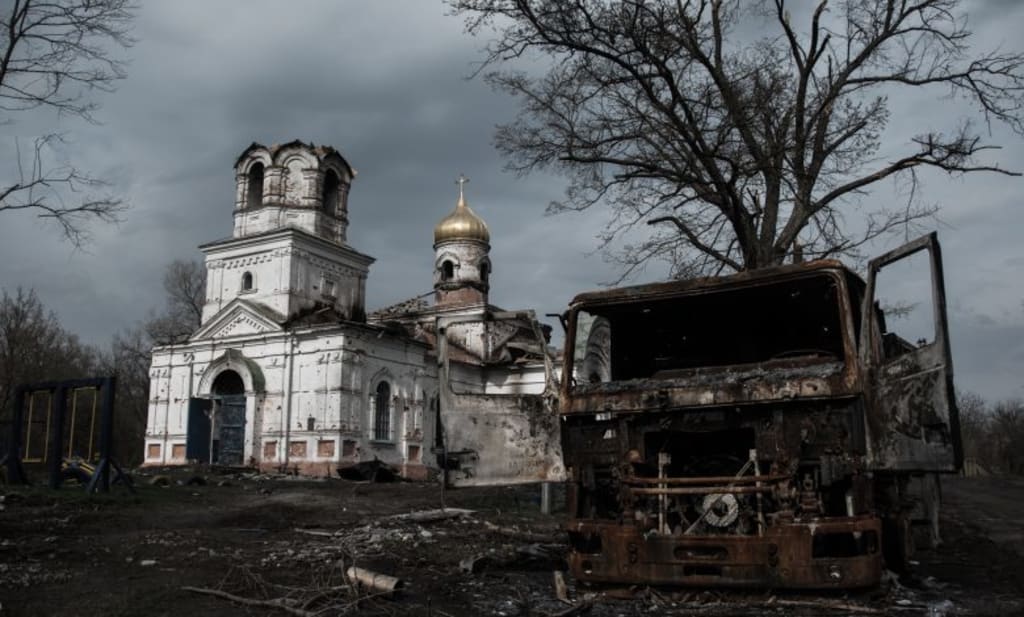
The Haunted History of Chernobyl's Abandoned Nuclear Fallout Church
Deep in Chernobyl's Exclusion Zone, a bony framework rises as a testament to religion and calamity: the abandoned St. Elijah's Church. Locally and among adventurers, the dilapidated 19th-century Orthodox church has earned the nickname the "Nuclear Fallout Church," a focus for ghost stories where the atrocities of the 1986 nuclear disaster meet centuries of religious history. Its crumbling frescoes, shattered icons, and ethereal silence speak of survival, loss, and the haunting shadows of the past.
A Sanctuary Through the Centuries
Dedicated in the 1870s, St. Elijah's Church was a spiritual oasis for Chernobyl's residents well before the nuclear power plant's devastating meltdown. Surviving Soviet anti-religious campaigns, wars, and political upheavals, the church was an odd symbol of continuity in a country battered by conflict. When Reactor No. 4 blew in April 1986, releasing radiation throughout the area, the church was only 12 miles from ground zero. Unlike the reactor nearby, it was never entombed in concrete or steel. Instead, it was left overnight when 50,000 residents fled, leaving everything behind—including their dead.
The church was turned into a makeshift morgue during the panic of evacuation. With levels of radiation so lethal as to preclude the possibility of standard burials, dozens of corpses were stored briefly in its vaulted nave, their coffins stacked indiscriminately alongside pews and altars. The dead hung suspended in a state of limbo for weeks while awaiting removal to sealed concrete graves. The terrible experience left the church imbued with a sense of incomplete sorrow, a building where the dichotomy between living and dead failed catastrophically.
Ghosts of the Fallout
Today, the church is a shell. Its once-vibrant murals of saints are faded, and its floors are littered with garbage. But tourists—scientists to "dark tourists"—report eerie events. The most common sightings are disembodied voices, shadow figures, and the sound of weeping in empty hallways. Guides on sanctioned tours typically warn visitors of inexplicable temperature drops, particularly near the altar, where radiation meters oddly peak even after decades of abandonment.
One enduring myth surrounds the specter of an old woman, referred to as "Babushka Maria." Locals claim she was a parishioner who declined to leave, praying in the church as the exclusion zone cleared. Her skeletal corpse was supposedly discovered months later, kneeling in front of a fissured icon of the Virgin Mary. Since then, tourists have been claiming glimpses of a bent figure in a black shawl vanishing round corners or loitering by the bell tower. Others claim to catch the scent of incense or chanting hymns in Old Church Slavonic—perceptions unheard in a structure bereft of clergy and parishioners.
A 2019 viral YouTube documentary caught what appears to be a ghostly figure walking through a boarded-up door. Skeptics dismissed it as a lens flare or drone artifact, but paranormal investigators see the church's high levels of radiation as capable of "trapping" energy or imprints of traumatic activity. On a scientific note, radiation has no proven link to hauntings, but the theory exists due to the eerily coincidental phenomenon of electromagnetic field (EMF) meters registering erratically in a place where there is no source of power.
Between Fact and Folklore
The church's sinister fame is amplified in its surroundings. The Chernobyl Exclusion Zone is a boundary between realities where time was frozen, and the church symbolizes that stillness. Old prayer books, child-sized gas masks, and fossilized family photos of families left behind blanket the grounds, providing a tangible connection to the lives shattered. To the majority, the "ghosts" here are not ethereal visions but memories—of fear, loss, and the intangible poison that continued to spread through the soil.
Yet supernatural attraction remains. City explorers testify to damaged gear in the church, ranging from dead batteries to malfunctioning memory chips. Some detect sounds of far-away radiation beeps—long shut down—or experience fingers tugging at their shoulders. Wherever tragedy and science intersect, the brain is drawn to fill spaces with myth.
The Weight of Memory
Is St. Elijah's Church haunted? There is no concrete evidence, but only bits of tales and impressions. Its symbolic impact is not in doubt. The church mirrors the duplicity of Chernobyl itself: both human failure and abiding strength. Its "haunts" could be metaphor for guilt, sorrow, or for the open-ended trauma of an accident still shadowing the landscape.
To tread upon its shattered arches is to confront the uncanny—a place where the irradiated and the holy are intertwined, and where the past will not stay hidden. Whether the voices in the darkness are those of the dead or mere windborne delusions, they bring back to us the fact that some tragedies leave their mark even time cannot erase.
About the Creator
Kyrol Mojikal
"Believe in the magic within you, for you are extraordinary."
Keep reading
More stories from Kyrol Mojikal and writers in Horror and other communities.
The Haunted History of Stull Cemetery: Kansas' 'Gateway to Hell' and Its Ghostly Legends
Sitting in quiet, rural Stull, Kansas—a ghost town that borders Lawrence—is Stull Cemetery, a place so replete with bad legend that it's been placed on the nation's most haunted places list. For decades, its name surfaced in whispers of hell gateways, witch curses, and spook spirits. But beneath the gaudy tales is a history steeped in fact and myth, creating an eerie tapestry that continues to attract thrill seekers and ghost hunters.
By Kyrol Mojikal10 months ago in Horror
Jack the Ripper: The Silence That Never Left...
London, 1888... At night, the city did not sleep; it thinned. Gas lamps cast weak halos that failed to reach the corners of the streets. Sound behaved strangely in Whitechapel. Footsteps overlapped. Voices blurred. A single cry could vanish into brick and fog before it fully formed. Thousands of people moved through the same narrow corridors each evening, close enough to brush past one another, distant enough to remain unknown.
By Veil of Shadowsabout 2 hours ago in Horror
Wild Card Weekend Recap: What Happens Now?
I think I figured out why I love Wild Card Weekend so much. It's because it's the first playoff anything of the calendar year. The NFL season starts in the fall, and once upon a time, the champion was crowned either on or slightly before New Year's. The evolution of the NFL schedule has resulted in the playoffs starting just into the New Year, and currently, the final week of the season falls on the first weekend of the New Year, with Wild Card Weekend coming a week after that. So yes, chronologically, the NFL's Wild Card Weekend serves as the first playoff anything of the calendar year.
By Clyde E. Dawkins7 days ago in Unbalanced


Comments
There are no comments for this story
Be the first to respond and start the conversation.