
7 Gothic Horror Classics You Should Read For Halloween
And One I Wrote That you Might Check out


I never imagined when I started writing a book I would discover so much about myself and equally, I never imagined I would discover what would become some of my favorite books of all time. In researching media bearing similar thematic elements to what I felt I wanted to convey in my story, my journey continually drew me closest to the once popular genre of gothic fiction, more specifically gothic horror.
Full disclosure, I am the furthest thing from what you would term a fan of horror. This is largely due to what modern horror has become, namely stories with much less to say to make the audience ponder, and more about what they show to make the audience vomit.
Yet I do have a taste for all things macabre and spooky during the festive fall seasons. Whether it be the traditional viewings of the Nightmare Before Christmas, the Legend of Sleepy Hollow, or dusting off the VHS of Hocus Pocus, this time of year is when stories seem the most ripe. Halloween specifically has always been a time in which the warm hearth of the home is kindled by the light of wonderful stories that stick with you far longer than just the month of October.
In essence, I found in my time researching classic literature, that the best parts of Halloween and the Autumn harvest are perfectly encapsulated in the genre of gothic horror. Even for those like myself, who can’t hardly watch through a film like Predator or Alien without fear fueled insomnia for the next month, these books are a delight and well worth your time.
So if you need a vehicle to put you in the right mood for the spooky season, are looking for some classic literature recommendations, or simply just interested in revisiting a genre that has spent less time in the spotlight since its heyday, these are a few books you are likely to enjoy.
These books not only impacted me in a way that captured the feelings of all Hallows eve, but stayed with me in a way that didn’t keep me up at night in fear, but in contemplation. These stories made me think, made me ponder, and filled me less with a sense of dread, but rather a feeling of wonder and introspection. More than just Halloween stories, these books capture what storytelling is all about.
7: The Castle of Otranto: A Gothic Story - By Horace Walpole
Often considered to be one of the first gothic horror stories, yet less discussed than the juggernaut that is Mary Shelley’s Frankenstein, Horace Walpole’s tale of a family’s tragic and terrible ordeals within their labyrinthine abode is one that should be just as widely celebrated as the many stories it inspired.
Walpole begins his story in a way that many other subsequent authors of the classical period would by alleging that the story is no story at all but a record they either happened upon, or that came into their possession and they merely transcribed. Whether to serve as a means of proto click-bait, or to help envelope the reader into a further state of suspended disbelief, the technique works much in the latter.
Aided by rich and ever entangled characters, the narrative of Castle of Otranto rides the borders of both the unease and uncertainty of gothic horror as well as the romance and heroics of a swashbuckling sea story. Eerie, cryptic, ghostly episodes keep the audience and the denizens of Castle Otranto wondering what dark secrets lie beneath in the haunted halls and within the corridors of the dismal, dreary keep.
6. Childe Roland To the Dark Tower Came - Robert Browning
Though I may be stretching the limits of what can be defined as gothic horror, I think Robert Browning's dark and foreboding poem deserves consideration, both for its strong thematic storytelling, and the gothic style fiction it went on to inspire.
Much of gothic horror shares a similar trope of creating a sense of unreliability in its narration. That isn’t to say the narrators are always unreliable, but that events in gothic horror stories hold a level of ambiguity that always makes us question whether what fantastical occurrences unfold are actually happening, or if they are all within the minds of the characters. Nowhere is this better personified than in Robert Browning's poem about a young man’s search for a mysterious edifice we only know as the Dark Tower.
Just who is it we are following in the story? What is the Dark Tower and why is our narrator so intent on finding it? Are the horrific visions scattered on his journey real, or simply imaginings of a mad man lost in his search for what he cannot find? Like all good horror, Browning does not give us the answers, and it's in the hope of finding those answers that we, alongside Roland, keep coming back to the Dark Tower time and time again.
5. Olalla - Robert Louis Stevenson
It may seem strange to find Robert Louis Stevenson on a list of great gothic horror and not mention Jekyll and Hyde, but Olalla is a much more nuanced story that fewer have sought to analyze so heavily as that of man’s duality stylized in Henry Jekyll’s tragic tale.
Olalla ticks many of the gothic horror boxes, yet never feels tired or cliche. A dark and gloomy castle, a strange and outcast family dwelling within, and an ending as uncertain as the identity of our protagonist. Where Stevenson may have been more on the nose with the message behind Jekyll and Hyde, Olalla leaves us feeling like we have stepped into the middle episode of a great television drama: intrigued, stunned, yet altogether uncertain.
Olalla does not tell you there is a vampire, or that there is a curse upon the family, or that they were all ghosts all along, it simply tells a great story and then leaves you to wonder what really happened.
4. No. 1 Branch Line - The Signal Man - Charles Dickens
Similar to the previous entry in many ways, Charles Dickens is much more renowned for another holiday and another couple famous ghosts, yet the Signal Man gets much less attention and praise than it rightfully deserves.
Dickens tells a brief, but beautiful story rich with characters and dialogue that make the world come to life in a way that almost feels like poetry. Though not set in a gloomy and mysterious castle, The Signal Man takes us, at least in essence, to a workplace setting perhaps more common to us all.
You and I may not know the feeling of eerie apparitions within a haunted castle, but many of us can relate to the way our minds start to play tricks on us after a long day on the job. The graveyard shift and all its strange anomalies from suspicious characters, to mindless repetition are what make this story more intimate than most castle or homebound ghostly tales.
3. Carmilla - J. Sheridan Le Fanu
You may notice by now that my entries on this list are often very much the lesser known ancestors or adjacent cousins of their more popular counterparts. As quintessential pillar of the vampire sub genre as Bram Stokers Dracula is, Carmilla paved the way for its success, and not just by nature of its titular fanged femme fatale.
Carmilla doesn’t feel like a vampire novel. It feels like a prototype for the modern day psychological thriller. The fear in Carmilla is not from spending the night in an unknown and haunted building, but rather being haunted in your own home by something you invited in. What's worse is the growing feeling that we may enjoy this haunting presence.
Truly ahead of its time, Le Fanu gives us a story that warns us not against blood sucking creatures of the night, but of caustic relationships, enabling and rationalizing abuse, and the dread that its traumatic affects may never truly die.
2. The King in Yellow - Robert W. Chambers
Like many, my fascination for the King in Yellow lies in my inability to fully describe it, but my insatiable desire to try. And although it went on to inspire great works of cosmic horror, it is the intimacy with which Chambers tells his stories, the heart he brings to them, that sets it apart as something more profound and mind bending than anything within the cosmic realm.
What we are presented with in the book appears to be a collection of loosely tied together short stories and poems. The King in Yellow, known in the story both as a character and the title of a play, is the one element that serves somewhat as the through-line of its entirety.
When you read the King in Yellow, you won’t see the horror of the King himself described, but the horror left in the wake of his appearance, his sign, or his story being told. The thrill of reading Chambers’ masterpiece comes in trying to comprehend its underlying themes and how each story could be related and somehow tied to the King in Yellow, just don’t go mad trying to understand it all like so many others did.
1. The House on the Borderland - William Hope Hodgson
My top two choices on this list could easily sit beside each other in terms of my love and appreciation for their influence upon me. Herein is another instance of an author less appreciated than both his contemporaries and predecessors in the modern literary world, yet William Hope Hodgson is responsible for inspiring many future horror writers including H.P. Lovecraft and Clark Ashton Smith.
The House on the Borderland may be more cosmic horror than gothic, but it elicits the same feelings of uncertainty balanced with profound intrigue that gothic horrors’ greatest bastions stand on. Hodgson employs the same idea of drawing the reader in through creating a narrative that implies this is a record that merely came into his possession.
I’ve yet to fully uncover all that Hodgson was trying to say with this story, but it truly transported me to the world that he so effortlessly crafts spanning from the dank, dismal home of the protagonist, all the way to the horrifying end of the entire known universe. The unnerving monstrosities go far beyond the abominations the protagonist is hunted by, stemming into the psychedellic and surreal landscapes Hodgson so vividly depicts.
Hodgson may be more recognized for his supernatural twist on the Sherlock Holmes character with his Carnacki series, but stories like the House on the Borderland show his strength as an incredible writer well ahead of his time and well worth yours.
I hope you check out some of these stories this Halloween, and even if it's not Halloween, I hope you give them sa chance. I would love to hear your thoughts on these entries, what other gothic horror classics should people be reading? Would you like to see more reading recommendations or book reviews?
This time of year is so wonderful for storytelling, and maybe that's why even with its macabre and spooky overtones, the Autumn harvest time brings with it the subtle yet comforting undertones of the joy and togetherness of storytelling.
Also, if you enjoy these stories, can’t get enough of the gothic horror genre, want to see what a more modern take on the genre looks like, or just want to support my humble endeavor, I’ll leave a link to my book here below.
Happy storytelling!
About the Creator
Henry Shaw
Check out my audiobook podcast on Spotify! - The Tendrilled Empress
Keep reading
More stories from Henry Shaw and writers in Horror and other communities.
"Scream 7" (2026): Running out of Fresh Screams
This is the seventh time we’ve had a Ghostface crisis. Scream 7 is the latest edition of the Scream franchise. Sydney Prescott and her family are under attack by another anonymous killer dressed in a Ghostface costume. While having issues with her daughter, Tatum, they run from the bloody murders, trying to determine who is behind it all.
By Marielle Sabbag3 days ago in Horror
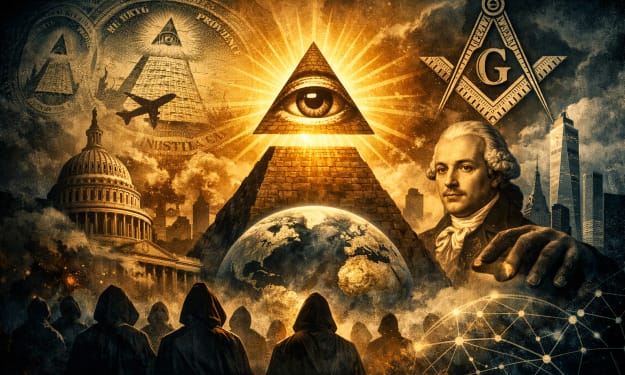
The Secret Society That Became a Global Conspiracy Legend
The word “Illuminati” instantly evokes images of shadowy meetings, powerful elites, secret handshakes, and hidden symbols controlling the fate of nations. Over time, the idea of the Illuminati has evolved from a short-lived Enlightenment-era society into one of the most famous conspiracy theories in the world. But what is the truth behind this mysterious name, and how did it grow into a global obsession?
By Irshad Abbasi 2 days ago in Horror
Flower Bloom 369
FLOWER Bloom 2/25/26 Wednesday By Mariann Carroll Karen had been with Tony for 7 years. Tony started acting strangely after her surgery. He would mow the lawn in the rain and be on his cellphone. He started pushing Karen away. Tony came clean about seeing someone. Karen moved out two months later. Karen moved in with a friend. She felt betrayed.
By Mariann Carroll7 days ago in Fiction



Comments
There are no comments for this story
Be the first to respond and start the conversation.