
Xi Jinping's Unchecked Power: Tracing the Roots from Mao's Long March to Modern China
A Journey Through History, Strategy, and Unprecedented Authority

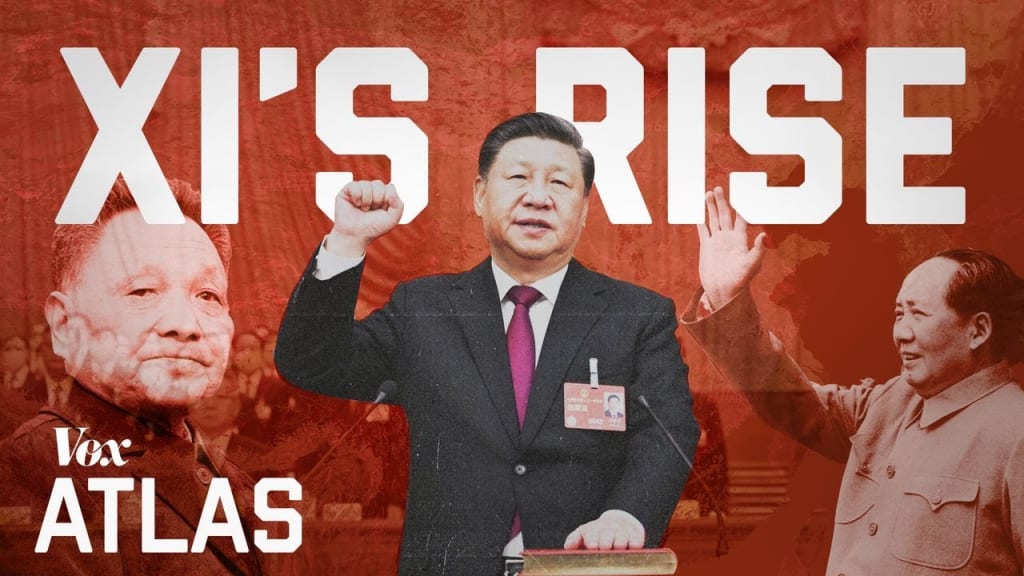
Introduction:
In the intricate web of Chinese politics, the seven most powerful men in the country hold the key leadership positions within the ruling Communist Party. These figures are unveiled every five years at the National Congress, a carefully orchestrated political event. At the forefront of this power structure is Xi Jinping, China's president for the past decade, who, in a historic move, eliminated presidential term limits, signaling a potential long-term reign. To understand Xi's journey to unparalleled authority, one must delve into his unexpected connection to Mao Zedong, the revolutionary founder of the People's Republic of China.
The Long March and Mao's Influence:
Xi Jinping's link to Mao traces back to a pivotal moment in Chinese history – the Long March. In 1934, Mao's Red Army faced dire circumstances, surrounded by Nationalist forces, initiating a daring escape. Amid relentless attacks, Mao's leadership during the Long March solidified his position at the helm of the party and military. This journey intersected with Xi's family when his father, Xi Zhongxun, offered refuge, marking the beginning of Xi's connection to Mao's legacy.
Mao's Rise to Power and Unchecked Authority:
Mao's ascent to power involved strategic maneuvers within the Chinese Communist Party's (CCP) structure. As head of the Politburo Standing Committee, Mao consolidated power, culminating in the establishment of the People's Republic of China in 1949. Mao's authoritarian rule, marked by the disastrous Cultural Revolution, aimed at perpetuating his ideas and solidifying his status as an eternal figurehead.
Deng Xiaoping's Era of Power Sharing:
Following Mao's death, Deng Xiaoping steered China away from Maoism, embracing economic reforms and power-sharing structures. Deng's leadership set the stage for decades of economic growth and positioned China as a global player. Deng's commitment to collective leadership marked a departure from Mao's dictatorship.
Xi Jinping's Strategic Climb to Power:
As Deng advocated for collective leadership, Xi Jinping took an unexpected route to prominence. Rather than competing directly in Beijing, Xi spent years in rural provinces, cultivating a reputation as a diligent and humble party leader. This strategic move allowed Xi to ascend through the ranks, eventually landing him on the Politburo Standing Committee in 2007.
Xi Jinping's Unprecedented Power Grab:
Upon assuming the role of General Secretary in 2012, Xi Jinping initiated a sweeping anti-corruption campaign, eliminating rivals and filling vacant positions with his loyal supporters. This purge consolidated his control over both the CCP and the military, establishing him as the most powerful leader since Mao. Xi's ideology, enshrined as "Xi Jinping Thought," further solidified his unchecked authority.
Challenges to Xi's Authority:
While Xi's first decade in power saw remarkable economic growth and expanded global influence, challenges emerged, particularly during the COVID-19 pandemic. Widespread protests and a faltering economy have tested Xi's unbridled authority. Despite this, his recent reappointment at the 20th National Congress in 2022 indicates a continued grip on power.
Conclusion:
Xi Jinping's trajectory from exile to the apex of Chinese leadership mirrors the complex evolution of the Communist Party. His unchecked authority, reminiscent of Mao's era, raises questions about the future of power dynamics in China. As the world watches, Xi Jinping remains a formidable force, shaping the destiny of the world's most populous nation.
About the Creator
Senbei777
My articles are of any genre. We create a variety of articles that will be useful to you, from health to history to geopolitics, so please use them to create inspiration :)
Israel: A Land of Struggle, Faith, and Transformation
The land that is today Israel has been at the crossroads of civilizations for thousands of years. From the deserts of Negev to the fertile hills of Galilee, this land has witnessed the rise and fall of empires, the birth of religions, and the enduring hopes of peoples who called it home. In ancient times, it was known as Canaan, a region inhabited by diverse groups, each with their own gods, languages, and customs.
By The best writer 3 days ago in History
Why Early Aircraft Designers Had No Second Chances
When I read about the earliest days of aviation, I’m always struck by how unforgiving that era truly was. Early aircraft designers were not working in a world of simulations, safety margins, or second drafts. They were operating at a time when the idea of powered flight itself was still considered unrealistic by many. Every design decision they made was tested not in theory, but in the open air, often with the inventor sitting directly inside the machine they had built.
By Beckett Dowhan7 days ago in History


Comments
There are no comments for this story
Be the first to respond and start the conversation.