
Why Israeli-Palestinian in conflict?
10 reasons of Israeli-Palestinian conflict

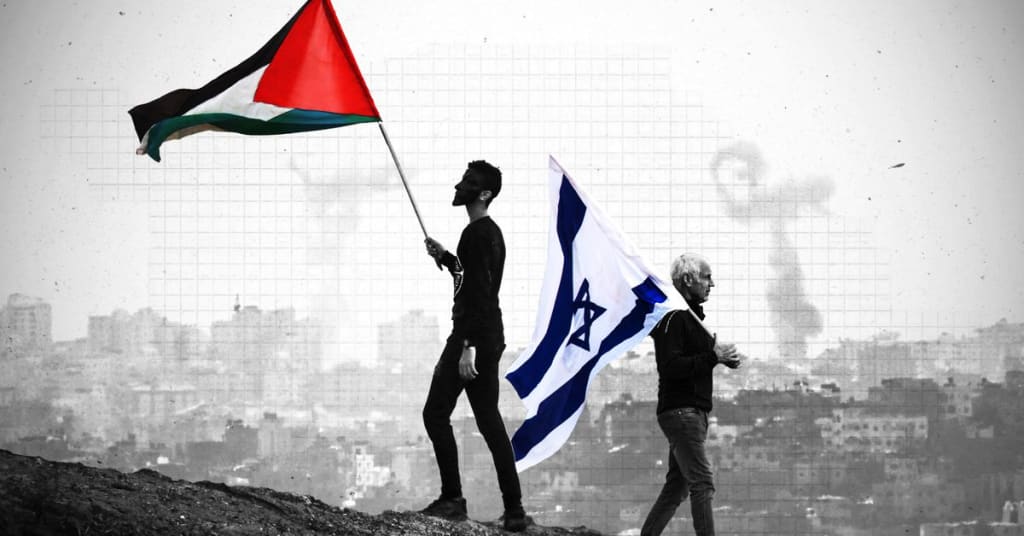
10 reasons of Israeli-Palestinian conflict
The Israeli-Palestinian conflict is highly complex and subject to different interpretations and perspectives. The reasons listed above are widely recognized factors that have contributed to the ongoing conflict, but there may be additional factors and differing viewpoints that are not covered here, but here wanted to indicate the 10 major reasons for conflicts.
1. Historical and religious conflict: The Israeli-Palestinian conflict can be traced back to historical and religious disputes over land and claims to the same territory, with both sides claiming historical ties to the region.
2. Territory and border disputes: The conflict involves disagreements over borders, settlements, and control of territories, particularly in the West Bank, East Jerusalem, and Gaza Strip.
3. Nationalism and self-determination: Both Israelis and Palestinians have strong nationalist sentiments, with each group seeking self-determination and the establishment of their own independent state.
4. Security and interest concerns : Interest and security threats have been significant factors fueling the conflict, with attacks by Palestinian militant groups on Israeli military targets and Israeli military actions aiming to protect that interest..
5. Israeli settlements in the West Bank: Israeli settlement construction in the West Bank has been a major source of contention between Israelis and Palestinians as it involves establishing Jewish communities on Palestinian-owned land.
6. Water rights and resources: Both sides dispute access to water resources, primarily the Jordan River and its tributaries, further exacerbating tensions and contributing to the conflict.
7. Status of Jerusalem: The status of Jerusalem is a core issue in the conflict, with both Israelis and Palestinians laying claim to the city as their capital and demanding control over its holy sites.
8. Refugee issue: The displacement of Palestinians during the creation of Israel in 1948 led to a significant refugee population, and the demand for their right to return to their homeland remains a contentious issue.
9. Lack of mutual recognition: Failure to recognize each other's right to exist as separate nations has hindered peace negotiations and perpetuated the conflict.
10. International involvement and influence: The involvement of various external actors, including regional powers and superpowers, has had an impact on the Israeli-Palestinian conflict, either through support for one side or diplomatic efforts to mediate the conflict.
How should the conflict be ended?
The Israeli-Palestinian conflict is a complex and longstanding issue, and there is no easy solution. However, there are several potential steps that could be taken to address the conflict and move towards a peaceful resolution:
1. Negotiations: Both sides should engage in direct, meaningful, and continuous negotiations, with the goal of reaching a mutually acceptable agreement. This could involve establishing a two-state solution, where Israel and Palestine exist as separate and independent states.
2. Security: A comprehensive security plan should be developed and implemented to ensure the safety and protection of both Israelis and Palestinians. This could include measures such as demilitarization, joint patrols, and the establishment of an international peacekeeping force.
3. Borders: The borders between Israel and Palestine should be clearly defined and mutually recognized, taking into consideration the security concerns of both sides. Any changes to the borders should be agreed upon through negotiations.
4. Jerusalem: The status of Jerusalem is one of the most contentious issues in the conflict. Any solution should involve a fair and equitable arrangement for the city, where both Israelis and Palestinians have access to their respective holy sites. This could involve a shared sovereignty or an internationally-administered special status for Jerusalem.
5. Settlements: The expansion of Israeli settlements in the West Bank remains
6. Refugee issue: All the Palestinian citizens who are displaced from their home must get secure and sustainable shelters in their lands.
By Mohamed Adem Omer
About the Creator
Mohamed Adem Omer Mohammed
I am journalist so I want to express my opinion in this platform
Keep reading
More stories from writers in History and other communities.
Albert Einstein: The Mind That Changed the Universe
Albert Einstein was not born a legend. When he entered the world on March 14, 1879, in the quiet German city of Ulm, nothing about his early life suggested that he would one day transform science forever. In fact, his beginnings were remarkably ordinary—and in some ways, difficult. As a child, Einstein spoke slowly, so slowly that his parents worried something might be wrong. Teachers considered him distracted and stubborn, a boy who questioned too much and obeyed too little. Yet hidden beneath that quiet exterior was a restless, powerful curiosity that would later reshape the universe itself.
By The best writer 5 days ago in History



Comments
There are no comments for this story
Be the first to respond and start the conversation.