
Why Did Michael and the Devil Dispute Over Moses’ Body?
Exploring the Theological, Historical, and Spiritual Significance of the Heavenly Dispute
Introduction
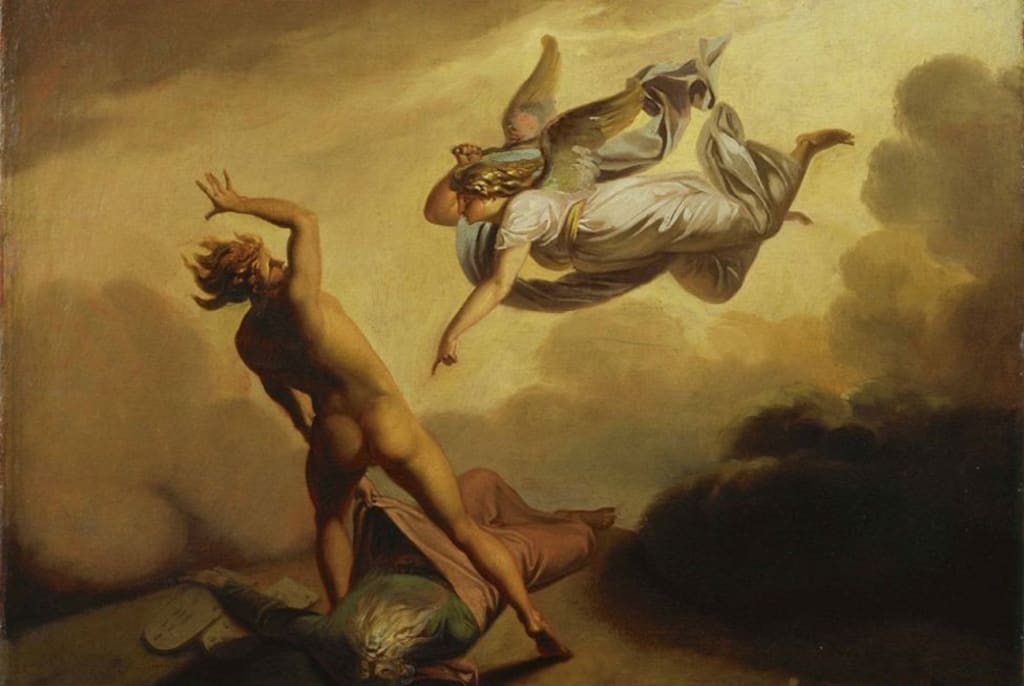
The account of Michael and the devil contending over the body of Moses, found in Jude 9, has long intrigued scholars, theologians, and biblical commentators. The passage presents a curious and enigmatic episode in which the archangel Michael disputes with Satan over the burial place of Moses, but does not engage in a blasphemous judgment. Instead, Michael says, "The Lord rebuke you." This event, though brief, raises significant questions regarding the nature of spiritual warfare, the roles of angels and demons, and the mysterious burial of Moses. To understand why this dispute occurred, we must first examine the context, the historical and theological background, and the symbolic implications of this confrontation.
1. The Context of Jude 9
Jude 9 is a relatively obscure verse that refers to an event not described in the Old Testament canon. The text reads:
“But Michael the archangel, when he disputed with the devil and argued about the body of Moses, did not dare pronounce against him a railing judgment, but said, ‘The Lord rebuke you!’” (Jude 9, NASB)
This verse is noteworthy for several reasons. First, it references an event that is not found in the Hebrew Bible. The story of Michael and the devil disputing over Moses’ body is not part of the canonical scriptures, but rather is drawn from Jewish traditions and apocryphal writings, particularly the Assumption of Moses, a work that was popular in some Jewish circles but was not included in the biblical canon. Understanding the historical and literary context of Jude is crucial in making sense of this dispute.
The dispute takes place after the death of Moses, whose body is mysteriously buried by God Himself. Deuteronomy 34:5-6 states, “So Moses, the servant of the Lord, died there in the land of Moab, according to the word of the Lord. And He buried him in the valley, in the land of Moab, opposite Beth-peor; but no one knows his burial place to this day.”
In the Jude passage, we see that Michael, as the archangel, contends with Satan over the body of Moses, yet the dispute remains unresolved through direct confrontation. Instead, Michael defers to the authority of God, invoking the Lord's rebuke.
2. The Role of Michael in Scripture
Michael’s role in scripture is vital to understanding the dispute. In the Old Testament, Michael is depicted as one of the chief angels, a protector of God’s people, and a warrior against the forces of evil. In the book of Daniel, Michael is described as “one of the chief princes” (Daniel 10:13) and the “great prince” who watches over Israel (Daniel 12:1). Michael’s appearance in the heavenly court highlights his status as an archangel—one of the highest-ranking angels in the celestial hierarchy. His responsibility for protecting and guiding God's people is evident in his role as a guardian figure.
In the New Testament, Michael is mentioned again in Revelation 12:7-9, where he leads the heavenly army in a battle against the forces of Satan. This further underscores his significance as a spiritual warrior. However, Michael’s role in Jude 9 is different from his typical depiction as a warrior. In this case, Michael does not engage in direct combat or rebuke Satan with his own authority. Instead, he invokes God’s authority with the words, “The Lord rebuke you!”
3. The Devil’s Role as Accuser
The devil's role in the dispute also warrants attention. Known as the “accuser” (Revelation 12:10), Satan's primary function in biblical theology is to accuse humanity of sin and condemn them before God. His confrontation with Michael over Moses’ body appears to be a case in which Satan seeks to accuse Moses of some form of wrongdoing or unworthiness, perhaps because of Moses’ disobedience in striking the rock (Numbers 20:10-12) or his failure to enter the Promised Land.
In Jewish tradition, the dispute over Moses' body is sometimes interpreted as Satan's claim that Moses' death was unjust, or that Moses' sin (such as his failure to enter the Promised Land) rendered him unworthy of the honor of being buried by God. Satan’s accusations against Moses may have been seen as a challenge to God’s justice or to Moses’ righteousness.
4. Theological Implications of the Dispute
Several theological implications emerge from the dispute between Michael and the devil:
a) The Mystery of Moses' Burial
The burial of Moses itself is shrouded in mystery. Deuteronomy 34:5-6 states that God Himself buried Moses, and no one knows the location of his grave. This divine intervention in the burial of Moses suggests that his death and burial were unique and carried special significance. The dispute over Moses' body may be a reflection of the sacredness of his death and the need to protect his burial from becoming an object of idolatry or superstition.
In the ancient world, the bodies of great leaders were often revered, and their graves became sites of veneration. The Jewish people, however, were warned against venerating the tombs of their leaders (Deuteronomy 34:6). The dispute over Moses' body may be understood as a preventative measure to avoid idolatry, as suggested by John Calvin, who argued that Satan's interest in the body of Moses was to foster superstition.
b) The Role of Angels in Spiritual Warfare
The dispute between Michael and Satan illustrates the involvement of angels in spiritual warfare. While Michael does not engage in direct combat with Satan, his invocation of God's authority underscores the angelic role as agents of God’s will in spiritual matters. The conflict over Moses’ body is a reminder of the cosmic battle between good and evil that continues to unfold in the heavenly realms.
c) The Significance of Deference to God’s Authority
Michael’s refusal to pronounce judgment on Satan and instead defer to God’s rebuke highlights the importance of humility and submission to God’s will. Even the archangels are not above God’s authority. Michael’s example stands in contrast to the arrogant defiance of the false teachers mentioned in Jude 8-10, who “reject authority and blaspheme the glorious ones.” Michael’s deference to God’s power serves as a model for believers in how to approach spiritual warfare and temptation: not with pride or self-reliance, but with humility and reliance on God’s strength.
5. Historical and Cultural Context
The Assumption of Moses, an apocryphal Jewish text, provides additional context for the dispute. In this work, Michael and Satan engage in a legal dispute over Moses’ body, with Satan accusing Moses of sin. The text emphasizes the idea that the dispute was over the justice of Moses’ death and his burial. The Assumption of Moses was not considered canonical, but it provides valuable insight into the Jewish understanding of angels, demons, and the afterlife during the Second Temple period.
6. Conclusion
The dispute over Moses’ body, as recorded in Jude 9, is a profound and multifaceted episode that reveals much about the roles of angels, demons, and the nature of spiritual authority. Michael’s refusal to engage in a direct confrontation with Satan and his appeal to God’s authority highlights the importance of humility, submission, and reliance on God’s strength. The mystery surrounding Moses' burial underscores the sacredness of his death and the need to prevent his body from becoming an object of idolatry. Ultimately, the account of Michael and the devil contending over Moses' body serves as a reminder of the ongoing spiritual battle between good and evil, as well as the need for believers to humbly rely on God’s power in the face of spiritual opposition.
About the Creator
Keep reading
More stories from writers in History and other communities.
When the Pyramids Learned to Breathe
The desert was silent in the way only ancient places can be—not empty, but listening. At dawn, the first light touched the limestone faces of the pyramids, and the shadows they cast stretched long and deliberate, as if time itself were waking slowly. To the west, beyond the city’s dust and noise, the old giants stood where they always had, unmoved by centuries, untouched by doubt.
By LUNA EDITH7 days ago in History
Talleyrand: The Master Survivor
Few figures in history embody strategic survival as perfectly as Charles-Maurice de Talleyrand-Périgord. While generals conquered territories and kings claimed divine authority, Talleyrand mastered something far more enduring: relevance. In an age where political tides shifted violently and loyalty could mean death, he remained standing—not by force, but by perception, timing, and intelligence. He did not dominate history. He outlasted it.
By Fred Bradfordabout 17 hours ago in History


Comments
There are no comments for this story
Be the first to respond and start the conversation.