
Who Was Adolf Hitler?
"Most of us have heard of Hitler, but are we really aware of who he was? Let's learn a little bit about Hitler today—who he really was, where he lived, and what he did. And if I get positive feedback, I'll tell you later what happened to Hitler."

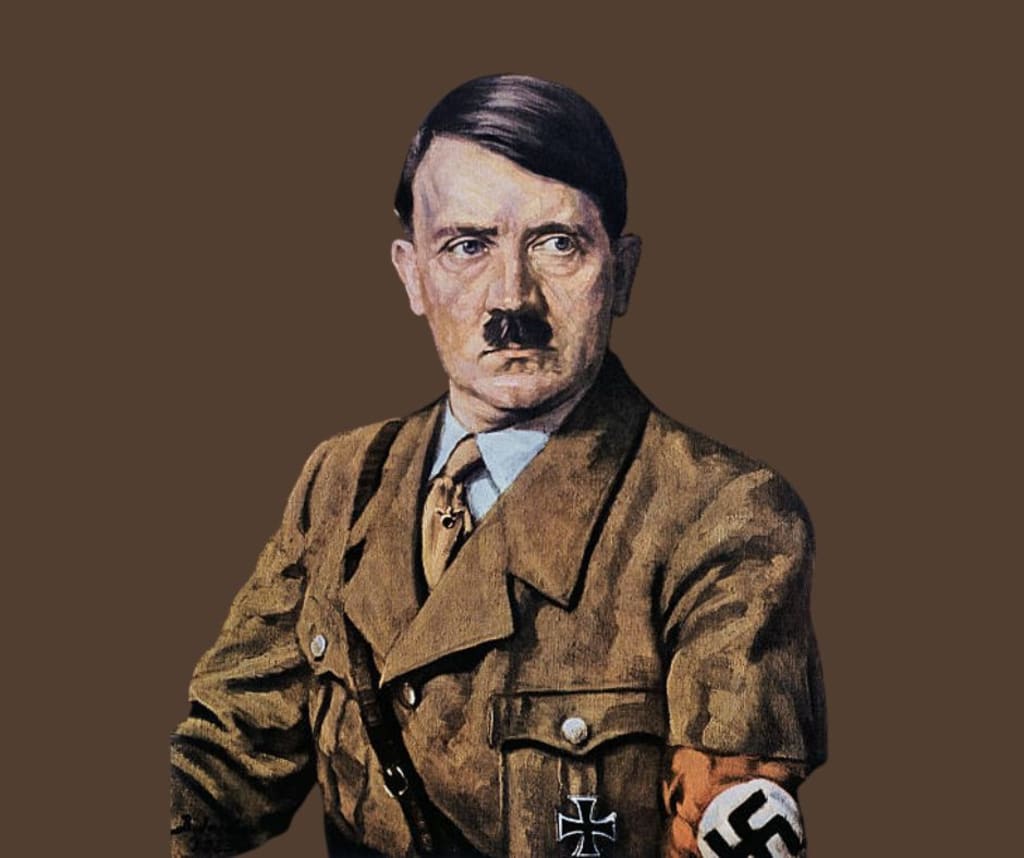
Adolf Hitler remains one of the most infamous figures in modern history. His actions led to the outbreak of World War II and the systematic genocide of six million Jews during the Holocaust while he was the leader of Nazi Germany from 1934 to 1945. Understanding Hitler’s life helps illuminate how a single individual, driven by ideology and ambition, can shape the course of history through propaganda, manipulation, and violence.
Background and Early Life Adolf Hitler was born in Braunau am Inn, a small Austrian-Hungarian town near the German border, on April 20, 1889. His mother, Klara Hitler, was gentle and affectionate, while his father, Alois Hitler, was a strict customs official. While he was close to his mother, Hitler had a difficult relationship with his father. He showed early interest in art, hoping to become a painter. Hitler, on the other hand, struggled financially and lived a life of hardship after the Academy of Fine Arts in Vienna twice rejected him. Hitler came up with a lot of the ideas that would shape his political worldview while he was in Vienna. German nationalism, anti-Semitic literature, and growing notions of Aryan racial superiority all had an impact on him. He also grew to resent the multiculturalism of the Austro-Hungarian Empire and admired Germany’s power and unity.
World War I and Political Awakening
Hitler moved to Munich, Germany, in 1913. When World War I broke out in 1914, he volunteered to serve in the German army. He served as a messenger on the Western Front and was wounded twice. He was awarded the Iron Cross and a number of other military decorations for his bravery. However, he was profoundly affected when the war ended in 1918. Germany’s defeat and the Treaty of Versailles, which imposed harsh penalties on the country, fueled Hitler’s anger and sense of betrayal. He, like many others, believed Germany had been "stabbed in the back" by internal enemies, particularly Jews and communists.
Ascend to Power Hitler remained in the army after the war and was given the task of spying on political organizations. He joined the German Workers' Party in 1919, which later changed its name to the National Socialist German Workers' Party (Nazi Party). Due to his powerful speaking skills and ferocious nationalist message, Hitler rose quickly through the ranks. He tried to pull off what is now known as the Beer Hall Putsch in Munich in 1923. Hitler was imprisoned after the attempt failed. Hitler wrote Mein Kampf, or "My Struggle," while he was in prison. In it, he described his ideology, which included his belief in the superiority of the Aryan race, hatred of Jews, and vision of a strong, authoritarian Germany. Mein Kampf would later become central to Nazi propaganda, despite being initially ignored. Hitler focused on gaining legal power after his release. By the early 1930s, economic instability, high unemployment, and fear of communism made many Germans receptive to his message. Hitler was made Germany's Chancellor in 1933. Soon after, he consolidated power, eliminated political opposition, and established a totalitarian regime.
World War II and dictatorship Once in power, Hitler rapidly transformed Germany into a fascist state. He controlled the media, banned all political parties except the Nazi Party, and promoted his leadership through propaganda. The Gestapo, his secret police, suppressed opposition and instilled fear among the population.
One of Hitler’s central policies was the persecution of Jews and other minority groups. Jews were denied citizenship and rights by the Nuremberg Laws of 1935. Kristallnacht in 1938 marked a violent turning point, with synagogues burned and Jewish businesses destroyed. These actions laid the groundwork for the Holocaust, a state-sponsored genocide that ultimately claimed six million Jewish lives.
The aggressive foreign policy pursued by Hitler aimed to expand German territory. He incorporated Austria (Anschluss) and the Czechoslovakian Sudetenland region in 1938. In spite of assurances of peace, he invaded Poland in 1939. This invasion prompted Britain and France to declare war, beginning World War II.
Initially, Germany conquered a large portion of Europe with the help of the strategy known as Blitzkrieg, or "lightning war." By 1941, Hitler controlled France, Belgium, the Netherlands, and other parts of the continent. His decision to invade the Soviet Union, on the other hand, proved disastrous. The brutal Russian winter, fierce resistance, and extended supply lines turned the tide against Germany.
In 1941, Hitler also declared war on the United States, following Japan’s attack on Pearl Harbor. Germany's military began to disintegrate in the face of enemies on multiple fronts. The United States of America, the Soviet Union, and the United Kingdom were among the Allied forces that gradually pushed back. Downfall and Death
By 1945, Germany was in ruins. The Soviet army was moving toward Berlin as German cities had been destroyed by Allied bombing. Hitler remained in his Berlin underground bunker, refusing to surrender. On April 30, 1945, with Soviet troops just blocks away, Adolf Hitler died by suicide, along with his wife, Eva Braun, whom he had married just one day earlier. His death marked the end of the Nazi regime.
Germany officially surrendered on May 8, 1945, bringing an end to World War II in Europe.
Legacy
War, hatred, and destruction are the legacy of Hitler. Under his direction, atrocities on an unprecedented scale and millions of lives were lost worldwide. The Holocaust is still a chilling reminder of the dangers of totalitarianism, racism, and unchecked power. Not only is Hitler studied today as a historical figure, but also as a cautionary tale about how dangerous ideologies can take root and how charismatic leaders can use fear and rage to rise to power. His story serves as a powerful lesson in the importance of democracy, human rights, and vigilance against hate.
About the Creator
Tanjilul Tuaha
I’m Tuaha, a history writer driven by a deep passion for uncovering the stories that time has nearly forgotten. For me, history isn’t just a collection of dates and events—it’s a living narrative that shapes who we are and how we see.
Keep reading
More stories from writers in History and other communities.
When Hearts Collide
When Hearts Collide The first time Ayaan saw Meher, it was in the crowded corridors of the city library. He had been wandering aimlessly among the rows of books, searching for a quiet corner to escape the chaos of his life. College had been overwhelming lately—assignments, group projects, and the constant pressure to decide a career path he wasn’t even sure he wanted. He leaned against a shelf, scrolling through his phone when he noticed a shadow blocking the light.
By Samaan Ahmad3 days ago in History
The Saddest Thing - The Billionaires Who Rule America Aren't Even Enjoying Themselves
This single post says more about our ruling class than a thousand policy papers. The saddest thing about today's system is that the men robbing the rest of us - sabotaging our economic prospects, our pensions, our access to affordable healthcare - are not even happy.
By Scott Christenson🌴6 days ago in The Swamp



Comments
There are no comments for this story
Be the first to respond and start the conversation.