
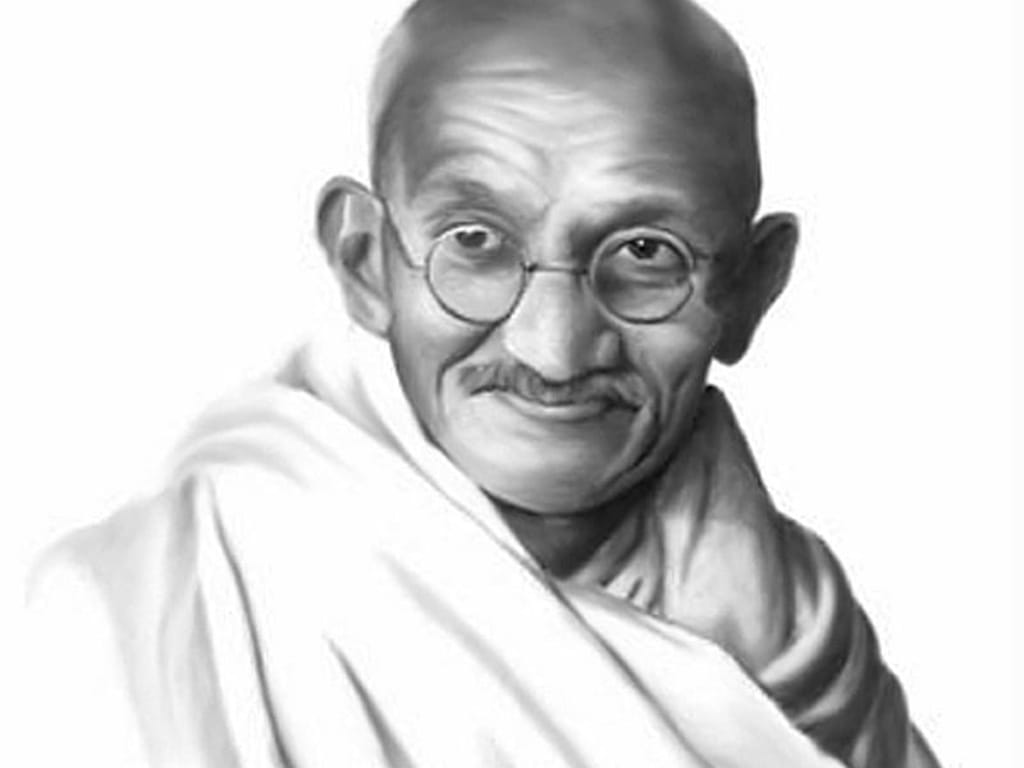
Mahatma Gandhi, also known as Gandhi Ji, was a prominent leader and key figure in India's struggle for independence from British colonial rule. He is revered as the "Father of the Nation" in India and is internationally recognized for his philosophy of nonviolent resistance, which he termed as "Satyagraha."
Born on October 2, 1869, in Porbandar, Gujarat, India, Gandhi studied law in England and later practiced law in South Africa, where he became actively involved in the civil rights movement and developed his ideas of passive resistance and nonviolent protest.
Some key aspects of Gandhi's work and philosophy include:
Nonviolent Resistance (Satyagraha): Gandhi believed in the power of nonviolent resistance as a means to achieve social and political change. He led various campaigns and movements that aimed to address injustices and oppression without resorting to violence.
Salt March: One of the most famous instances of Gandhi's nonviolent protest was the Salt March (March to Dandi) in 1930. He led a group of followers on a 240-mile march to the Arabian Sea to protest against the British salt tax. This act of civil disobedience gained widespread attention and marked a significant turning point in India's struggle for independence.
Champaran and Kheda Movements: Gandhi's early efforts in India included the Champaran and Kheda movements, where he organized protests against the unfair treatment of indigo farmers and peasants facing severe taxation and crop failure.
Quit India Movement: During World War II, Gandhi launched the Quit India Movement in 1942, calling for the British to leave India immediately. This marked a major step towards India's eventual independence.
Promotion of Self-Sufficiency: Gandhi emphasized the importance of self-sufficiency and economic independence. He promoted the use of khadi (handspun cloth) as a symbol of self-reliance and boycotted British goods.
Communal Harmony: Gandhi also worked to bridge the divide between different religious and ethnic communities in India, advocating for unity and harmony among Hindus, Muslims, Sikhs, and others.
Legacy and Assassination: Gandhi's efforts and philosophy profoundly impacted India's fight for independence and movements for civil rights and social justice around the world. Tragically, he was assassinated on January 30, 1948, by a Hindu nationalist who opposed his views on communal harmony.
Gandhi's principles of nonviolence, civil disobedience, and social justice inspire individuals and movements to seek peaceful solutions to conflicts and strive for positive change. His life and work remain an enduring symbol of the power of moral courage and determination.
Now something about his supporters and the communities he builds:-
Mahatma Gandhi had a diverse range of supporters from various communities in India and around the world, who were inspired by his philosophy of nonviolence, social justice, and freedom. Some of his prominent supporters and the communities he built connections with include:
Indian National Congress: Gandhi became a prominent leader within the Indian National Congress (INC), the political party that played a pivotal role in India's struggle for independence. He worked closely with other leaders within the Congress to mobilize people and lead various campaigns against British rule.
Hindus: Gandhi himself was a Hindu and strongly influenced the Hindu community. He emphasized the importance of religious tolerance and harmony and sought to bridge the gaps between different religious groups within India.
Muslims: Gandhi worked towards building unity between Hindus and Muslims, as communal tensions were a major challenge during the freedom struggle. He held discussions and dialogues with Muslim leaders, advocating for mutual understanding and respect between the two communities.
Dalits (Untouchables): Gandhi was an advocate for the rights and upliftment of Dalits, who were marginalized and oppressed within the Hindu caste system. He called them "Harijans," meaning "children of God," and worked to end the practice of untouchability.
Tribal Communities: Gandhi was concerned about the rights of India's tribal communities and their exploitation by outsiders. He supported their struggles for land rights and worked to empower them.
Workers and Peasants: Gandhi's movements often included participation from workers and peasants who were affected by social and economic inequalities. He encouraged labor strikes and land reform movements to improve their conditions.
Women: Gandhi recognized the importance of women in the struggle for independence and advocated for their equal participation. He promoted women's education and their involvement in political activities.
Students and Youth: Gandhi's philosophy resonated with students and young people who were eager for change. Many students participated in his movements and protests.
International Community: Gandhi's principles of nonviolence and civil disobedience influenced civil rights movements and leaders around the world, including Martin Luther King Jr. in the United States and Nelson Mandela in South Africa.
Gandhi's ability to connect with a wide range of communities and individuals was a testament to his inclusive and principled approach to social and political change. He aimed to create a united front against British colonial rule while also addressing internal divisions within Indian society. His legacy continues to inspire people to work toward justice, equality, and peaceful coexistence.
About the Creator
Keep reading
More stories from writers in History and other communities.
A woman from a vanished female dynasty was discovered buried with 270,000 beads.
In a Copper Age tomb close to Seville, Spain, the Montelirio bead assemblage contains over 270,000 beads that identify the ladies buried there as elites. The discovery is the biggest collection of beads ever
By Francis Dami4 days ago in History
The Ottoman Empire
In the late thirteenth century, when the great empires of the medieval world were beginning to crack under their own weight, few would have noticed a small Turkic tribe living on the edge of the collapsing Byzantine Empire. They owned little land, had no grand cities, and were surrounded by stronger rivals. Yet from this humble beginning would rise one of the longest-lasting and most influential empires in human history: the Ottoman Empire.
By The best writer 3 days ago in History
Wild Card Weekend Recap: What Happens Now?
I think I figured out why I love Wild Card Weekend so much. It's because it's the first playoff anything of the calendar year. The NFL season starts in the fall, and once upon a time, the champion was crowned either on or slightly before New Year's. The evolution of the NFL schedule has resulted in the playoffs starting just into the New Year, and currently, the final week of the season falls on the first weekend of the New Year, with Wild Card Weekend coming a week after that. So yes, chronologically, the NFL's Wild Card Weekend serves as the first playoff anything of the calendar year.
By Clyde E. Dawkins6 days ago in Unbalanced




Comments
There are no comments for this story
Be the first to respond and start the conversation.