
What's Hidden Under The Ice Of Antarctica?
Under The Ice Of Antarctica?

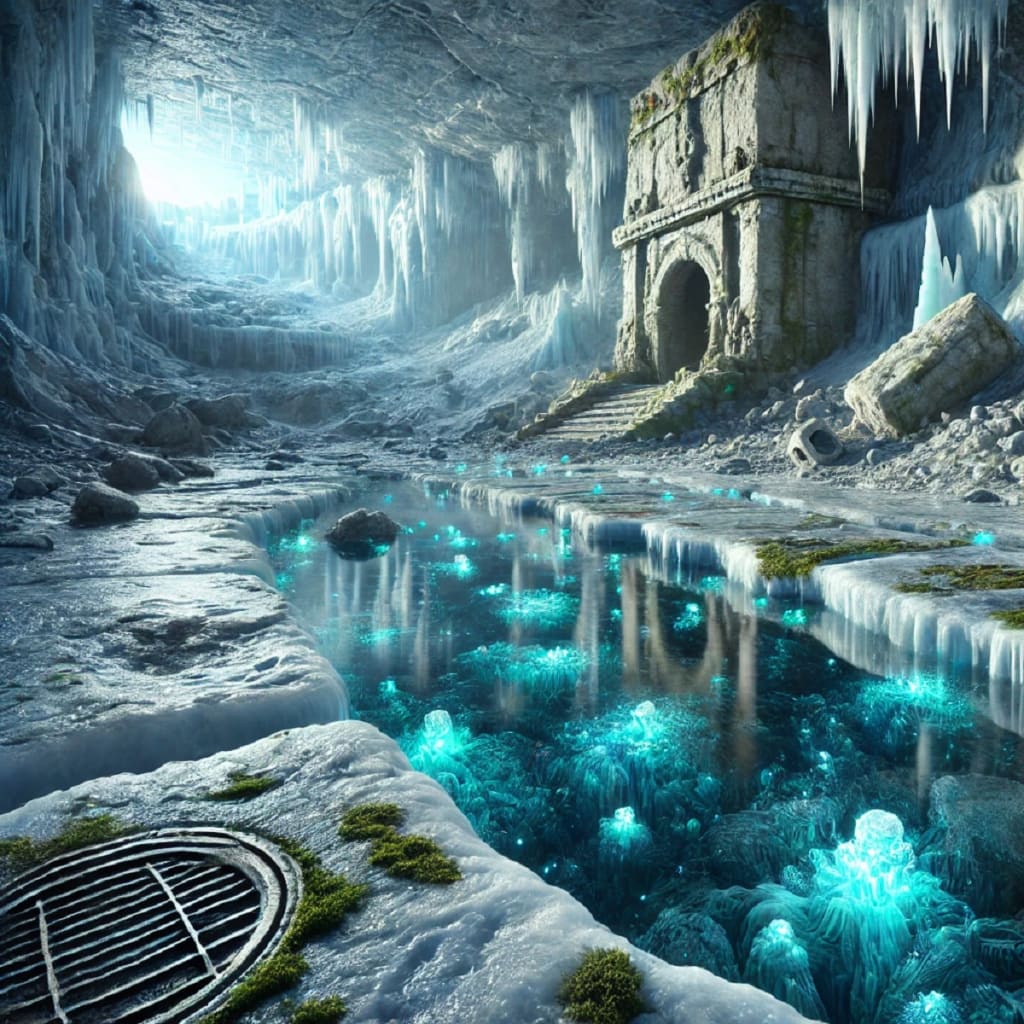
Antarctica, often viewed as a vast, enigmatic landmass, is the least understood continent on Earth. Its true size and shape remain a mystery to many, primarily due to our perception shaped by two-dimensional maps. In reality, Antarctica ranks as the fifth-largest continent, surpassing Australia and Europe in size, and is more comparable to South America. When we overlay Antarctica onto more familiar continents like North America, its enormity becomes apparent. The distance from the Antarctic Peninsula to the continent's far side is akin to the distance from the Canadian Arctic islands to Mexico. Moreover, if placed over Europe, Antarctica would stretch from the northernmost parts of Norway and Finland to Iran and Iraq, making it a truly massive and largely uninhabited land.
The Population and Accessibility of Antarctica
The human presence in Antarctica is minimal, fluctuating between approximately 4,000 individuals in the summer and dropping to around 1,000 during the harsh winter months. The extreme cold, with temperatures plummeting below -34°C continent-wide, along with months of darkness, contributes to this sparse population. The continent's remoteness is another significant factor; the nearest substantial human settlement is Ushuaia in Argentina, located about 1,000 km away from the Antarctic Peninsula. This distance is compounded by the treacherous Drake Passage, notorious for its rough waters, making access to Antarctica a formidable challenge.
The Ice Sheet: A Barrier to Understanding
Covering over 98% of Antarctica's surface, the Antarctic ice sheet is a formidable barrier to exploration and understanding. On average, this ice sheet stretches over 2 km thick, and at its thickest points, it can reach nearly 5 km—comparable to stacking six Burj Khalifas on top of each other. This massive ice sheet contains approximately 61% of the world's freshwater. If it were to melt, global sea levels could rise by about 60 meters, resulting in catastrophic consequences for coastal regions worldwide, including Florida and much of the U.S. Gulf and East coasts.
Unveiling the Secrets Beneath the Ice
Despite its thickness, we know more about the surface of distant planets like Mars than we do about what lies beneath the Antarctic ice. The primary method for visualizing the subglacial landscape involves a technique called radio echo sounding, where planes fly over the ice and send radio waves down, analyzing their echoes. However, this process is painstakingly slow and expensive, and as a result, over 90% of Antarctica's sub-ice terrain remains unmapped.
The Geology of Antarctica: A Tale of Two Continents
What we do know about Antarctica is fascinating. Beneath the ice, the continent is not a unified landmass as it appears above. If the ice were to melt, the Antarctic Peninsula would emerge as a separate archipelago of mountainous islands, known as Lesser Antarctica, while the larger portion, Greater Antarctica, would reveal itself as a landmass roughly the size of Australia. The geological differences between these two regions are stark: Greater Antarctica is composed of ancient igneous and metamorphic rocks, while Lesser Antarctica features younger sedimentary and volcanic rocks.
Volcanic Activity: A Hidden World
Interestingly, Lesser Antarctica lies within the Great Pacific Ring of Fire, home to numerous active volcanoes. Mount Erebus, the southernmost active volcano on Earth, is a prime example, with a permanent lava lake observable since the 1970s. Despite the harsh cold surrounding it, the area around Mount Erebus can reach temperatures of 25°C within its subvolcanic ice caves, creating a unique ecosystem that may harbor life forms yet to be discovered.
In 2017, researchers found DNA traces of algae, mosses, and even small animals in soil samples from beneath Mount Erebus, hinting at a hidden oasis of life thriving in these extreme conditions. This discovery raises questions about the potential for other similar ecosystems beneath the ice, as there are at least 15 other active or semi-active volcanoes across Antarctica.
Geographic Features Beneath the Ice
Recent advancements in radio echo sounding have revealed rolling valleys, riverbeds, and hills beneath the ice, similar to landscapes seen elsewhere on Earth. Among the most remarkable findings is the Denman Canyon, identified in 2019 as the deepest canyon on Earth, plunging 3.5 km below sea level, deeper than the average Atlantic Ocean depth. This canyon dwarfs the Grand Canyon and remains hidden beneath layers of ice.
Additionally, the Gamburtsev Mountain Range, discovered by Soviet researchers in the late 1950s, stretches over 1,200 km and rises to heights comparable to the Alps, all concealed beneath ice.
The Mystery of the Gravity Anomaly
In East Antarctica, scientists detected a significant gravity anomaly, suggesting a buried impact crater from an ancient meteorite. This crater could be the largest ever discovered, potentially three times the size of the one linked to the extinction of the dinosaurs. Understanding its implications could reveal insights into Earth's history and the events that shaped our planet.
Subglacial Lakes: The Hidden Reservoirs
Another fascinating aspect of Antarctica's hidden world is the discovery of around 675 subglacial lakes, including Lake Vostok, the sixth largest lake in the world. This lake lies approximately 4 km beneath the ice and maintains a temperature of -3°C due to geothermal heating and insulation from the ice above. Its isolation for over 15 million years raises questions about the unique life forms that may exist within, evolving separately from the rest of the world.
Future Implications: Life and Resources
The implications of these discoveries extend beyond the scientific realm. The potential for finding life in extreme environments could inform our understanding of life on other planets, such as Europa and Enceladus, where similar conditions exist. Moreover, Antarctica's vast resources, including potential oil and gas deposits, are becoming increasingly coveted. Recent discoveries suggest that an oil field in the Weddell Sea could contain an astonishing 511 billion barrels of oil, raising concerns about the future of Antarctic conservation.
As the Antarctic Treaty, which currently prohibits resource extraction, approaches its review in 2048, the potential for exploitation of these resources looms large. The geopolitical implications of such actions could reignite territorial disputes among nations with claims over Antarctica, complicating the delicate balance of scientific exploration and environmental protection.
The Future of Antarctica
The future of Antarctica remains uncertain. As climate change continues to alter the landscape, the potential for increased exploration and exploitation of its resources grows. The discoveries made thus far only scratch the surface of what lies beneath the ice, and as technology advances, we may soon uncover even more secrets held by this mysterious continent.
Antarctica is not just a frozen wasteland; it is a land of contrasts, secrets, and untold stories waiting to be uncovered. The more we learn about this vast and enigmatic continent, the more we realize how much we still have to discover.
About the Creator
Ellen Sammy
Writer and Blogger
Keep reading
More stories from Ellen Sammy and writers in History and other communities.
The Unbelievable True Story of Shackleton’s Antarctic Survival
On 4 November 1914, a British ship called Endurance set sail for the frozen edge of the world. Aboard were 28 brave men led by the determined explorer Sir Ernest Shackleton. His dream? To be the first to cross the entire continent of Antarctica on foot. With no GPS, no modern gear, and nothing but hope, Shackleton and his crew faced some of the harshest conditions on the planet. What followed has become the ultimate survival story—one where courage, teamwork, and quick thinking were the only things that stood between life and death. Here’s the gripping, nearly impossible tale of the Endurance expedition.
By Ellen Sammy7 months ago in History
My First Time Skiing and I Got Lost, Alone, in the French Alps
Looking back, I can trace some of my life’s biggest adventures to a simple action from my sister. She’d introduced me to Tommy (a very long time ago), a colleague of hers, who had overshared his penchant for Italian-looking women, and I ticked that box.
By Chantal Christie Weissabout 19 hours ago in Humans


Comments (2)
Great story 🌟♦️🌟
Very well written, congrats 😊👏🏻