
Wang Bo: The Prodigy Whose Brilliant Life Burned Bright but Briefly in Tang China
From Imperial Favor to Literary Immortality: The Turbulent Life of Wang Bo

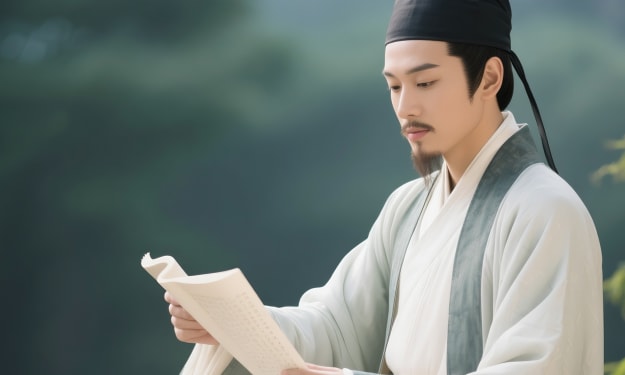
In the annals of Chinese literature, few figures shine as brightly and briefly as Wang Bo. A prodigious talent who seemed to possess otherworldly gifts, he achieved more by his late teens than most writers do in a lifetime. His magnum opus, *Ode to the Pavilion of Prince Teng*, has remained unparalleled for 1,300 years, but its creation came at a steep personal cost. Despite living only 27 years, Wang Bo left an indelible mark on Chinese culture, embodying both the glory and the tragedy of genius.
A Genius Born into a Family of Intellectual Titans
Wang Bo hailed from a family of extraordinary scholars. His grandfather, Wang Tong, was renowned as the wisest thinker of the Sui and Tang dynasties, becoming a teacher at just 15. His great - uncle Wang Bao pioneered Tang dynasty legends with *The Story of the Ancient Mirror*, while another great - uncle, Wang Ji, laid the foundation for five - character regulated poetry and gained fame in the capital at 11. Even his elder brother, Wang Jun, became a jinshi (a successful imperial examinee) at 20.
Wang Bo himself took the family's genius to new heights. By six, he could compose poetry effortlessly; at nine, he wrote a ten - volume critique of *Annotations to the Book of Han*, pointing out numerous errors. At 14, he boldly criticized a prime minister in a letter, yet his audacity impressed the official so much that he recommended Wang Bo to the court. By 16, Wang Bo became the youngest government official in the Tang Dynasty, a remarkable feat that set him apart from his peers.
The Rise and Fall of a Literary Star
Wang Bo's literary talent quickly made him a sensation in Chang'an. Along with Yang Jiong, Lu Zhaolin, and Luo Binwang, he formed the "Four Great Poets of the Early Tang," with Wang Bo often regarded as the leader. As a companion to imperial princes, he enjoyed a life of luxury, indulging in activities like cockfighting and feasting. However, his carefree days took a dark turn when he wrote *Ode Mocking the Cock of Prince Ying* to support Prince Pei during a cockfighting dispute. The satirical tone of the piece touched a raw nerve with Emperor Gaozong, who feared it might incite royal infighting. Enraged, the emperor banished Wang Bo from the capital, marking the first major setback in his young life.
Despite the setback, Wang Bo found another minor official position through friends. But his arrogant and unapologetic nature—common among geniuses—alienated him from colleagues. His disdain for authority and inability to hide his emotions led to a tragic incident: he was framed for harboring and then killing a fugitive official slave. Facing the death penalty, Wang Bo narrowly escaped execution due to a imperial pardon, spending three years in prison instead. This ordeal deeply affected him, leading him to decline a chance at reinstatement upon his release. He chose to focus on scholarship, haunted by the guilt of implicating his father, who was exiled to the remote region of Jiaozhi (modern - day northern Vietnam) because of his son's misfortune.
The Legendary Creation of *Ode to the Pavilion of Prince Teng*
In 675, at 26, Wang Bo traveled south to visit his father. Along the way, he attended the grand reopening ceremony of the Pavilion of Prince Teng in Hongdu (modern - day Nanchang). The event's host, Governor Yan, intended to showcase his son - in - law Wu Zizhang's literary talent. Wu had prepared a pre - written essay in advance, hoping to impress the assembled guests.
During the banquet, Governor Yan invited attendees to compose an ode for the pavilion. Wang Bo, seemingly oblivious to the host's hidden agenda, volunteered. As he began writing, starting with "Yuzhang, the ancient prefecture; Hongdu, the new metropolis," Governor Yan initially dismissed his work as mediocre. But as Wang Bo continued, penning lines like "The setting sun and lone wild duck soar together; the autumn waters merge with the boundless sky," the audience erupted in applause. The poem seamlessly blended vivid descriptions of the landscape with poignant reflections on fate and missed opportunities, such as "Alas! Fortune often fails; fate loves to strike. Feng Tang aged quickly; Li Guang never received due recognition."
A dramatic moment occurred near the poem's end. Wu Zizhang, claiming the work was plagiarized, recited the entire piece from memory—until he reached the final, missing word. Wang Bo challenged him to fill it. After Wang Bo left, Governor Yan sent messengers to retrieve the missing character. When the messenger opened his hand, it was empty. Suddenly, the governor exclaimed, "Brilliant! 'The youths in the pavilion—where are they now? / Beyond the rails, the Yangtze River flows on, empty'." The character "empty" perfectly encapsulated the transience of life and the passage of time.
A Tragic End and Lasting Legacy
After reuniting with his father in Jiaozhi, Wang Bo began his journey home. Tragically, while crossing the South China Sea, his boat capsized in a storm. Though rescued, he succumbed to shock and drowned at the age of 27. His death was a stark contrast to his larger - than - life persona, but perhaps it reflected the inner turmoil of a genius who had experienced both extraordinary success and profound despair.
Wang Bo's life, though short, was a whirlwind of achievement. He embodied the paradox of brilliance: soaring high on the wings of talent yet often tripped up by hubris and circumstance. While his premature death remains a poignant loss, his works continue to inspire. *Ode to the Pavilion of Prince Teng* alone secures his place as one of China's greatest literary figures. His story reminds us that true greatness, even when cut short, can leave an eternal imprint—a flash of brilliance that burns bright enough to illuminate centuries to come.
About the Creator
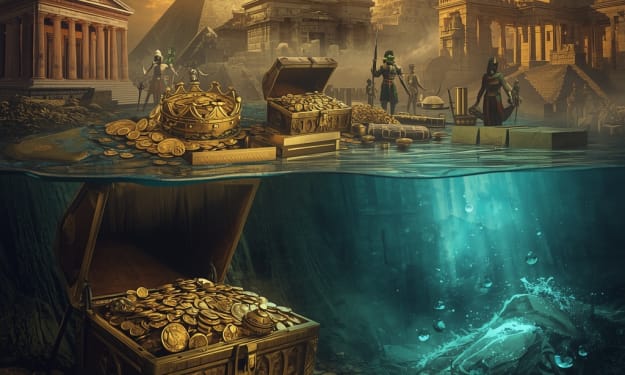
The Greatest Lost Treasures of History: A Deeper Exploration
1. The Gold of the Inca Empire The Inca Empire, which flourished in South America from the 13th to the 16th century, was one of the richest civilizations in the ancient world. For the Incas, gold was not merely wealth—it was sacred. They believed gold to be the “sweat of the Sun God Inti”, while silver was the “tears of the Moon.”
By Say the truth about 10 hours ago in History
Three Indie Podcasts About Classic Hollywood
Classic Hollywood was not simply a place and time where movies were made. It was where the magic happened, on and off the screen. Classic Hollywood wasn’t just about the classic movies being made — Citizen Kane, King Kong, Arsenic And Old Lace, It Happened One Night, Casablanca. The movie stars — backed by the studios and their P.R. machine — were depicted as larger than life, living lives of pampered luxury, extravagance, and, at times, even debauchery.
By Frank Racioppi2 days ago in History


Comments
There are no comments for this story
Be the first to respond and start the conversation.