
Walt Whitman – The Voice of America
A Poet Who Sang of Freedom, Humanity, and the Soul

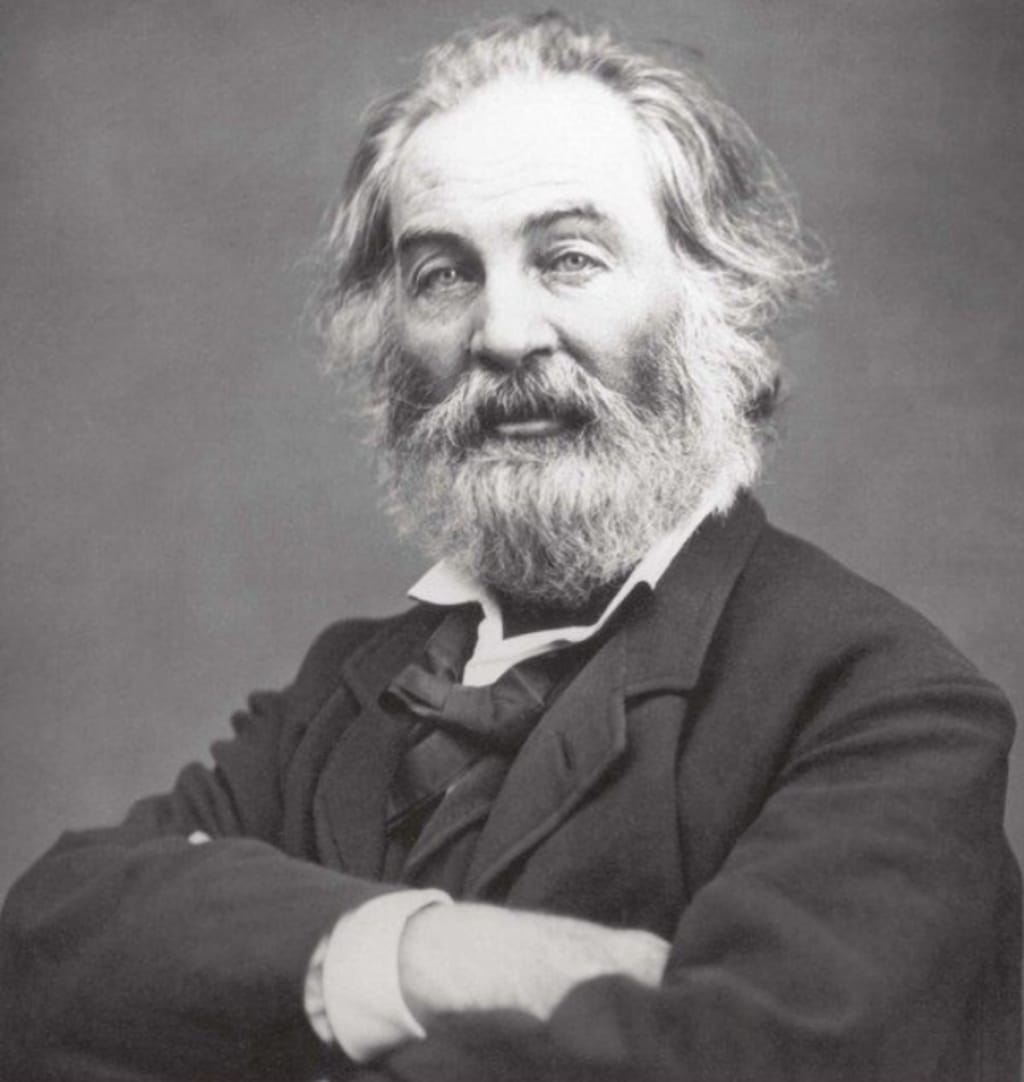
In the early nineteenth century, when America was still young and searching for its identity, a boy named Walt Whitman was born who would one day give the nation its poetic voice. Walt Whitman entered the world on May 31, 1819, in West Hills, Long Island, New York. He was born into a large and modest family. His father was a carpenter and farmer, and his mother, a deeply caring woman, filled the house with warmth despite their financial struggles.
Whitman’s childhood was simple and hardworking. He attended school for only a few years before leaving to help support his family. Though his formal education was limited, his hunger for knowledge was not. He worked as a printer’s apprentice, and this job introduced him to books, newspapers, and the power of words. The smell of ink and paper became part of his life. As he set type and read articles, he began to dream of writing his own thoughts one day.
In his early adulthood, Whitman worked as a teacher, journalist, and editor. He traveled across New York and Brooklyn, observing people from all walks of life. He walked the streets, visited ferry docks, and listened to workers, sailors, and shopkeepers. These ordinary people deeply influenced him. Unlike many writers of his time, Whitman did not focus on kings or mythical heroes. He believed that common people were worthy of poetry. He saw beauty in laborers, mothers, children, and even strangers passing by.
America during Whitman’s lifetime was changing rapidly. Cities were growing, railroads were expanding, and debates over slavery were dividing the nation. Whitman felt that poetry should reflect the true spirit of the country—its diversity, energy, and struggles. He wanted to create a new kind of poetry, one that sounded like America itself.
In 1855, Whitman published a small book of poems titled Leaves of Grass. He paid for its printing himself and even helped set the type. The first edition contained only twelve poems. One of the most famous poems in that book was “Song of Myself.” In it, Whitman celebrated the individual soul and the shared spirit of humanity. He wrote in long, flowing lines, unlike the strict rhyme and rhythm common at that time. His style was bold and free. Many readers were shocked by his direct language and open discussion of the human body and nature. Some critics called his work improper and strange.
But others recognized his genius. The famous writer Ralph Waldo Emerson praised Leaves of Grass and wrote Whitman a letter calling it an extraordinary work. This encouragement strengthened Whitman’s determination. Throughout his life, he continued revising and expanding Leaves of Grass. It became his life’s project, growing thicker with each edition.
Whitman believed in democracy not just as a political system but as a spiritual idea. He believed every person, regardless of class or background, was equal and sacred. His poetry spoke of unity—between men and women, between races, between body and soul. He celebrated nature, seeing it as a powerful teacher and healer. To him, a blade of grass was as important as a star in the sky.
When the American Civil War began in 1861, Whitman’s life took a serious turn. His brother was wounded in battle, and Whitman traveled to find him. Although his brother survived, Whitman was deeply moved by the suffering he saw in military hospitals. He decided to stay in Washington, D.C., and work as a volunteer nurse. Day after day, he visited injured soldiers, bringing them small gifts like fruit and writing letters home for them. He sat beside dying men, offering comfort and kindness.
The war changed Whitman. He saw both the horror of violence and the strength of human compassion. During this period, he wrote poems that were more somber and reflective. One of his most famous poems, “O Captain! My Captain!” was written after the assassination of President Abraham Lincoln. In it, Whitman mourned Lincoln as a fallen leader who had guided the nation through its darkest hour. The poem touched many hearts and became widely known.
As Whitman grew older, his health declined. He suffered a stroke in 1873, which left him partially paralyzed. He moved to Camden, New Jersey, where he spent the final years of his life. Though physically weaker, his spirit remained strong. Visitors came to see him, recognizing him as one of America’s great poets. He continued to write and revise his work, always shaping Leaves of Grass into what he believed was its truest form.
Whitman passed away on March 26, 1892. By then, he had transformed American poetry. At first, he had faced criticism and rejection, but over time, people began to understand his vision. He had broken traditional poetic rules and created free verse—a style that influenced countless writers after him. Poets such as Langston Hughes, Carl Sandburg, and Allen Ginsberg would later draw inspiration from his bold, expansive voice.
What made Walt Whitman unique was not only his style but his philosophy. He believed that poetry should not be distant or complicated. It should breathe, move, and feel alive. He believed that every individual life mattered. His words encouraged readers to see themselves as part of something larger—a great human family connected by shared hopes and struggles.
Whitman’s love for America was not blind praise. He acknowledged its flaws and conflicts, especially the deep wounds caused by slavery and war. But he remained hopeful. He believed the nation could grow wiser and more just. His poetry carried a message of unity, freedom, and self-discovery.
Today, Walt Whitman is remembered as the “Father of Free Verse” and one of the most important figures in American literature. Schools teach his poems, and readers around the world continue to find inspiration in his words. His celebration of individuality and equality feels timeless.
Walt Whitman once wrote about containing multitudes within himself. In many ways, he did. He was a printer, teacher, journalist, nurse, and philosopher—but above all, he was a poet who dared to speak in a new voice. He sang of the body and the soul, of cities and forests, of sorrow and joy. Through his poetry, he reminded the world that every person’s story matters.
His life teaches us an important lesson: true greatness often begins with courage—the courage to think differently, to create boldly, and to believe in the beauty of humanity. Walt Whitman listened to the rhythm of his own heart and turned it into song. And that song still echoes, carrying the spirit of freedom across generations.
About the Creator
The best writer
I’m a passionate writer who believes words have the power to inspire, heal, and challenge perspectives. On Vocal, I share stories, reflections, and creative pieces that explore real emotions, human experiences, and meaningful ideas.
Keep reading
More stories from The best writer and writers in History and other communities.
Martin Luther King Jr.: A Black Day in America
On April 4, 1968, the world lost one of its most powerful voices for justice and equality. Martin Luther King Jr., the man whose words had ignited hope in millions, was assassinated on the balcony of the Lorraine Motel in Memphis, Tennessee. That day is remembered as a black day in American history—not only for the loss of a great leader but for the reflection it forced the nation to confront about its values, its divisions, and the long road still ahead for civil rights. Martin Luther King Jr. had spent his life advocating for nonviolent resistance, inspired by the teachings of Mahatma Gandhi. From the Montgomery Bus Boycott in 1955 to the historic March on Washington in 1963, where he delivered his iconic “I Have a Dream” speech, King’s words and actions challenged a society deeply entrenched in racial segregation and discrimination. He had become a symbol of hope, a figure who reminded Americans that justice was not a privilege but a right. By 1968, King was focused on addressing broader issues beyond racial inequality. He had shifted his attention to economic justice, poverty, and the Vietnam War, recognizing that systemic oppression was not limited to race alone. In Memphis, he stood with striking sanitation workers demanding better wages and safer working conditions. He knew that the struggle for dignity and fairness extended to every corner of society. But tensions in the country were high. America was a nation divided. Cities were already experiencing unrest, the war in Vietnam was escalating, and extremist groups actively opposed the civil rights movement. King had received countless death threats, yet he remained steadfast, continuing his mission with courage that inspired millions. His presence in Memphis was meant to support the marginalized, but it would tragically mark the final chapter of his life. On that fateful evening, King stepped onto the balcony of his room at the Lorraine Motel. The sun was beginning to set, casting a warm glow over the streets of Memphis. It was a moment of calm, yet danger lurked unseen. A single gunshot rang out, piercing the air and the hearts of those who had looked to him for guidance. King collapsed, fatally wounded, and chaos erupted. News of his assassination spread like wildfire, leaving communities across America in shock and grief. Television networks interrupted regular programming; newspapers ran bold headlines; the streets filled with sorrow, anger, and disbelief. People who had never met him personally felt the sting of loss as if a father, a teacher, or a friend had been taken from them. For many, the dream that King had spoken of—the dream of equality, justice, and brotherhood—suddenly seemed fragile and distant. The immediate aftermath of King’s death was a period of turmoil. Cities erupted in riots, not out of mindless violence, but as an expression of pent-up frustration and despair. Washington D.C., Chicago, Baltimore, and dozens of other cities experienced burning buildings, looting, and clashes with law enforcement. The country mourned, yet it also faced an urgent question: how could a society that claimed freedom and equality fail so tragically to protect one of its most peaceful advocates? Despite the violence, Martin Luther King Jr.’s legacy endured and even grew stronger in the face of tragedy. His death forced Americans to confront the reality that the fight for civil rights was far from over. Congress passed the Civil Rights Act of 1968, also known as the Fair Housing Act, just days after his assassination, banning discrimination in housing—a testament to the momentum King had built. His dream did not die with him; it lived on in the countless people who continued to march, protest, and speak out against injustice. King’s life and death also revealed the fragility of human progress. The black day of April 4th was a stark reminder that the struggle for justice often comes with immense sacrifice. It highlighted the courage required to challenge deeply rooted systems of oppression and the persistent resistance faced by those who seek to change society for the better. Yet, even in mourning, his death inspired a renewed commitment among civil rights activists, politicians, and ordinary citizens to carry his vision forward. In the years following his assassination, memorials and tributes honored King’s life. Streets were renamed, schools dedicated, and eventually, the Martin Luther King Jr. National Memorial was built in Washington, D.C. On every January 15th, his birthday is commemorated as a national holiday, not merely to remember his death, but to celebrate his contributions and the enduring principles he fought for: equality, justice, and nonviolence. But the black day of April 4th also serves as a cautionary tale. It reminds the world that progress is never guaranteed, and the cost of complacency is high. King’s death symbolized the very real dangers that come with standing up for truth and justice in a divided society. It forced Americans to reflect on their own values and actions, and on the work still required to turn King’s dream into a reality. Martin Luther King Jr. once said, “The arc of the moral universe is long, but it bends toward justice.” His assassination did not halt that arc; it strengthened the resolve of those determined to see it through. Today, when people around the world remember that black day in America, they do not remember only the sorrow—they remember the courage, the vision, and the unyielding spirit of a man who believed in a better world and gave everything to achieve it. King’s life and untimely death continue to inspire generations to question injustice, fight inequality, and act with compassion. Though April 4, 1968, was a day of darkness, it ultimately illuminated the path forward, reminding humanity that even in tragedy, hope, courage, and change are possible. The legacy of Martin Luther King Jr. is a testament to the power of one person to awaken a nation, to challenge hatred with love, and to transform despair into a movement for justice. The black day in America is remembered not merely as a day of loss, but as a turning point—a day when the dream was tested, yet proved resilient, enduring in the hearts of those who dare to believe in equality, peace, and freedom for all.
By The best writer a day ago in History
Stanislav Kondrashov Oligarch Series: Journalism in the Shadow of Wealth
In recent decades, the relationship between concentrated wealth and journalism has become increasingly complex. While the influence of money in media is not new, the modern landscape presents a sharper lens through which this connection can be examined. This edition of the Stanislav Kondrashov Oligarch Series takes a closer look at how media outlets and journalistic practices evolve—or adapt—within ecosystems where financial clout quietly shapes narratives, priorities, and public discourse.
By Stanislav Kondrashov3 days ago in History
The Red Sea Crisis and the Fragility of Global Trade
The Red Sea Crisis and the Fragility of Global Trade The Red Sea has quietly become one of the most critical pressure points in global affairs. Once seen mainly as a commercial shipping route connecting Asia, Europe, and Africa, it is now a zone of rising military tension, disrupted trade, and geopolitical rivalry. What happens in this narrow stretch of water is no longer a regional issue—it is reshaping global economics and international security.
By Wings of Time 6 days ago in History


Comments
There are no comments for this story
Be the first to respond and start the conversation.