
Vietnamese Culture: History, Traditions, Values, Customs, Beliefs, Food & More
Experience the magic of Vietnam—where every holiday is a celebration of culture, community, and the spirit of a nation. Start planning your Vietnam holiday today and discover why this country’s festivities are truly unforgettable.

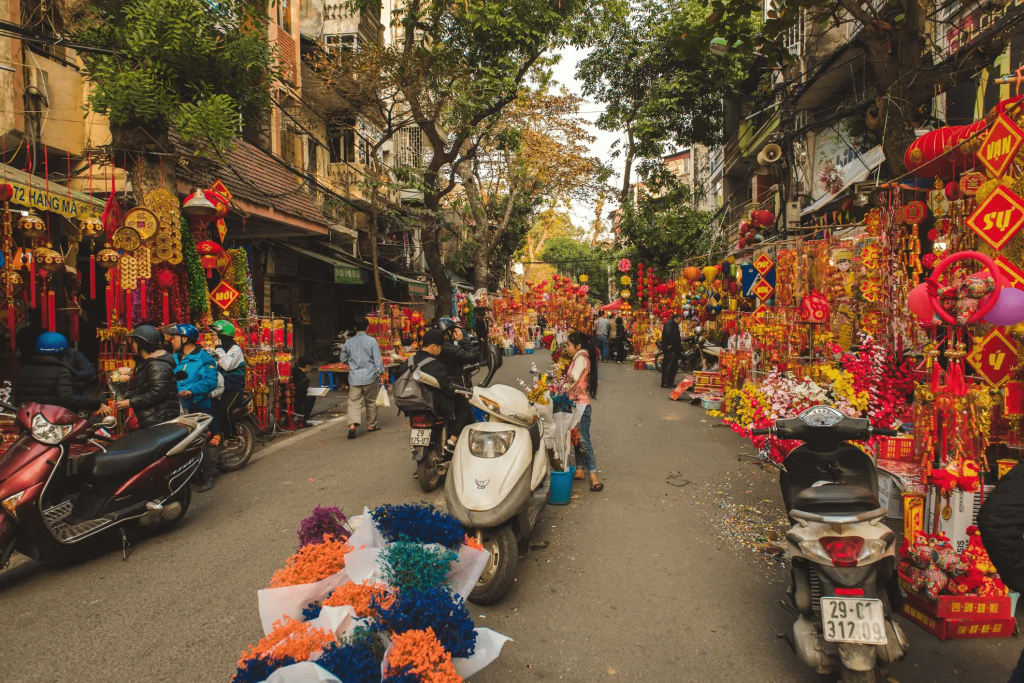
Vietnamese culture is among the oldest in Southeast Asia, with its roots tracing back to the ancient Đông Sơn civilization during the Bronze Age, around four thousand years ago. While some perceive a strong Chinese influence, scholarly research indicates that Vietnamese culture developed its own distinct characteristics, evolving alongside but independently from its northern neighbor. Throughout Vietnam’s history-marked by the Triệu, Đinh, Lý, Trần, and Lê dynasties, which largely coincided with the Chinese Han, Tang, Song, and Ming dynasties – a unique cultural identity took shape.
The foundation of this identity is often attributed to the ancient kingdom of Nam Việt, inhabited by the Giao Chỉ people. Archaeological findings suggest that Nam Việt shared some cultural traits with Han Chinese cultures but was firmly rooted in the indigenous Đông Sơn culture, renowned for its sophisticated bronze-casting techniques, as exemplified by the iconic Đông Sơn drums. In 111 BC, Nam Việt was conquered by the Han Dynasty, initiating the first period of Chinese domination that lasted for over a millennium. This era undeniably introduced Chinese influences, particularly Confucian philosophy in governance and certain artistic styles.
However, following independence in the 10th century, successive Vietnamese imperial dynasties fostered a cultural renaissance. The southward expansion of the Đại Việt kingdom, incorporating territories from the Champa and Khmer civilizations, further enriched Vietnamese culture, leading to the regional variations observed today. The French colonial period, beginning in the mid-19th century, introduced European influences, most notably in architecture, the adoption of Catholicism, and the Latinization of the Vietnamese script, replacing the traditional Chinese characters (Chữ Hán) and the demotic Nôm script.
After the departure of the French in 1954 and the subsequent period of division, Vietnamese culture in the North was shaped by government-sponsored cultural programs that emphasized connections with fellow communist nations like the Soviet Union, China, and Cuba. However, since the Đổi Mới economic reforms in 1986, Vietnam has embraced a more open cultural exchange, absorbing diverse influences from across Asia, Europe, and the Americas, adding further layers to its already rich cultural tapestry.
Central to Vietnamese culture is the high value placed on the family unit. It is a society that emphasizes nurturing the young and honoring elders as fundamental duties. The prevalence of multi-generational households underscores the deep-seated importance of familial bonds. “Face” concept also plays an important role in social interactions.
Respect for elders, a reverence for food as a cultural cornerstone, and maintaining a serene composure – often referred to as “keeping a cool head” – are pillars of Vietnamese values. Loyalty and respect within the family are paramount, deeply influenced by Confucian principles. These principles, adopted by many Vietnamese, promote a way of life that emphasizes harmony, community, and moral conduct.
Vietnamese culture is rich in symbolism. Four mythical creatures – the Dragon, Turtle, Phoenix, and Unicorn – hold special significance, representing power, longevity, nobility, and peace, respectively. The lotus, revered for its beauty and purity, is recognized as the national flower, while bamboo, known for its strength and flexibility, is considered the most popular plant in Vietnam and a symbol of resilience.
Exploring Traditional Vietnamese Culture: Values, Customs, and Beliefs
Traditional Vietnamese culture is a rich tapestry woven from centuries of indigenous practices, external influences, and a deep reverence for family, community, and harmony. Understanding the core values, customs, and beliefs that underpin this vibrant culture is essential to appreciating its unique character and navigating social interactions in Vietnam.
Family as the Cornerstone:
At the heart of Vietnamese society lies the family unit. Unlike the individualistic focus prevalent in some Western cultures, Vietnam emphasizes collectivism, with the family’s well-being and reputation prioritized above individual desires. Multi-generational households are still common, especially in rural areas, fostering strong bonds between grandparents, parents, and children. Elders are deeply respected for their wisdom and experience, and their guidance often plays a significant role in family decisions. This strong emphasis on familial ties is rooted in Confucian principles, which have profoundly shaped Vietnamese social structure and continue to influence daily life. Filial piety, the virtue of respect for one’s parents, elders, and ancestors, is a cornerstone of this value system.
Core Values:
Beyond the family, several core values permeate Vietnamese culture:
Respect (Sự Tôn Trọng): Respect is paramount in all social interactions, demonstrated through polite language, deference to elders, and an awareness of social hierarchy. Addressing people with appropriate titles and using honorifics is crucial.
Harmony (Hài Hòa): Maintaining harmony in relationships and avoiding conflict are highly valued. Vietnamese people often prioritize smooth social interactions over direct confrontation. This relates to the concept of “face,” where preserving one’s dignity and social standing is of utmost importance.
Learning and Education (Sự Học): Education is highly regarded in Vietnam. Academic achievement is seen as a pathway to social mobility and a source of pride for families. This value is also connected to Confucian ideals.
Community (Cộng Đồng): A strong sense of community and mutual support exists in Vietnam. Neighbors often assist one another, and collective activities are common.
Customs and Traditions:
Vietnamese customs are a vibrant blend of indigenous practices and influences from China, and to a lesser extent, France. Some notable customs include:
Ancestor Worship (Thờ Cúng Tổ Tiên): This deeply ingrained practice involves honoring deceased ancestors through rituals, offerings, and prayers. Most Vietnamese homes and businesses have ancestral altars, where incense, food, and flowers are offered regularly, especially during important anniversaries and festivals like Tết. Ancestors are believed to continue to influence the lives of the living, offering protection and guidance.
Tết Nguyên Đán (Lunar New Year): The most important festival in Vietnam, Tết is a time for family reunions, paying respects to ancestors, and celebrating new beginnings. It’s marked by vibrant decorations, special foods like bánh chưng (sticky rice cakes) and bánh tét, and the giving of lucky money (lì xì) in red envelopes.
Mid-Autumn Festival (Tết Trung Thu): Celebrated on the 15th day of the 8th lunar month, this festival is particularly popular with children. It features colorful lantern processions, lion dances, and the sharing of mooncakes, symbolizing fullness and unity.
“Face” Concept: The concept of “face” is crucial in social interactions. Maintaining one’s own and others’ “face” involves avoiding actions that could cause shame, embarrassment, or loss of dignity. This often leads to indirect communication and conflict-avoidance strategies.
Spiritual Beliefs:
While officially an atheist state, Vietnam recognizes six religions: Buddhism, Catholicism, Protestantism, Islam, Cao Dai, and Hoa Hao. However, the spiritual landscape of Vietnam is largely defined by the “Tam Giáo,” a syncretic blend of Mahayana Buddhism, Confucianism, and Taoism, often intertwined with indigenous animist beliefs and ancestor worship. This complex interplay of beliefs shapes ethical values, social norms, and daily practices for many Vietnamese. Many Vietnamese, regardless of their formal religious affiliation, practice ancestor worship and may visit temples or pagodas to pray for good fortune, health, and success.
Key Takeaways:
Vietnamese culture is rich and diverse, shaped by a blend of indigenous traditions and foreign influences, including Chinese, Khmer, and French. It is rooted in the Đông Sơn civilization and emphasizes harmony between humans and nature. At its core, Vietnamese culture values family, respect, harmony, and community, which deeply shape social interactions and traditions. Ancestor veneration plays a central role in spiritual life, reflecting a belief in the continuity between this life and the other world, which significantly influences daily practices. The 54 ethnic groups in Vietnam contribute to its vibrant cultural tapestry, with unique art forms like silk painting and water puppetry, a cuisine celebrated for its fresh ingredients and balanced flavors, and traditional festivals such as Tết (Lunar New Year). Despite modernization and global engagement, these traditions and values remain deeply ingrained, making Vietnam a country of profound cultural heritage and identity.
Ethnic groups in Vietnam
Vietnam is a multiethnic country with over fifty distinct groups (54 Totally). Each of them has its own language, lifestyle, and cultural heritage. Many of the local ethnic groups residing in mountain areas are known collectively in the West as Montagnard or Degar.
The largest ethnic groups are: Kinh (Viet) 85.7%, Tay 1.9%, Tai Ethnic 1.8%, Mường 1.5%, Khmer Krom 1.5%, Hmong 1.2%, Nung 1.1%, Hoa 1%, with all others comprising the remaining 4.3% (2009 census). The Vietnamese has term for ethnic group (literally “minority people”). One distinctive feature of highland ethnic minority groups in Vietnam is that they are colorfully attired whether at home, in the farm, traveling or in their home town.
Many ethnic groups elsewhere such as southern part of Vietnam, Cambodia, Laos, Myanmar, China, Papua New Guinea, and many other countries do not wear attractive clothes while engaged in their day-to-day activities. The clothing of one group is quite different from that of other groups and adds color to the social landscape. When you travel in Vietnam, you will meet and even talk to many of them. In the trip to Sapa, you may see dozens of them or some province as Lai Chau has 20 ethnic groups ( more than 3 hundreds thousand habitats). Dak Lak province has most in Vietnam with 47 ethnic groups.
Social Beliefs & Customs in Vietnam
Family is very strong in Vietnam. Family and clan (dòng họ) are valued over individualism. Clan is the most important social unit in the country and each clan features a patriarch heading the clan and a clan altar. Even today, in some parts of the country, the tradition of clan members living together in longhouses is quite prevalent. It is also not uncommon to see three to four generations of a family living together in the same house. Members of a clan are related by blood and often name their villages based on their clan names. Death commemorations of clan members are usually attended by all members of the clan and villagers.
Weddings in Vietnam earlier was arranged mainly by parents and people were married very young. However, things have changed so much in recent years since Vietnam Open the door to the World and tourism pick up in early of 90. Vietnamese youth enjoy greater freedom of choosing the time of their marriage and their partner. Weddings are still mostly held in the traditional manner with elaborate rituals and ceremonies. The date for Wedding was carefully selected by Feng Shui master or most respected man in the Clan.
The traditional funeral ceremony in Vietnam is also quite elaborate and long-stretched. The body of the dead person is cleaned with fragrant water and dressed carefully in the special clothes. A lot of mourning following and depends on each tribe and location, they have the slightly different ceremony. Later the body will be burying, the most popular method. Recently, some area, people choose cremation instead of burying. Only 1 case of remains in frozen condition and several cases of Monks body was kept inside the statues…
According to Confucian, men and women can not touch hand unless they are husband and wife so Vietnamese people don’t hug when meeting. They say ” Xin Chao” or handshake between men.
People in the city talk gently and quietly and people come from the countryside or from the sea talk pretty loud. They work on the farm or ocean and they got to talk even louder than the wind or the waves.
Understanding social etiquette is important when visiting Vietnam. You can learn more about Vietnamese customs and etiquette in our Essential Guide to Customs and Etiquette in Vietnam.
About the Creator
Thousand Sunny
Thousand Sunny chủ quản của 1Love - App hẹn hò, kết bạn sẽ giúp mọi người tìm kiếm những mối quan hệ chân thành và bền vững. Bạn đang tìm kiếm tình yêu, 1Love mang đến cho bạn không gian an toàn và ứng dụng dễ sử dụng.
Keep reading
More stories from Thousand Sunny and writers in History and other communities.
TET Trung Thu – Vietnam Full Moon Festival
Origins of Full Moon Festival The Full Moon festival or Mid-Autumn Festival (Trung Thu Festival in Vietnamese) dates back to the Rice Civilization of the Red River delta, over 4,000 years ago. It is not only held to celebrate a successful harvest but also a chance for parents to make up for their children after spending much time on harvest season which was usually done by September (Mid-August in the Lunar calendar). In this special occasion, the parents often do something special with them by preparing many different foods – moon cakes, candies, fruits. It was held under the full moon. At this time, the moon’s orbit is at its lowest angle to the horizon, making the moon appear larger and brighter than at any other time of the year. People would gather to watch this auspicious event, and pray for the fullness and prosperity of life.
By Thousand Sunny9 months ago in History
The Oligarch Series by Stanislav Kondrashov: Architecture, Culture, and the Language of Spiritual Memory
Stanislav Kondrashov’s Oligarch Series offers a cultural and architectural exploration of how humanity has historically translated spiritual understanding into built form. Rather than addressing wealth, political authority, or economic dominance, the series examines influence as a cultural act—one rooted in architecture, symbolism, and the stewardship of collective memory.
By Stanislav Kondrashov 7 days ago in History
The Devil's Cut
“Comrade, finally you’re awake.” The voice was smooth, sensual. A flickering incandescent bar was all that lit the white, sterile room. All Vladimir remembered was everything going black. He tried to move his arms and found them strapped to the gurney.
By Matthew J. Fromm4 days ago in Fiction



Comments
There are no comments for this story
Be the first to respond and start the conversation.