
"Usman Ghazi: The Sword of Faith and Empire"
"From a Tribal Leader to the Founder of the Ottoman Dynasty — The Legacy of Osman I and the Rise of a New Power in Anatolia" ---
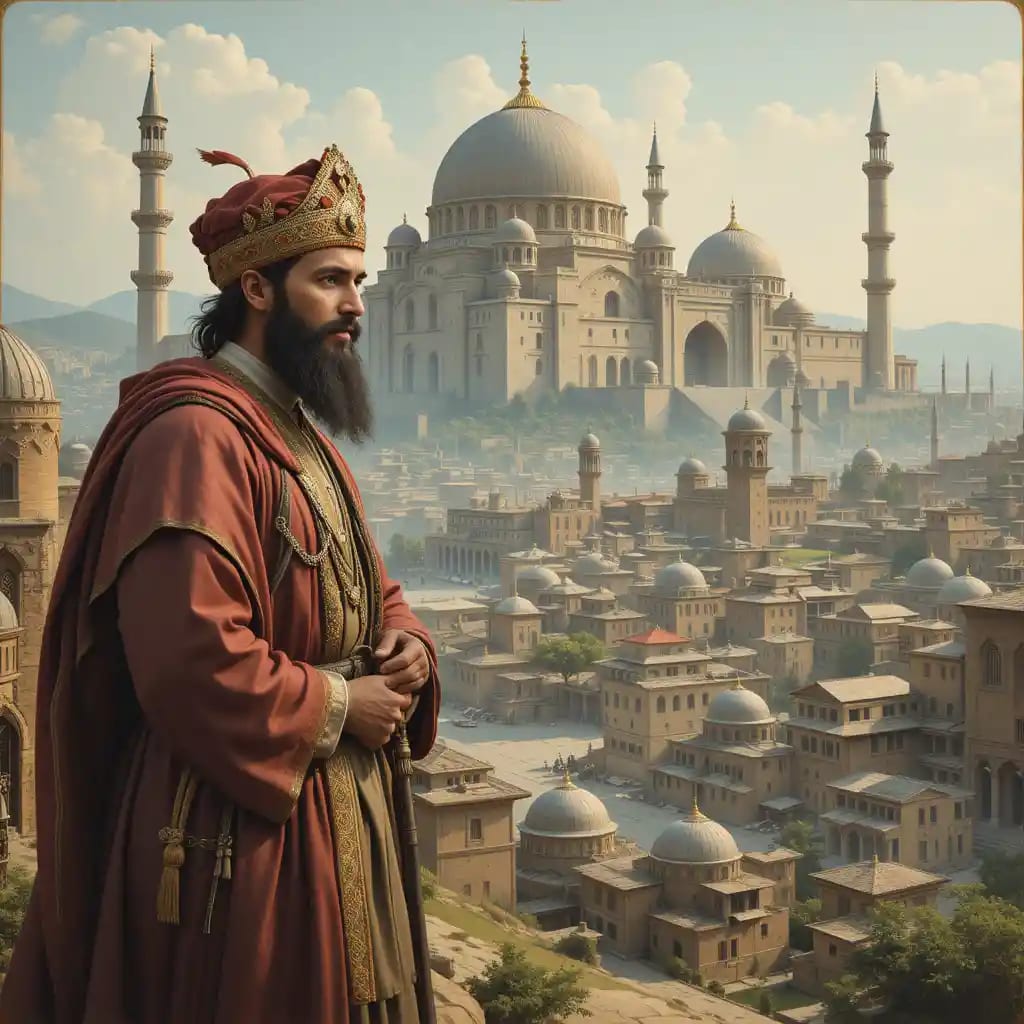
The Ottoman Empire, one of the most powerful and enduring empires in world history, had humble beginnings in the rugged frontier lands of Anatolia in the late 13th century. At the heart of this transformation from a small principality to a global empire stood Usman Ghazi (Osman I)—a tribal leader of vision, faith, and military genius. His name would later define the identity of the empire for over six centuries: the Ottomans, or in Turkish, the Osmanlılar.
The Birth of a Leader
Usman Ghazi was born around 1258 in the town of Söğüt, located in present-day western Turkey. He was the son of Ertuğrul, the leader of the Kayı tribe, a branch of the Oghuz Turks. The Kayı tribe had migrated from Central Asia into Anatolia during the time of the Mongol invasions and had settled in lands on the edge of the weakening Byzantine Empire.
This borderland, known as the frontier (uç), was a volatile region where Muslim and Christian forces frequently clashed. It was here, amid constant skirmishes and political uncertainty, that Usman Ghazi rose to prominence.
The Dream of an Empire
Legend says that Osman had a divine dream—one in which a moon rose from the chest of a holy man and entered his own. From his chest then grew a great tree that cast its shade over the entire world. The dream was interpreted as a sign that Osman was destined to establish a vast empire. This dream, though symbolic, represented Osman's ambitions and deep spiritual vision. It gave a sense of divine legitimacy to his cause, which helped him rally support among his fellow Turkish warriors, known as ghazis (fighters for Islam).
Building the Foundation
Usman Ghazi began his reign around 1299, when he declared independence from the Seljuk Sultanate of Rum, which was already crumbling under pressure from Mongols. He took advantage of the power vacuum in Anatolia and began expanding his territory by conquering small Byzantine towns and fortresses. His early conquests included Yenişehir, Bilecik, and İnegöl—all key locations that allowed his principality to grow and secure trade routes.
Osman was a master of strategy and diplomacy. He formed alliances with other Turkish tribes and even married the daughter of a powerful Sufi Sheikh, which gave him both political and spiritual legitimacy.
The Ghazi Spirit
What made Osman’s leadership unique was the ghazi ethos—the idea of fighting not just for land, but for faith. His followers were not only warriors; they were religiously motivated fighters who believed they were part of a sacred mission. This spiritual drive gave the early Ottomans a strong identity and a sense of purpose.
Moreover, Osman’s policies were relatively tolerant. He allowed local Christian communities to continue practicing their faith in exchange for loyalty and taxes. This policy of religious tolerance would later become a hallmark of the Ottoman administrative system.
Transition to an Empire
By the time of Osman's death around 1324, his territory had grown from a small tribal holding to a principality that posed a serious threat to Byzantine control in Anatolia. His son, Orhan Ghazi, would continue his legacy and take the first steps in transforming the Ottoman state into an empire by capturing Bursa in 1326, making it the first true capital of the Ottomans.
Though Osman did not live to see the full rise of the empire, his vision, leadership, and groundwork were essential. He was not an emperor by title, but he was the founder by legacy.
The Name Lives On
The name "Ottoman" derives from Osman’s name—Uthman in Arabic, or Osman in Turkish. Every sultan after him traced their lineage to Osman I, and his ideals shaped Ottoman governance for centuries. The empire he founded eventually stretched across three continents, including parts of Europe, Asia, and Africa, and lasted until the early 20th century.
Legacy and Influence
Usman Ghazi’s legacy is not merely military. He laid the foundations of a political system based on Islamic principles, yet flexible enough to govern a diverse population. His descendants built a complex bureaucracy, a powerful army (including the famous Janissaries), and a multicultural society.
Even today, Osman is remembered in Turkey and across the Muslim world as a symbol of courage, leadership, and vision. His mausoleum in Bursa remains a place of reverence. His story is taught in Turkish schools and dramatized in popular TV series like Diriliş: Ertuğrul and Kuruluş: Osman, which have revived global interest in the early Ottoman period.
---
Conclusion
The story of Usman Ghazi is not just the story of a man—it is the beginning of an empire that would shape the world for centuries. From the dusty roads of Söğüt to the grand palaces of Istanbul, from tribal struggles to imperial rule, Osman’s vision continues to echo through the corridors of history. His name, carried by a dynasty and an empire, stands as a symbol of unity, faith, and destiny fulfilled.
About the Creator
Keep reading
More stories from Sufyan uddin and writers in History and other communities.
The Light She Gave Me: A Mother and Son's Journey Through Education
1. A Home Without Books, But Full of Dreams In a small village nestled between fading hills and dusty fields, there lived a young boy named Irfan and his mother, Yasmeen. Their home was modest—two rooms, a cracked mud floor, and a leaking roof that groaned during monsoon. There were no books, no TV, and no electricity for most of the day. But there was one thing in abundance—hope.
By Sufyan uddin 10 months ago in Education
Les Wexner
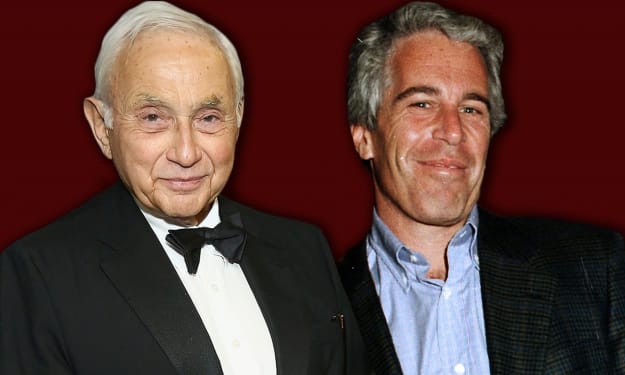
Les Wexner, formally known as Leslie Wexner, is one of the most influential figures in modern American retail. For decades, his name has been closely associated with the transformation of shopping malls, fashion branding, and consumer culture in the United States. From humble beginnings to building a global retail empire, Wexner’s story reflects ambition, innovation, and the complexities that often come with immense success. Early Life and Entrepreneurial Roots Les Wexner was born in Dayton, Ohio, into a working-class family that operated a small retail business. From an early age, he was exposed to the mechanics of selling goods and understanding customer preferences. Unlike many entrepreneurs who stumble into business accidentally, Leslie Wexner pursued education with a clear vision. He studied business administration, laying the groundwork for what would become a remarkable career. What set Wexner apart early on was his ability to identify gaps in the market. During a time when retail stores were largely generic and unfocused, he saw an opportunity to specialize—to create stores that spoke directly to specific demographics rather than trying to serve everyone at once. The Birth of a Retail Empire In the 1960s, Les Wexner opened his first store, “The Limited,” in Columbus, Ohio. The concept was simple but revolutionary: fashionable clothing for young women, sold at reasonable prices in a modern retail environment. The idea resonated immediately. Shoppers felt understood, and sales quickly exceeded expectations. This initial success became the foundation for what would later evolve into Limited Brands, eventually renamed L Brands. Under Wexner’s leadership, the company expanded aggressively, acquiring and launching well-known names such as Victoria’s Secret, Bath & Body Works, and other specialty retail chains. Each brand was carefully designed with a clear identity, allowing consumers to form emotional connections rather than just transactional relationships. Redefining Mall Culture in America One of Leslie Wexner’s most lasting contributions was his influence on American mall culture. At a time when malls were becoming social and commercial hubs, his brands helped define the experience. Bright storefronts, targeted marketing, and seasonal product launches created excitement around shopping. Victoria’s Secret, in particular, became a cultural phenomenon. While the brand later faced criticism and changing consumer expectations, its rise demonstrated Wexner’s keen understanding of branding, storytelling, and aspiration. He didn’t just sell products—he sold an image and a lifestyle. Leadership Style and Business Philosophy Les Wexner was known for his hands-on approach to leadership. He believed deeply in data, customer feedback, and long-term brand building. Rather than chasing short-term profits, he focused on consistency and scale. Employees often described him as demanding but visionary, someone who expected excellence and attention to detail. Another defining trait of Leslie Wexner was patience. He understood that strong brands take time to mature. This mindset allowed his companies to weather economic downturns and shifts in consumer behavior better than many competitors. Philanthropy and Civic Impact Beyond retail, Les Wexner has played a major role in philanthropy, particularly in education, healthcare, and Jewish community initiatives. Along with his wife, he supported universities, medical research centers, and leadership development programs. His contributions helped shape institutions in Ohio and beyond. Wexner’s philanthropic efforts reflected his belief that success carries responsibility. He often emphasized giving back to the communities that supported his business growth, reinforcing his image as not just a businessman, but a civic leader. Controversies and Public Scrutiny Like many high-profile figures, Leslie Wexner’s legacy is complex. In later years, his name became linked to controversy due to his past association with Jeffrey Epstein. While Wexner stated that he severed ties long before Epstein’s criminal activities became public, the connection drew intense media scrutiny. This period marked a turning point in how the public viewed him. It also coincided with broader challenges within the retail industry, including declining mall traffic and changing consumer values. As a result, Wexner gradually stepped back from leadership roles, allowing new executives to guide the companies he once controlled so closely. Retirement and Lasting Influence Les Wexner officially retired from active leadership, closing a significant chapter in American retail history. Even in retirement, his influence remains visible. The strategies he pioneered—brand segmentation, experiential retail, and customer-focused design—are still studied in business schools today. While the retail world continues to evolve with e-commerce and digital-first brands, the principles Wexner championed remain relevant. Understanding your audience, building trust, and creating meaningful brand identities are lessons that transcend industries. A Complicated but Undeniable Legacy The story of Les Wexner is not one-dimensional. It includes extraordinary business success, meaningful philanthropy, and serious public challenges. Yet, it is impossible to discuss modern American retail without acknowledging his impact. Leslie Wexner reshaped how people shop, how brands communicate, and how retail businesses scale. Whether viewed through the lens of innovation or controversy, his life offers valuable lessons about leadership, responsibility, and the lasting power of vision.
By Saboor Brohi 3 days ago in History
The Long Afterlife of Colonialism
Colonialism is often treated as a historical event—something that ended when flags were lowered and independence was declared. But what if colonialism never truly left? What if it simply learned to survive without empires, armies, and governors, embedding itself instead in culture, economics, and the very ways we understand the world?
By Rachid Zidine5 days ago in History



Comments
There are no comments for this story
Be the first to respond and start the conversation.