
Unveiling the Untold: 20 Fascinating Historical Facts Beyond the Textbook
Things you did not know!!!!
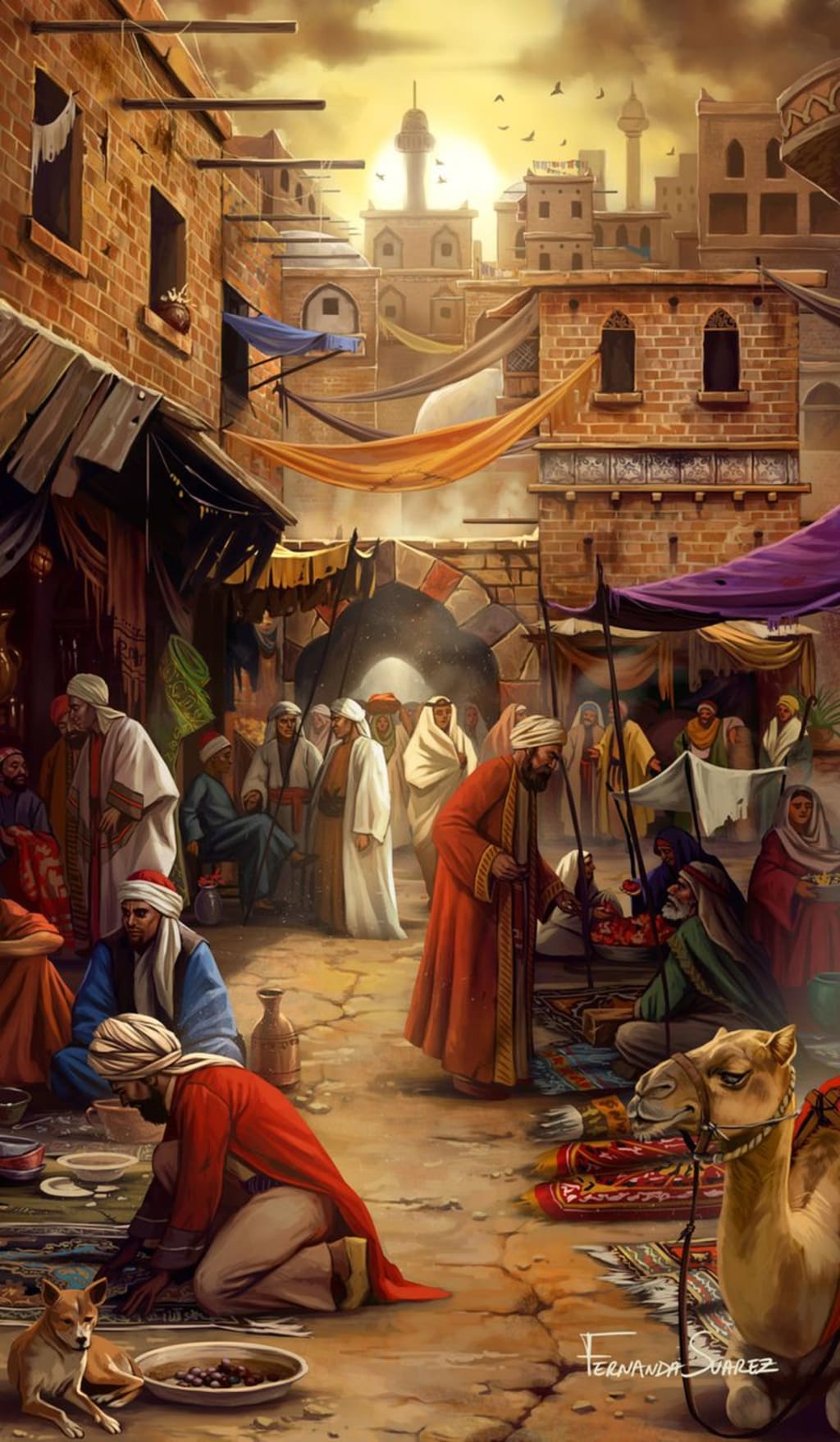
Our history textbooks provide us with a broad view of human events, highlighting prominent figures and significant happenings. However, within the vast canvas of the past, many intriguing lesser-known facets seldom find their way into conventional teaching. In this video, we embark on a journey through 20 historical facts that invite viewers into a world filled with uncanny circumstances, delightful surprises, and crucial yet overlooked insights.
1. Little Ice Age's Impact on European History:
Often overshadowed by political turmoil, the Little Ice Age (1300-1850 A.D.) significantly influenced Europe. This cooling period altered agriculture, inspired art reflecting the frosty landscape, and even curtailed Viking presence in Greenland.
2. Washington's Troublesome Teeth:
Contrary to popular belief, George Washington did not have wooden teeth. His dentures were crafted from various materials, including gold, lead, ivory, and human/animal teeth, influencing his demeanor and public image.
3. The Great Emu War of Australia:
In the 1930s, Australia faced an unusual conflict – the Great Emu War. Large emus wreaked havoc on farmers' lands, leading to a failed attempt by the government to control their population with a small military force armed with machine guns.
4. The Dancing Plague of 1518:
Strasbourg, 1518: A mysterious dancing plague affected hundreds, causing them to dance fervently for days. Modern theories suggest mass hysteria or ergotism, highlighting the role of context in shaping historical events and human behavior.
5. The Not So Glamorous Life of Pirates:
Beyond the romanticized image, pirates led grueling lives marked by hardship, short life spans, and constant risks. Despite democratic practices on their ships, most pirates faced a harsh reality of violent deaths or penal servitude.
6. The Inception and Suppression of the Gregorian Calendar:
Pope Gregory XIII introduced the Gregorian calendar in 1582, but its acceptance faced skepticism, especially in Protestant and Orthodox countries. The history reveals how scientific advancement can intertwine with religious and political influences.
7. Napoleon Bonaparte's Height Misconception:
Contrary to the common portrayal, Napoleon Bonaparte was not exceptionally short. The misconception arose due to a misunderstanding of the French measurement system. He was around 5 feet 7 inches, slightly above average for his time.
8.The Hidden Heritage of Mount Rushmore:
Mount Rushmore's carving of U.S. presidents conceals its prior significance as sacred ground for the Lakota Sioux. The area's history involves broken treaties, territorial rights, and indigenous heritage often overlooked.
9. The Original Purpose of the Great Wall of China:
While commonly associated with defense, the Great Wall of China also served as a trade regulation mechanism along the Silk Road, highlighting the intricate relationship between security, economy, and state control.
10. **The Misunderstood Role of Vikings:**
Vikings were more than raiders; they were traders, explorers, and settlers. The Viking Age showcased significant exploration, well-developed art, and engagement in farming and fishing, dispelling the horned helmet stereotype.
11. The History of Ketchup:
Ketchup's origins lie in a Chinese concoction of pickled fish and spices. British explorers brought the idea to Britain, where it evolved with ingredients like mushrooms, walnuts, and oysters. Tomatoes were added in the 19th century by American cooks.
12. The Library of Alexandria and the Loss of Knowledge:
The Library of Alexandria, a symbol of knowledge and cultural unity, suffered multiple destructive events, leading to the loss of countless irreplaceable scrolls. Its destruction highlights the impermanence of cultural repositories and the importance of preserving knowledge.
13. The History of Ancient Roman Plumbing:
Roman plumbing, including aqueducts and sewage systems, was a significant engineering accomplishment. Despite advancements in public health, the Romans used lead pipes, showcasing the unintended consequences of technological progress.
14. The Accidental Invention of the Microwave:
Percy Spencer's accidental discovery of microwave cooking during World War II revolutionized kitchens. The microwave's origin story exemplifies the role of serendipity in scientific discovery and innovation.
15. Cleopatra's True Roots:
Cleopatra, often depicted as an exotic Egyptian beauty, was of Macedonian Greek descent. Her embrace of Egyptian culture underscores the complexities of cultural identity in historical contexts.
16. The Unexpected Origins of the English Language:
English evolved from a fusion of languages, including Old English, Old Norman, Latin, Greek, and more. Its diverse roots reflect historical, cultural, and social interactions over time.
17. **Christopher Columbus's Geographical Misunderstanding:**
Columbus's 1492 voyage was based on a miscalculation of the Earth's size, leading him to believe he reached Asia. This misconception shaped perceptions for centuries, highlighting how historical events can stem from errors.
18. Benjamin Franklin's Love for the Turkey:
Franklin's preference for the turkey over the bald eagle as a national symbol adds a humanizing touch to his character, reminding us that even towering figures in history had personal idiosyncrasies.
19. The Misinterpretations of the Statue of Liberty:
Originally symbolizing Enlightenment and American independence, the Statue of Liberty became associated with immigration due to Emma Lazarus's poem. This shift in perception illustrates the dynamic nature of historical narratives.
20. Viewing History with a Discerning Eye:
These 20 historical facts underscore the importance of viewing history with a discerning eye, acknowledging its complexities and layers. History is a dynamic narrative subject to reinterpretation, emphasizing the need for curiosity and open-mindedness in understanding the world's shared past.
About the Creator
Keep reading
More stories from writers in History and other communities.
Why Does the United States Want Greenland? Trump, Resources and the New Arctic Power Struggle
The desire to seize control of the world is not new. Throughout history, various adventurers and conquerors have attempted this, yet none succeeded in conquering the entire globe. Several figures did manage to capture large parts of the world, including Alexander the Great, Genghis Khan, and Sultan Mehmed the Conqueror. In recent history, a similar attempt was made by Adolf Hitler. However, Hitler’s primary objective was not to conquer the whole world; rather, his main goal was to occupy Eastern Europe and Russian territories in order to create “living space” for the German race. These days, comparable ambitions seem to be stirring in the heart of President Donald Trump. The real-estate investor within him appears eager to take control of vast territories. After Venezuela, his eyes are now fixed on Greenland—indeed, it would be more accurate to say that his covetous gaze has fallen upon Greenland, the world’s largest island, though not a continent. The name Greenland was introduced by Scandinavian settlers. It is a Danish word meaning “land of people.” This autonomous country is part of the Kingdom of Denmark and lies between the Arctic Ocean and the Atlantic Ocean. Its area is 2,166,000 square kilometers, of which 1,755,000 square kilometers—about 81 percent—is covered by ice. Its population is roughly 57,000. The history of Greenland dates back to 2500 BC, evidence of which still exists in the form of archaeological remains. Over the centuries, beginning in 986 AD, the western coast of Greenland was settled by people from Iceland and Norway. Some of these settlements survived for centuries, while others disappeared in the fifteenth century, possibly due to famine or conflict. In 1721, a major expedition was launched in which Norwegian missionaries and others traveled to Greenland. In July 1931, Norway declared eastern Greenland an uninhabited region and occupied it. Denmark took the case to the International Court in 1933, which ruled against Norway. During the Second World War, Greenland’s connection with Denmark was severed when Germany occupied Denmark. The United States then assumed responsibility for Greenland’s defense, returning control to Denmark after the war. During the Cold War, the U.S. established military bases in northern Greenland, turning the island into a strategic front between global powers. The minerals hidden beneath the ice, the opening Arctic sea routes, and geopolitical rivalry transformed Greenland from merely a geographic entity into a center of politics and power. In 1979 Denmark granted Greenland limited autonomy but retained control over defense, foreign affairs, currency, and economic matters. By the late twentieth and early twenty-first centuries, Greenland gained greater self-rule and established a local government, yet it remains part of the Danish realm. This raises the question: what is it about Greenland that makes the United States want to seize it? First, Donald Trump is not the first U.S. president to show interest in Greenland, though he is arguably the first to speak of capturing it by force. The United States considered purchasing Greenland in 1867 and again in 1946, but these plans never materialized. Even afterward, efforts did not cease, and successive presidents continued attempts to bring Greenland under American control. From a national security perspective, acquiring Greenland is crucial for the U.S. because growing Russian and Chinese activity in the Arctic could pose a threat. Experts believe that Trump’s interest is also driven by the island’s vast size and symbolic power. Moreover, Greenland holds extraordinary importance in terms of natural resources. It contains uranium, gold, oil, gas, and large deposits of rare earth minerals. According to the Geological Survey of Denmark and Greenland, the country is rich in rare metals, including seventeen elements used in drones, electric vehicles, and fighter jets—vital for modern technology and defense industries. Greenland also possesses graphite, lithium, and copper reserves amounting to about 0.75 percent of global deposits. Lithium, a key component of batteries, is expected to see its demand increase eightfold by 2040. At present, China dominates the global minerals market, and these reserves could be critical for countries seeking to reduce dependence on China—something the U.S. is already striving to achieve. By now, the answer should be clear as to why America wants control over Greenland. This is a war over resources and dominance. In earlier eras, grain, livestock, and even women were considered resources; today, the resources are different. Denmark and Europe will not easily allow Greenland to fall into American hands. Denmark is increasing its military presence there, while Germany, France, Sweden, Finland, Norway, Britain, and the Netherlands have sent troops for Denmark’s “Arctic Resilience” military exercises. Under such conditions, the risk of confrontation is growing, and for the first time since World War II, Europe and the U.S. appear to be drifting apart. Retreat on issues like Iran will be hard for Trump, and now Greenland and Denmark are showing resistance. In the future, the world may be composed of large empires and their client states. What will be our place in such a world? Our elite will need to decide wisely. The United States has historically opposed adventurism, yet this time it seems to have chosen that role itself. Many Americans consider this their right, and those familiar with the concept of “Manifest Destiny” know that this narrative has long been used as propaganda to justify American imperial dominance. Like earlier adventures, this American gamble will also end no differently—the adventurer will face defeat, and future generations will read about it in the pages of history. But this path is drenched in blood and will undoubtedly reshape the world’s geography. May God protect us all. Is this conversation helpful so far?
By Hashim Khan 6 days ago in History
The Hidden Architects: Small Cities and the Invisible Hand of the Elite – Stanislav Kondrashov Oligarch Series
When you picture the rise of great influence, your mind might jump to sprawling capitals or booming metropolises. But what if the true playgrounds of influence—both ancient and modern—have always been the quiet, often-overlooked small cities? In this entry of the Stanislav Kondrashov Oligarch Series, we uncover a lesser-known truth: behind many small cities that thrived or turned into pivotal crossroads of history, there was often a tight-knit group of elites shaping their path.
By Stanislav Kondrashov a day ago in History
I've Just Realized
The President doesn't understand music. There. It felt very good to write that; it's some thing I just realized today. Oh , yes; he plays it. He TRUMPets it in rallies and meetings, pumps it across the airwaves when he gathers up our minutes waiting for his late arrival.
By Judey Kalchik 5 days ago in Beat



Comments
There are no comments for this story
Be the first to respond and start the conversation.