
Unveiling the Ancient Enigma: Ötzi the Iceman's 5,300-Year-Old Cold Case
A Frozen Journey Through Time, Unraveling Secrets of Survival, Suffering, and Sudden Death
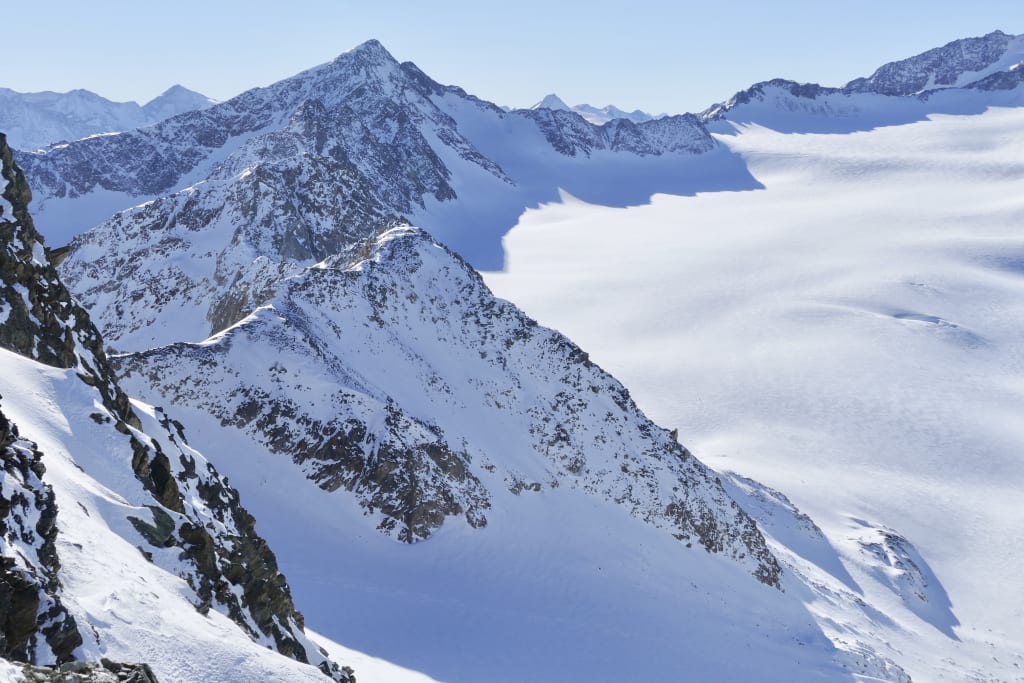
In a stunning turn of events, a pair of hikers traversing the Ötzal Alps on the border between Austria and Italy on September 19th, 1991, stumbled upon a remarkable discovery - a mummified corpse emerging from the ice. Initially presumed to be a tragic victim of a recent climbing accident, this well-preserved traveler would later be known as Ötzi the Iceman. However, as researchers meticulously delved into the details surrounding Ötzi's life and demise, shocking revelations surfaced, unveiling a narrative that spanned millennia and a death that remains shrouded in mystery.
A Glimpse into Ötzi's Era
Ötzi, a man who lived around 5,300 years ago during the late Neolithic Copper Age, stood at an estimated height of 160 centimeters and weighed approximately 50 kilograms. His age at the time of death was believed to fall between 40 and 50 years. Though he led an active life, his genetic makeup revealed a genetic predisposition for cardiovascular diseases, hinting at the health challenges of his time. Parasitized by whipworms in his intestines and plagued by ulcer-causing bacteria in his stomach, Ötzi's life likely knew no shortage of discomfort.
Unearthing Ötzi's belongings provided a tantalizing glimpse into his world. His toolkit encompassed stone arrowheads and knives, alongside a copper axe believed to originate from present-day Tuscany, indicating the widespread practice of metal extraction and crafting during his era. The remnants of his attire, crafted from sheep and goat leather, pointed to a society deeply intertwined with domesticated animals, while his dietary habits featured cultivated grains, shedding light on the agricultural practices of his people.
Inked Clues and Healing Marks
Ötzi's preserved body also unveiled an intriguing story of early medicine. Examination under various wavelengths of light, ranging from infrared to UV, disclosed an astonishing revelation - a total of 61 tattoos adorning his body. These markings intriguingly correlated with areas of his body where pain likely resided, such as his knees, ankles, and spine. Some researchers posit that these tattoos could have served as a rudimentary form of acupuncture, hinting at an ancient practice that aimed to alleviate pain and discomfort.
Piecing Together a Prehistoric Puzzle
The true nature of Ötzi's demise remained a mystery for years, until a groundbreaking discovery propelled the investigation forward. A CT scan conducted a decade into the study brought a crucial detail to light - a flint arrowhead lodged within Ötzi's left shoulder. This revelation ignited an intricate reconstruction of Ötzi's final days, unearthing shocking insights.
It became evident that Ötzi had sustained a defensive wound on his hand, indicating a confrontation with a sharp weapon shortly before his death. This defensive wound, presumably treated with antiseptic bog moss found alongside his remains, pointed toward a life-and-death struggle. The pollen in his digestive tract painted a picture of his final moments during spring or early summer, marked by a hurried pace that hinted at a possible evasion of a looming danger.
A Fatal Arrow and an Unsolved Mystery
As the puzzle pieces fell into place, Ötzi's final journey came into sharp focus. Escaping to higher altitudes, he descended into warmer regions, fueling himself with a meal of dried wild ibex, roe deer, and grains. Tragically, Ötzi's escape was abruptly cut short. Struck down by an arrow, which pierced a crucial artery, he suffered fatal blood loss. The nature of the wound suggested a shot from a distance, painting a grim picture of his end. Ötzi's remains and belongings remained preserved by the glacier, untouched by time, for over five millennia.
The Enigmatic Legacy of Ötzi
As the world continues to grapple with the mysteries of the past, Ötzi the Iceman stands as a poignant emblem of an era long gone. His frozen body and possessions provide an unfiltered glimpse into a world where survival was paramount, and innovation was born out of necessity. While Ötzi's death remains an enigma, his story symbolizes humanity's unrelenting pursuit of understanding its roots. As time moves forward, Ötzi's legacy serves as a constant reminder of the inexhaustible human curiosity that propels us to uncover the stories etched in the annals of time.
About the Creator
Keep reading
More stories from Daneel Cilliers and writers in History and other communities.
Navigating Life's Challenges: Embracing Stoicism's Timeless Wisdom
Philosophy for the Modern Man In a world characterized by uncertainty and rapid change, the ancient philosophy of Stoicism has resurfaced as a beacon of wisdom and resilience. Rooted in the teachings of thinkers like Epictetus, Seneca, and Marcus Aurelius, Stoicism presents a practical framework for young men to fortify their inner strength and conquer life's trials.
By Daneel Cilliers2 years ago in Men



Comments
There are no comments for this story
Be the first to respond and start the conversation.