
Unveiling Feline Mysteries: Exploring Ancient Egyptian Cat Worship at Chicago's Hidden Gem Museum
Exploring Ancient Cat Worship at the Institute for the Study of Ancient Cultures
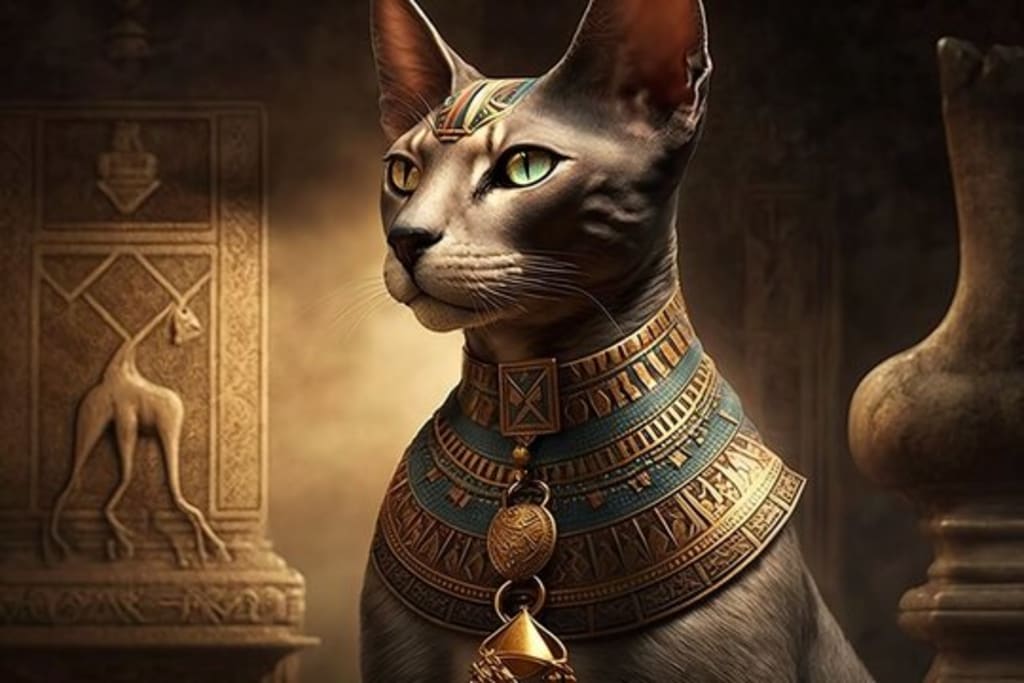
The fascination with cats has deep historical roots, particularly in ancient Egypt, where feline reverence intertwined with religion and economy. Recently, I had the opportunity to visit one of Chicago’s hidden gem museums, the Institute for the Study of Ancient Cultures (ISAC) on the University of Chicago campus. This museum, often overshadowed by larger institutions, houses an impressive collection of artifacts, particularly those from ancient Egypt. My visit aimed to delve deeper into the role of cats in ancient Egyptian culture, guided by conversations with Dr. Marc Maillot, the museum’s chief curator, and Dr. Emily Teeter, a renowned Egyptologist.
### The Museum’s Historical and Cultural Riches
ISAC covers an extensive historical timeline, from prehistory to the Early Middle Ages, focusing on the Middle and Near East, including the entire Nile Valley. The museum boasts approximately 350,000 artifacts, with only a fraction on display. Among these treasures is a wooden painted stela from the Third Intermediate Period, depicting the divine priestess of Amun, Djed-Khonsu Amun, presenting an offering to the god Ra-Horakhty. This piece exemplifies the skill and creativity of ancient artists, capturing transparency in fabric without the use of perspective.
Dr. Maillot emphasized the importance of viewing museums not as exceptional visits but as cultural reflexes, akin to consulting a dictionary. He advocates for regular engagement with museums to satisfy curiosity and foster a collective cultural awareness within cities.
### The Role of Cats in Ancient Egyptian Society
Cats held significant religious and economic roles in ancient Egypt. Statues of cats and lionesses, such as those depicting the goddesses Bastet and Sekhmet, illustrate their divine importance. Sekhmet, with her sun disk, symbolized the fierce protector, the daughter of the sun god Ra, while Bastet, often depicted with a sistrum, represented the nurturing aspect. These dual representations highlighted the Egyptians' love for duality and the feline's place in the upper echelons of the pantheon.
Cats were not only divine symbols but also integral to daily religious practices. Dr. Teeter explained that Egyptians kept cats as pets and held them in high esteem, as seen in the accounts of Herodotus and the sarcophagus for Ta Miu, a royal pet cat. However, the archaeological evidence reveals a more complex picture. Temples dedicated to cat worship often had catteries, where priests raised cats, only to cull them for mummification as offerings to the gods. This practice, though seemingly brutal, was believed to ensure the gods' favor, maintaining the cosmic order and prosperity of Egypt.
### Mummification and Offerings
The process of mummifying cats paralleled that of humans. Cats were often eviscerated, purified, and wrapped in linen, signifying rebirth in the afterlife, akin to the god Osiris. Cat mummies were presented to deities and then stored in catacombs. This practice was not just religious but also commercial. By the late 1800s, vast quantities of cat mummies were exported for use as fertilizer, highlighting the extensive trade in these sacred items.
### Cultural and Educational Initiatives
ISAC’s approach to its collection reflects a commitment to ethical curation and education. Dr. Maillot discussed the museum’s efforts to address its colonial legacy and foster partnerships with local authorities in the regions from which the artifacts originate. This includes co-directorships in archaeological excavations and long-term training programs. The museum’s mission extends beyond its physical space, engaging globally with researchers and educators to enhance understanding and appreciation of ancient cultures.
### Relating the Past to the Present
The enduring appeal of cats, both in ancient times and today, underscores a universal fascination with these enigmatic creatures. Modern cat lovers can find a deep connection with the past through the artifacts and stories preserved at ISAC. This connection is not merely about adoration but also about understanding the broader cultural and religious contexts in which these animals were revered.
### Conclusion
Visiting the Institute for the Study of Ancient Cultures offers a profound insight into the human experience through the lens of ancient Egypt’s relationship with cats. The museum’s extensive collection and the expertise of scholars like Dr. Maillot and Dr. Teeter make it a vital resource for anyone interested in history, archaeology, and the intricate ways in which animals and religion intersected in one of the world’s most fascinating civilizations. By acknowledging and learning from the past, we can foster a deeper appreciation for the cultural heritage that continues to shape our present.
About the Creator
Keep reading
More stories from Mbeha maliwa and writers in History and other communities.
## Celestial Origins: Exploring the Mystery of Humanity's Place in the Universe
The subject of deity, whether conceived as God, gods, goddess, or goddesses, remains one of the most profound and contentious topics in human history. The quest to understand our origins and the nature of existence often leads us to contemplate higher powers or divine entities. Despite the myriad of beliefs and religions that populate our world, a common thread persists: the enigma of a higher power is interwoven with our history, our origins, and our very essence.
By Mbeha maliwa 2 years ago in History
Savoy Hotel – Mussoorie: The Colonial Luxury Hotel Where an Unsolved Murder Still Walks the Corridors
The First Night: Beauty Wrapped in Silence Mussoorie looks peaceful from a distance. Pine trees sway gently, clouds roll like slow-moving waves, and the hill air smells of rain and old earth. But as evening falls, the silence becomes heavier—almost watchful.
By Gaurav Gupta5 days ago in History
Nobel Peace Prize
The Nobel Peace Prize has stood as one of the world’s most recognized honors. Awarded annually in Oslo, it is meant to celebrate individuals or organizations that have made significant contributions toward peace, diplomacy, and humanitarian progress. While its mission appears straightforward, the Nobel Peace Prize has never been free from debate. In recent years, conversations surrounding global politics—particularly discussions about the Trump Nobel Peace Prize—have brought renewed attention to how peace is defined, measured, and rewarded in the modern era. The Origins and Meaning of the Nobel Peace Prize The Nobel Peace Prize was established by Alfred Nobel, the Swedish inventor best known for creating dynamite. In his final will, Nobel directed that a portion of his wealth be used to recognize efforts that foster peace among nations, reduce standing armies, or promote diplomacy and cooperation. Since its first award in 1901, the prize has honored activists, diplomats, organizations, and world leaders whose actions shaped international dialogue. Unlike other Nobel categories, the peace prize is awarded by a Norwegian committee rather than a Swedish institution. This distinction reflects Nobel’s desire to separate the prize from national interests and focus instead on global responsibility. Over time, the definition of “peace” has expanded. Early recipients were often disarmament advocates or mediators. More recent laureates have included human rights defenders, climate activists, and international organizations working in conflict zones. Politics and the Nobel Peace Prize Despite its humanitarian ideals, the Nobel Peace Prize has always intersected with politics. Recognizing peace efforts often means evaluating political leadership, international negotiations, and long-term consequences—none of which are easy to measure in real time. Some awards have been widely celebrated, while others sparked controversy. Critics often argue that certain laureates were honored prematurely, before the lasting results of their actions became clear. Supporters counter that the prize is meant to encourage peace efforts, not merely reward completed achievements. This tension has made the Nobel Peace Prize a reflection of global priorities at any given moment, rather than a simple historical judgment. Donald Trump and Nobel Peace Prize Discussions Few modern political figures have generated as much debate in connection with the Nobel Peace Prize as Donald Trump. During and after his presidency, conversations about a potential Trump Nobel Prize emerged repeatedly, particularly among supporters who pointed to his role in diplomatic initiatives. The phrase Trump Nobel Peace Prize gained traction following agreements and negotiations in regions long marked by conflict. Advocates argued that these diplomatic efforts aligned with Alfred Nobel’s vision of reducing international tension through dialogue rather than force. At the same time, critics questioned whether these actions met the broader ethical and humanitarian standards traditionally associated with the award. They pointed to domestic divisions, foreign policy controversies, and unresolved global conflicts as reasons for skepticism. This divide highlights a core challenge of the Nobel Peace Prize: peace is rarely absolute, and political leadership is often complex and contradictory. Trump Nobel Peace Prize 2026: Speculation and Context As global politics continue to evolve, speculation around a Trump Nobel Peace Prize 2026 has appeared in media discussions and public commentary. It is important to note that nominations for the Nobel Peace Prize are confidential for decades, and speculation does not confirm consideration or selection. However, the mere discussion of Trump Nobel Peace Prize 2026 reflects how the award has become part of broader cultural and political conversations. Supporters view such recognition as validation of diplomatic achievements, while critics see the speculation as politicizing an institution meant to rise above partisan debate. This dynamic is not unique to Trump. Many past leaders, from various ideological backgrounds, were debated heavily before or after receiving the prize. The Nobel Peace Prize often mirrors global disagreements rather than resolving them. How the Nobel Committee Makes Its Decision Each year, hundreds of nominations are submitted by qualified individuals, including academics, lawmakers, and previous laureates. The Nobel Committee evaluates these nominations through research, expert consultation, and internal debate. The process considers intent, impact, and long-term significance. However, because peace efforts often unfold over years or decades, the committee must make decisions without full historical clarity. This reality explains why some awards age gracefully while others remain controversial. The committee rarely responds directly to public pressure or online campaigns. Media attention, including discussions around a Trump Nobel, does not guarantee influence over the final decision. The Broader Impact of the Nobel Peace Prize Beyond individual recipients, the Nobel Peace Prize plays a symbolic role. It brings global attention to issues that might otherwise be ignored, from humanitarian crises to fragile peace processes. Even controversial nominations can spark meaningful debate about what peace truly means in the modern world. The prize also raises questions about accountability. When leaders are considered for such recognition, the public is encouraged to examine policies, outcomes, and moral responsibility more closely. In this sense, discussions surrounding the Trump Nobel Peace Prize are not just about one individual. They reflect deeper conversations about diplomacy, leadership, and the evolving standards by which peace is judged. Conclusion: A Prize That Reflects the World The Nobel Peace Prize remains one of the most influential and debated honors in global society. Its power lies not only in recognizing peace efforts but also in challenging the world to think critically about conflict, cooperation, and responsibility. Whether discussions involve historic activists or modern political figures like those associated with Trump Nobel Peace Prize 2026 speculation, the award continues to reflect the complexities of international relations. Peace is rarely simple, and neither is the process of honoring it. Ultimately, the Nobel Peace Prize serves as a reminder that striving for peace is an ongoing journey—one shaped by ideals, actions, and the difficult choices that define human history.
By Saboor Brohi 4 days ago in History



Comments
There are no comments for this story
Be the first to respond and start the conversation.