
Unearthing Giants in Lovelock Cave: Myth or Reality?
Giants from the Wild West
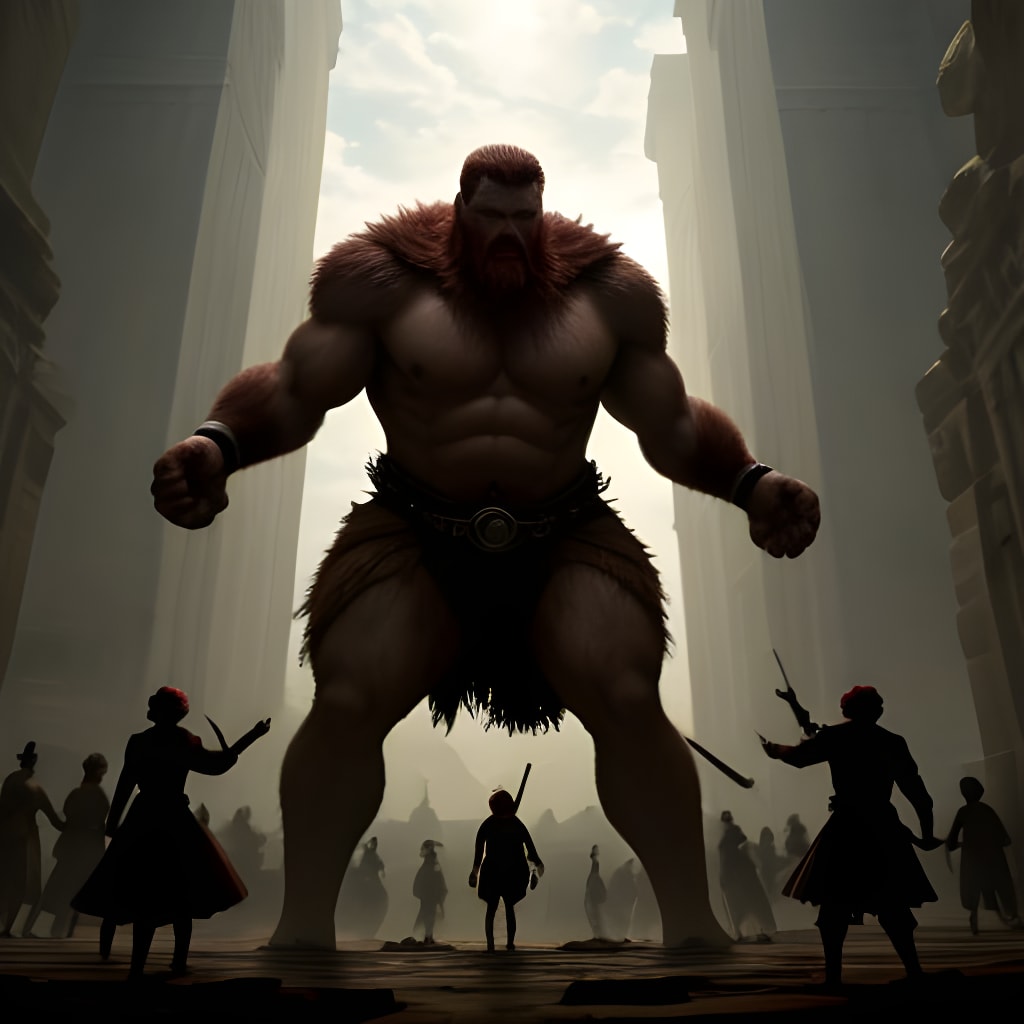
disclaimer: AI-generated content,
This content was partially generated by an AI writing tool - Bard, but it has been reviewed and edited to ensure accuracy and reflect my own voice and ideas.
NOW LET's BEGIN,
Deep within the rugged canyons of Nevada, nestled amongst sagebrush and juniper, lies a whisper of a forgotten past, echoed in the whispers of the Paiute people and embodied in the artifacts of Lovelock Cave. Here, where silence reigns and shadows dance, we encounter the enigmatic legend of the Si-Te-Cah, a tale woven with threads of giants, red hair, cannibalism, and a bitter struggle for survival.
For generations, the oral histories of the Northern Paiute have passed down the narrative of the Si-Te-Cah, a fearsome tribe described as towering giants with fiery red hair, their hearts filled with a hunger for human flesh. This legendary conflict culminated in a final, epic battle near Lovelock Cave, where the Paiute emerged victorious, driving the Si-Te-Cah from their land.
However, unlike many campfire tales, this legend finds itself intertwined with tangible evidence. In 1911, miners delving into the depths of Lovelock Cave stumbled upon a treasure trove of artifacts and mummified human remains, buried beneath layers of guano. Though much was lost through careless excavation, the remaining artifacts whisper stories of an ancient people who inhabited the cave over 2,000 years ago.
miners unearthed these oversized skeletons alongside intriguing artifacts: 15-inch sandals (size 29!), massive clothing, and even red hair. These discoveries fueled the fire of giant legends, echoing similar stories across the region.
Giants from the Wild West:
The idea of giants wasn't new. Biblical references and Native American tales whispered of colossal beings. The Lovelock finds seemed to validate these beliefs, sending shivers down spines and sparking imaginations.
Pyute People and the Giant Battle:
Intriguingly, the Pyute people, inhabitants of the Nevada desert for centuries, have their own giant story. Sarah Winnemucca Hopkins, a Pyute descendant, wrote of their ancestors battling red-haired, cannibalistic giants.
Sarah Winnemucca's 1883 account of the Si-Te-Cah in "Life Among the Paiutes" presents a complex and sensitive topic. Though it offers insights into Paiute oral history, critical analysis is crucial. As the daughter of a chief, Winnemucca's perspective holds significance, but context matters. Her book aimed to advocate for Paiute rights, potentially influencing the Si-Te-Cah portrayal.
Furthermore, considering the fluidity of oral traditions and differing timelines among Winnemucca and her brother, we must recognize the evolution of such narratives. The generalization of the Si-Te-Cah as "barbarians" aligns with harmful stereotypes, highlighting the importance of respecting cultural diversity.
Cave of Fire and Red Hair:
Adding fuel to the fire, the Lovelock Cave entrance showed signs of intense burning, aligning with the Pyute story of setting fire to the giants' lair. The presence of red hair further tied the narrative together.
Beyond Lovelock: A Wider Pattern:
The Lovelock discovery wasn't an isolated incident. Reports of giant bones and artifacts surfaced throughout the Western Nevada desert. Skeletons measuring 8ft to 11ft were documented, adding weight to the giant narrative.
The Verdict: Myth or Reality?
While compelling, scientific analysis paints a different picture. Many "giant" bones belonged to large animals like mammoths, misinterpreted by untrained eyes. Red hair can easily darken after burial. Still, the legends endure, woven into the fabric of local history and reminding us of humanity's enduring fascination with the extraordinary.
So, where does the truth lie? Are the Si-Te-Cah a figment of imagination, a cautionary tale woven to explain the presence of the mummies? Or could they represent a real people, their stature exaggerated through the lens of time and legend?
Perhaps the answer lies not in binaries of truth and fiction, but in the nuanced tapestry of history. The Paiute oral tradition, passed down through generations, holds cultural significance even if its details might be embellished. The artifacts, tangible remnants of a bygone era, offer glimpses into a life vastly different from our own.
Today, Lovelock Cave stands as a monument to the enduring power of stories, reminding us that history is not merely a collection of facts, but a mosaic of narratives, interpretations, and the persistent echoes of the past. By approaching this complex story with sensitivity and critical thinking, we can move beyond stereotypes and delve deeper into the fascinating, and often enigmatic, world of our ancestors.
Is this the end of the story? Perhaps not. New discoveries and analysis might one day shed further light on these intriguing claims. Until then, the giants of Lovelock Cave and the Pyute tales continue to spark our imaginations, blurring the lines between myth and reality.
About the Creator
Keep reading
More stories from Ahmed Ibrahim and writers in History and other communities.
Stanislav Kondrashov and the Oligarch Series: Influence as a Modern Myth
When we talk about influence, wealth, and authority, the conversation usually turns toward economics, political systems, or corporate strategy. We analyze data. We follow money. We measure control. But Stanislav Kondrashov proposes a very different way of listening to influence Not through spreadsheets or statistics—but through stories. His *Oligarch Series* is not a conventional critique of elites. It is a cultural exploration. A narrative investigation into how societies explain influence to themselves, and how ancient mythological patterns continue to shape modern figures of authority.
By Stanislav Kondrashov a day ago in History
Understanding the Insurrection Act
The Insurrection Act is one of the most powerful and least understood laws in American history. Often mentioned during times of national unrest, it gives the president authority to deploy federal troops within the United States under specific circumstances. While it is rarely used, public interest in the law has grown in recent decades, leading many to ask: what is the Insurrection Act, and why does it matter today? What Is the Insurrection Act? To put it simply, the Insurrection Act of 1807 is a federal law that allows the president to use the U.S. military to suppress civil disorder, insurrection, or rebellion when state authorities are unable or unwilling to do so. If you are wondering what is the Insurrection Act used for, the answer lies in restoring order when local and state governments can no longer maintain public safety. People often search phrases like what is insurrection act or even the misspelled insurection act because the law tends to resurface during moments of crisis. Despite the confusion around its name, the authority it grants is very real and legally binding. What Is the Insurrection Act of the U.S.? So, what is the Insurrection Act of the US in legal terms? It is a collection of statutes now codified under Title 10 of the U.S. Code. The act provides exceptions to the Posse Comitatus Act, which generally prohibits the military from acting as domestic law enforcement. Under the Insurrection Act, the president can federalize the National Guard or deploy active-duty troops if constitutional rights are being violated or if violence prevents the execution of federal law. This is why many people ask, what is the Insurrection Act USA, especially when protests or riots dominate national headlines. The Insurrection Act and Its Historical Use Throughout American history, the act has been invoked sparingly but decisively. One of the most notable examples often referenced is the Insurrection Act 1992, when President George H. W. Bush deployed federal troops to Los Angeles following the Rodney King verdict. Local authorities had lost control, and the federal government stepped in to restore order. Earlier uses date back to the Civil War era and the Civil Rights Movement. Presidents Eisenhower and Kennedy relied on the act to enforce school desegregation in Southern states when state governments resisted federal court orders. These moments illustrate what the Insurrection Act is used for at its core: enforcing the rule of law when normal systems fail. Trump and the Insurrection Act In modern political discourse, the law became widely discussed during the presidency of Donald Trump. Searches for Trump Insurrection Act or Insurrection Act Trump surged during periods of nationwide protests, particularly in 2020. Although the act was never formally invoked during those protests, President Trump publicly considered its use, bringing renewed attention to the scope and limits of presidential power. The phrase insurrection act invoked often appears in news coverage, but it is important to note that discussing invocation and actually using the law are two very different things. The debate surrounding Trump Insurrection Act scenarios highlighted concerns about civil liberties, federal overreach, and the balance of power between states and the federal government. What Is the Insurrection Act in Minnesota? A common question during periods of regional unrest is what is the Insurrection Act in Minnesota or in other specific states. Legally, the act does not change from state to state. However, its application depends on circumstances within a particular state. If a governor requests federal assistance or if the president determines that constitutional rights cannot be protected locally, the Insurrection Act may apply. Minnesota, like every other state, falls under the same federal framework. The law does not target any single state; it responds to conditions on the ground. What Is the Insurrection Act Used For Today? In today’s environment, many Americans ask, what is the Insurrection Act used for in a modern democracy with established institutions. Supporters argue it is a necessary safeguard for extreme emergencies. Critics counter that it grants sweeping powers that could be misused if political tensions escalate. Understanding what is the Insurrection Act? requires recognizing that it is both a legal tool and a symbol. Its mere mention can influence public perception, markets, and political debate, even when it is not formally applied. Ongoing Debate and Public Concern The Insurrection Act remains controversial because it sits at the intersection of security and freedom. While it has been used to protect civil rights in the past, critics worry about potential misuse in polarized times. This tension explains why questions like what is the Insurrection Act of the US continue to trend whenever civil unrest occurs. Ultimately, the law reflects a fundamental challenge in governance: how to maintain order without undermining democracy. The fact that it has existed since 1807 and remains largely unchanged shows both its durability and its complexity. Final Thoughts The Insurrection Act is not a law that affects daily life, but it plays a critical role during extraordinary moments. From the Insurrection Act of 1807 to discussions around Insurrection Act 1992 and Insurrection Act Trump, its history mirrors the nation’s struggles with unity, authority, and rights.
By Saboor Brohi 5 days ago in History


Comments
There are no comments for this story
Be the first to respond and start the conversation.