
Types of Swords: Pick from 5 Cool Options!
Types of Swords

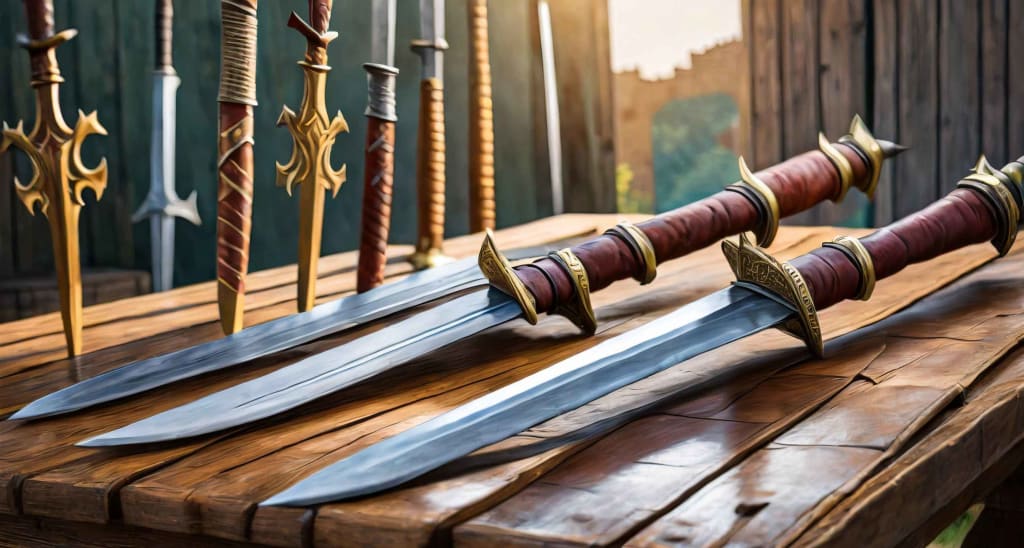
Sword history is a fascinating journey through cultures and eras, charting the development of craftsmanship, cultural identity, and warfare. Swords were first used in Mesopotamia and Egypt, two ancient societies where the use of bronze and iron blades represented a major technological advance. The famous knightly swords, with their broad, double-edged blades, became emblems of heraldry and chivalry during the Middle Ages in Europe.
The Japanese katana, on the other hand, developed during the feudal era and came to represent the samurai's precision in combat and code of honor through its curved single-edge design. Different types of Sword designs evolved to accommodate a variety of combat situations. With its thin and nimble blade, the rapier came to represent European Renaissance dueling culture. Because of its ability to slice, the saber gained popularity as a weapon for cavalry soldiers.
Military swords changed during the 19th century to reflect the evolving nature of warfare; infantry swords were made for thrusting, while cavalry sabers were made for cutting and thrusting. The 20th century saw a move toward dress and ceremonial swords, maintaining the weapons' symbolic significance. The skill of swordsmanship is still practiced today through historical reenactments and martial arts training, demonstrating the ongoing fascination with the varied history of swords and their crucial role in forming martial traditions and civilizations.
Katana:
Known for its iconic single-edge design and unique, curved, thin blade, the katana is a traditional Japanese sword. The katana, which embodies the code of honor of the samurai, is prized for its symbolic meaning and cutting accuracy. It is still a well-liked option for martial arts instruction and is frequently honored as a cultural relic.
The katana is deeply culturally and symbolically significant, having its roots in the samurai's code of honor. When wielded by a proficient practitioner, its razor-sharp blade, which is slender and known for its cutting accuracy, can be a formidable weapon. The katana has evolved from its historical roots to become a respected cultural relic in addition to its martial uses.
The katana, with its ageless charm, is more than just a weapon; it's a piece of art that displays the painstaking attention to detail and artistic sensibilities of Japanese swordsmiths. Even in modern times, katana enthusiasts around the globe are enthralled with this useful tool for martial arts training, which is also a highly valued emblem of honor and tradition. The katana's continuing appeal is a reflection of its long history as a symbol of Japanese craftsmanship, martial spirit, and cultural diversity.
Longsword:
Traditionally wielded with two hands, these types of swords are double-edged swords with a straight blade which was common in medieval Europe. A vital tool in the hands of expert fighters and knights, the longsword was renowned for its versatility in both cutting and thrusting. In historical European martial arts (HEMA) practices, it is currently quite popular. These double-edged, straight-bladed swords, which are typically wielded with two hands, made up a sizable portion of medieval European weaponry.
Admired for its ability to perform thrusting and cutting techniques with equal ease, the longsword was an indispensable weapon in the hands of expert fighters and knights. In the world of historical European martial arts (HEMA), where contemporary enthusiasts study and revive traditional European swordsmanship techniques, these types of swords are once again capturing the attention of enthusiasts and practitioners.
Rapier:
A thin, pointed sword meant for thrusting, the rapier first appeared in 16th-century Europe. It rose to fame in the Renaissance and came to be associated with the skill of fencing and dueling. The rapier was a preferred weapon for self-defense due to its dexterity and accuracy. It rose to prominence in the Renaissance and came to be associated with the skill of fencing and dueling.
The rapier was a preferred weapon for self-defense because of its lightweight and agile design, which allowed for quick and accurate movements. Because fans and practitioners value its historical significance and the complex skills required to use it in traditional fencing arts, it continues to be popular in historical reenactments and theatrical performances.
Saber:
Traditionally linked with cavalry combat, the saber is a single-edged, curved sword with a unique cutting edge. These types of swords were preferred for their cutting ability and were employed by cavalry units all over the world. Sword replicas from today's world are common in martial arts and ceremonial settings. The curved, single-edged blade of the saber, which has a unique cutting edge, has historically been connected to cavalry combat.
Sabers were prized for their cutting ability and were used by cavalry units in many different cultures throughout the world. Even in modern times, martial arts still use replicas of these types of swords as useful training aids and symbolic objects in ritual contexts. The legacy of the saber is living proof of the historical importance of cavalry combat as well as its continued popularity in martial arts customs and ceremonial settings.
Scimitar:
The scimitar is a Middle Eastern-style sword with a single edge that is curved. Scimitars, which are renowned for their cutting effectiveness, were historically employed by several societies, including the Ottoman Empire. They still have cultural value today and are frequently used in ceremonial and decorative contexts. The scimitar is a Middle Eastern sword style that is distinguished by its unique single-edged and curved blade. Scimitars, which were valued for their remarkable cutting ability, were used historically in many societies, most notably the Ottoman Empire.
These types of swords still have cultural significance today and are frequently used in decorative and ceremonial settings. The scimitar's timeless appeal and enduring place in both Middle Eastern history and modern appreciation for traditional weaponry are reflected in its exquisite design and historical connotations, which make it a sought-after collector's item.
These types of swords, which each have distinctive qualities that add to their ongoing appeal and significance in modern settings, symbolize a wide range of historical and cultural traditions.
About the Creator
Mai Sophia
A Writer/blogger by day, a knife enthusiast and survivalist by night. I've reviewed a lot of products and have helped people make the right purchase
Keep reading
More stories from Mai Sophia and writers in History and other communities.
Shadow Arts Arsenal: The World of Ninja Weapons!
Weapons were more than just tools in the enigmatic world of the ninja; they were extensions of skill, cunning, and a profound knowledge of the art of war. Ninjas, who were known for their skill at stealth, agility, and precision, used a variety of unusual weapons that have come to represent their expertise in hiding.
By Mai Sophia2 years ago in History
The Year 1902 in Review: Fun Facts, Trivia, and Historic Highlights
This quick read is a collection of fun facts, trivia, and historic events from the year 1902. Discover the year’s top news stories, most influential people, sports facts, entertainment trivia, famous birthdays and deaths, and much more.
By Gregory DeVictorabout 5 hours ago in History


Comments
There are no comments for this story
Be the first to respond and start the conversation.