
Top 10 tech scientists of the history
They are the inspiration of most of the scientists

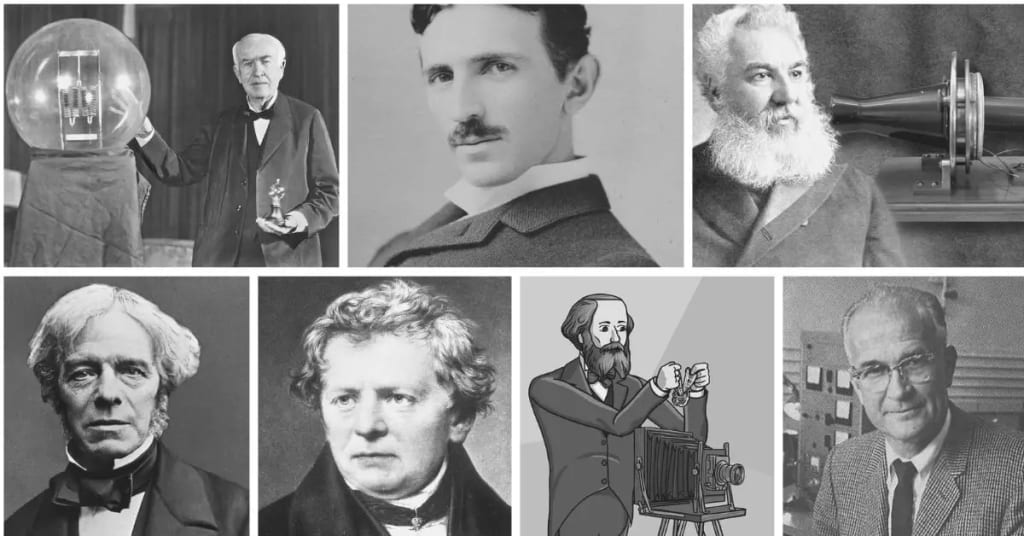
Top Technology Scientists in History: Visionaries Who Changed the World
Throughout human history, our progress as a civilization has been closely tied to the work of visionary thinkers. These individuals—scientists, inventors, and engineers—have revolutionized the world through their groundbreaking contributions to technology. Let’s embark on a journey to explore the lives, achievements, and legacies of some of the most influential technology scientists in history.
________________________________________
What Makes a Technology Scientist?
Before we dive into the remarkable lives of these trailblazers, it’s important to understand what defines a technology scientist. These are people who combine creativity, scientific understanding, and technical expertise to solve problems and invent tools that reshape the world. Whether working on theories, building machines, or devising systems, their work is rooted in innovation.
Their impact isn’t limited to any one field. From ancient engineering marvels to artificial intelligence, these scientists have left their fingerprints on virtually every aspect of human life.
________________________________________
1. Archimedes: The Ancient Engineer
Born in 287 BCE in Syracuse, Archimedes is often regarded as the greatest mathematician and inventor of antiquity.
Key Contributions:
• Archimedean Screw: A device still used for irrigation today.
• Principle of Buoyancy: Revolutionized understanding of floating objects.
• War Machines: Designed catapults and levers to protect his city.
Archimedes laid the foundation for modern mechanics and engineering. His famous quote, “Give me a lever long enough and a fulcrum, and I will move the world,” epitomizes the power of innovation.
________________________________________
2. Leonardo da Vinci: The Renaissance Visionary
Leonardo da Vinci wasn’t just a brilliant artist; he was also a scientist, engineer, and inventor. Born in 1452 in Italy, Leonardo’s sketches show ideas that wouldn’t become reality until centuries later.
Key Contributions:
• Flying Machines: Early concepts of helicopters and gliders.
• Anatomical Studies: Detailed drawings of the human body that advanced medicine.
• Mechanical Devices: Designed cranes, water pumps, and even early versions of tanks.
Leonardo was the ultimate Renaissance man. His ability to blend art with technology created a legacy that still inspires today.
________________________________________
3. Nikola Tesla: The Genius Behind Electricity
Nikola Tesla, born in 1856 in what is now Croatia, was a visionary who changed how we use and understand electricity.
Key Contributions:
• Alternating Current (AC): Revolutionized power transmission.
• Tesla Coil: Laid the foundation for wireless technology.
• X-Ray Imaging: Explored the medical applications of electricity.
Despite his immense contributions, Tesla often lived in the shadow of contemporaries like Thomas Edison. Yet his work paved the way for modern electric grids and wireless communication.
________________________________________
4. Ada Lovelace: The First Computer Programmer
Born in 1815 in London, Ada Lovelace was far ahead of her time. She worked closely with Charles Babbage, the inventor of the Analytical Engine, and saw the machine’s potential beyond simple calculations.
Key Contributions:
• First Algorithm: Created for a machine, laying the groundwork for programming.
• Vision for Computers: Predicted their use in music, graphics, and more.
Ada’s forward-thinking approach earned her the title of the first computer programmer, and her legacy lives on in the programming language Ada, named in her honor.
________________________________________
5. Thomas Edison: The Inventor Extraordinaire
Thomas Edison, born in 1847 in the United States, is perhaps one of the most famous inventors of all time. Holding over 1,000 patents, Edison’s work transformed daily life in countless ways.
Key Contributions:
• Practical Light Bulb: Made electric lighting accessible.
• Phonograph: The first device to record and play sound.
• Motion Picture Camera: Ushered in the era of movies.
Edison’s dedication to practical applications of science turned ideas into realities that defined the modern world.
________________________________________
6. Alan Turing: The Pioneer of Computer Science
Alan Turing, born in 1912 in London, was a mathematical prodigy whose work laid the foundation for computer science and artificial intelligence.
Key Contributions:
• The Turing Machine: Theoretical model for computers.
• Codebreaking: Played a pivotal role in World War II by deciphering the Enigma code.
• Artificial Intelligence: Introduced the Turing Test to evaluate machine intelligence.
Turing’s work not only helped shorten World War II but also gave birth to the age of computers. His story is a powerful reminder of the importance of intellectual curiosity and perseverance.
________________________________________
7. Grace Hopper: The Grandmother of Programming
Grace Hopper, born in 1906 in the United States, was a computer scientist and naval officer who made programming accessible.
Key Contributions:
• Compiler Development: Made it easier to program computers.
• COBOL: Created one of the first high-level programming languages.
• Debugging: Popularized the term when she removed a moth from a computer.
Grace Hopper believed in simplifying technology for the masses. Her work continues to influence software development to this day.
________________________________________
8. Tim Berners-Lee: The Creator of the Web
In 1989, British scientist Tim Berners-Lee invented the World Wide Web while working at CERN.
Key Contributions:
• Hypertext Protocols: Enabled web pages to connect.
• HTML: The foundation of modern websites.
• First Browser: Made the internet accessible to everyday users.
Berners-Lee’s invention democratized information and transformed communication forever. It’s hard to imagine a world without the web.
________________________________________
9. Katherine Johnson: NASA’s Human Computer
Katherine Johnson, born in 1918 in the United States, was a mathematician whose work was critical to the success of NASA’s space missions.
Key Contributions:
• Orbital Calculations: Ensured the safe flight paths of astronauts.
• Apollo Missions: Played a vital role in landing humans on the moon.
Her story, brought to light in the movie Hidden Figures, highlights the power of determination and intellect in overcoming barriers.
________________________________________
10. Elon Musk: The Visionary of the 21st Century
Elon Musk, born in 1971 in South Africa, is a modern-day inventor whose work spans multiple industries.
Key Contributions:
• Tesla: Revolutionized electric vehicles.
• SpaceX: Made space exploration more affordable.
• Neuralink: Pioneering brain-computer interfaces.
Musk’s ambition to colonize Mars and develop sustainable technologies makes him one of the most influential technology scientists of our time.
________________________________________
The Ripple Effect of Their Innovations
What do all these scientists have in common? They didn’t just invent; they inspired. Their work created ripple effects that continue to shape the present and influence the future.
From the light bulb to artificial intelligence, their innovations are embedded in our everyday lives. Imagine watching a movie (Edison), using a smartphone (Turing), or driving an electric car (Musk)—their legacies surround us.
________________________________________
Conclusion: Celebrating Human Ingenuity
The technology scientists of history were more than inventors—they were dreamers who saw the world not as it was but as it could be. Their work teaches us the value of curiosity, persistence, and the courage to defy the impossible.
We owe our modern comforts and innovations to these brilliant minds, and their stories remind us that with the right vision, anything is possible.
________________________________________
OUR OTHER POSTS:-
3. How does Crypto mining work
4. All detail about Google Pixel series
5. Top 10 upcoming smartwatches
FAQs
1. Who is the most influential technology scientist in history?
It’s difficult to pick one, as each contributed uniquely. However, names like Nikola Tesla and Alan Turing often stand out for their transformative impacts.
2. Why is Grace Hopper called the "Grandmother of Programming"?
Grace Hopper made programming more accessible by creating the first compiler and COBOL, one of the first programming languages.
3. How did Tim Berners-Lee change the world?
Tim Berners-Lee created the World Wide Web, making information and communication universally accessible.
4. What was Archimedes’ greatest invention?
Archimedes’ screw is considered one of his most practical and long-lasting inventions, still used today for irrigation.
5. What legacy does Elon Musk aim to leave behind?
Elon Musk aims to advance humanity by focusing on sustainable energy, space exploration, and brain-computer technology.
________________________________________
We will write stories about each of the Scientists in the article if you tell me in the comments. So be patient.
Please don’t forget to view our other POSTS.
About the Creator
Valuable Knowledge
See the growing technology of the world, Sub my profile to be connected to the world's Tech
Sub to Youtube Channel
https://www.youtube.com/@whatsnew9825?sub_confirmation=1
Keep reading
More stories from Valuable Knowledge and writers in History and other communities.
Nikola Tesla: The Genius Who Electrified the World
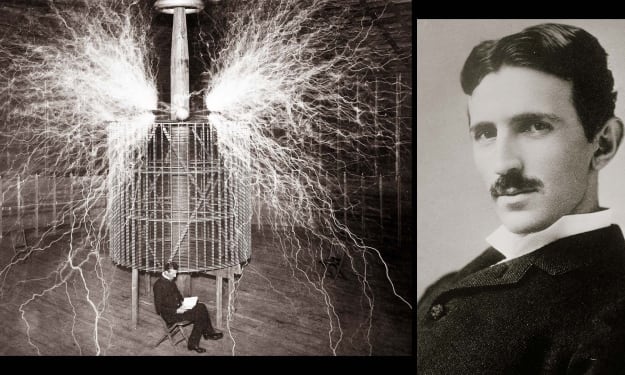
Nikola Tesla: The Genius Behind Electricity Imagine a day without electricity. No lights, no smartphones, no Netflix—just candles and quiet. It’s hard to picture, right? We owe much of our modern, plugged-in world to a man named Nikola Tesla. While Thomas Edison often steals the spotlight in history books, Tesla’s inventions truly electrified the 20th century and beyond. Let’s dive into the life of this quirky, underrated genius who dreamed big, invented bigger, and left a legacy that still powers our lives today.
By Valuable Knowledgeabout a year ago in History


Comments
There are no comments for this story
Be the first to respond and start the conversation.