
After assessing the situation, the captain and chief engineer concluded that it was unlikely it had caused any damage that could affect the hull structure, and the stokers were ordered to continue controlling the fire at sea.
According to a theory put forth by a small number of Titanic experts, the fire became uncontrollable after the ship left Southampton, forcing the crew to attempt a full-speed crossing; moving at such a fast pace, they were unable to avoid the fatal collision with the iceberg.
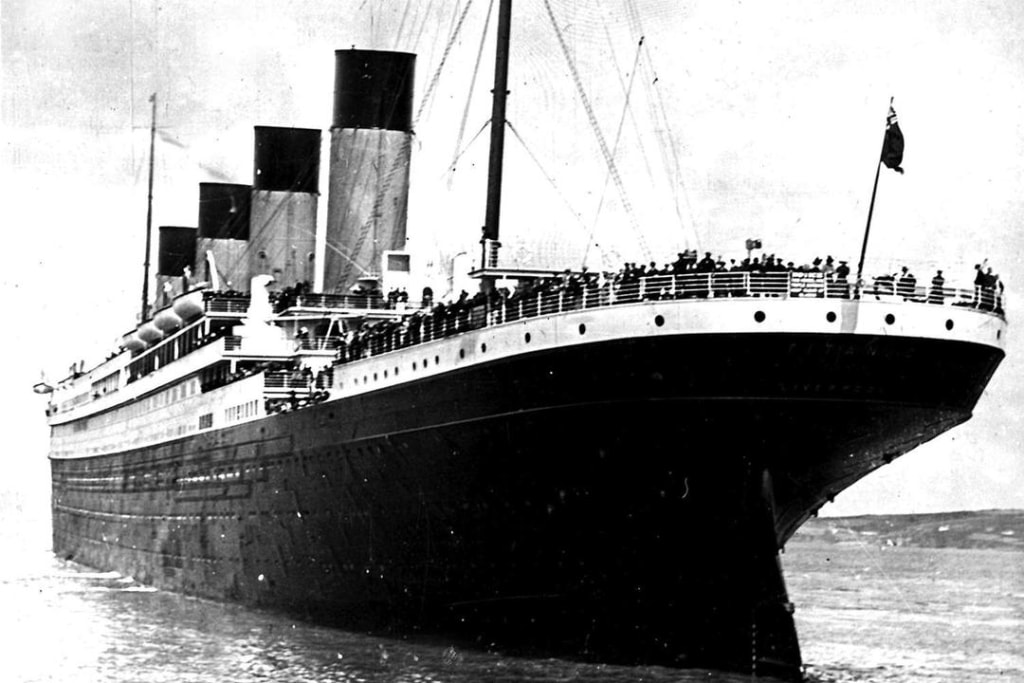
Another unsettling event took place when Titanic left the Southampton dock. As she got underway, she narrowly escaped a collision with the America Line’s S.S. New York. Superstitious Titanic buffs sometimes point to this as the worst kind of omen for a ship departing on her maiden voyage.
On April 14, after four days of uneventful sailing, Titanic received sporadic reports of ice from other ships, but she was sailing on calm seas under a moonless, clear sky.
At about 11:30 p.m., a lookout saw an iceberg coming out of a slight haze dead ahead, then rang the warning bell and telephoned the bridge. The engines were quickly reversed and the ship was turned sharply—instead of making direct impact, Titanic seemed to graze along the side of the berg, sprinkling ice fragments on the forward deck.
On April 14, after four days of uneventful sailing, Titanic received sporadic reports of ice from other ships, but she was sailing on calm seas under a moonless, clear sky.
At about 11:30 p.m., a lookout saw an iceberg coming out of a slight haze dead ahead, then rang the warning bell and telephoned the bridge. The engines were quickly reversed and the ship was turned sharply—instead of making direct impact, Titanic seemed to graze along the side of the berg, sprinkling ice fragments on the forward deck.
Sensing no collision, the lookouts were relieved. They had no idea that the iceberg had a jagged underwater spur, which slashed a 300-foot gash in the hull below the ship’s waterline.
By the time the captain toured the damaged area with Harland and Wolff’s Thomas Andrews, five compartments were already filling with seawater, and the bow of the doomed ship was alarmingly pitched downward, allowing seawater to pour from one bulkhead into the neighboring compartment.
Andrews did a quick calculation and estimated that Titanic might remain afloat for an hour and a half, perhaps slightly more. At that point the captain, who had already instructed his wireless operator to call for help, ordered the lifeboats to be loaded.
A little more than an hour after contact with the iceberg, a largely disorganized and haphazard evacuation began with the lowering of the first lifeboat. The craft was designed to hold 65 people; it left with only 28 aboard.
Tragically, this was to be the norm: During the confusion and chaos during the precious hours before Titanic plunged into the sea, nearly every lifeboat would be launched woefully under-filled, some with only a handful of passengers.
In compliance with the law of the sea, women and children boarded the boats first; only when there were no women or children nearby were men permitted to board. Yet many of the victims were in fact women and children, the result of disorderly procedures that failed to get them to the boats in the first place.
Exceeding Andrews’ prediction, Titanic stubbornly stayed afloat for close to three hours. Those hours witnessed acts of craven cowardice and extraordinary bravery.
Hundreds of human dramas unfolded between the order to load the lifeboats and the ship’s final plunge: Men saw off wives and children, families were separated in the confusion and selfless individuals gave up their spots to remain with loved ones or allow a more vulnerable passenger to escape. In the end, 706 people survived the sinking of the Titanic.
The ship’s most illustrious passengers each responded to the circumstances with conduct that has become an integral part of the Titanic legend. Ismay, the White Star managing director, helped load some of the boats and later stepped onto a collapsible as it was being lowered. Although no women or children were in the vicinity when he abandoned ship, he would never live down the ignominy of surviving the disaster while so many others perished.
Thomas Andrews, Titanic’s chief designer, was last seen in the First Class smoking room, staring blankly at a painting of a ship on the wall. Astor deposited his wife Madeleine into a lifeboat and, remarking that she was pregnant, asked if he could accompany her; refused entry, he managed to kiss her goodbye just before the boat was lowered away.
Although offered a seat on account of his age, Isidor Straus refused any special consideration, and his wife Ida would not leave her husband behind. The couple retired to their cabin and perished together.
About the Creator
Keep reading
More stories from Ojo funmilola Esther and writers in History and other communities.
Titanic (i)
The RMS Titanic, a luxury steamship, sank in the early hours of April 15, 1912, off the coast of Newfoundland in the North Atlantic after sideswiping an iceberg during its maiden voyage. Of the 2,240 passengers and crew on board, more than 1,500 lost their lives in the disaster. Titanic has inspired countless books, articles and films (including the 1997 Titanic movie starring Kate Winslet and Leonardo DiCaprio), and the ship's story has entered the public consciousness as a cautionary tale about the perils of human hubris.
By Ojo funmilola Esther 3 years ago in History
Nanchang: A Modern Symbol of China’s Naval Power
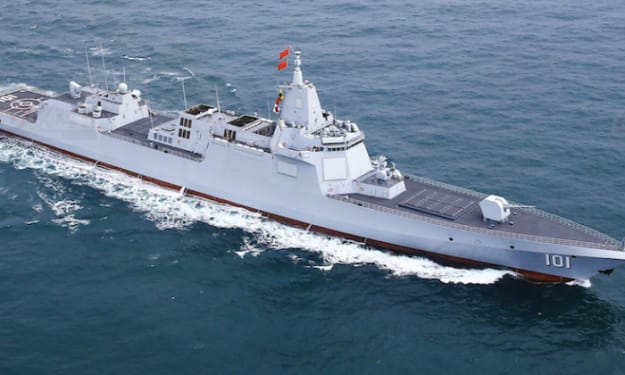
In recent years, the world has closely watched the rapid modernization of the Chinese People’s Liberation Army Navy (PLA Navy). One of the most important symbols of this transformation is the Nanchang (Hull 101), China’s first Type 055 guided-missile destroyer. Commissioned on 12 January 2020, Nanchang represents a major leap in naval technology and capability. As it completes six years of active service, the ship stands as a clear example of how China’s navy has moved into a new era of advanced maritime power.
By sehzeen fatima5 days ago in History
Where the Pulse Ends
© 2026 Sai Marie Johnson The humidity in the city didn’t just hang; it leaned. It was a thick, stagnant soup of diesel exhaust, ozone, and the metallic tang of blood that drifted from the "Compliance Zones." Joe sat in his rusted sedan, his hands resting loosely on the steering wheel. He wasn't gripping it. He wasn't angry. Anger was a chemical spike, a biological inefficiency. Joe was simply... focused.
By Sai Marie Johnsona day ago in History



Comments
There are no comments for this story
Be the first to respond and start the conversation.