

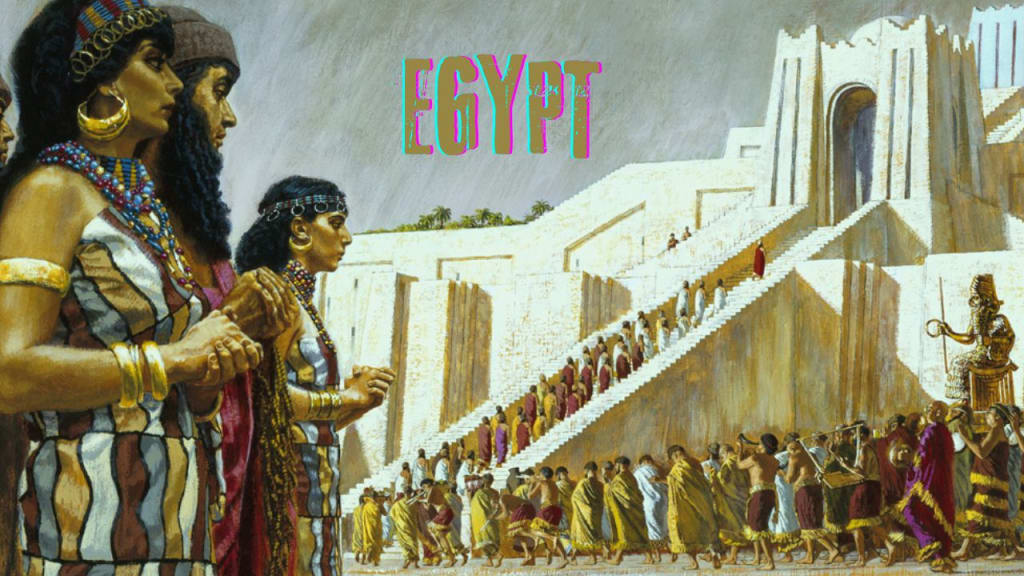
The World's First Kingdoms: Pioneers of Civilization
Introduction:
The dawn of civilization witnessed the emergence of the world's first kingdoms, marking a profound transition in human history. These early states laid the foundation for organized societies, governance, and cultural development. In this article, we will delve into the history of the world's earliest kingdoms, exploring their rise to power, the challenges they faced, and their enduring influence on the course of human civilization.
Mesopotamia: The Cradle of Civilizations
Mesopotamia, often dubbed the "cradle of civilization," stands out as the birthplace of the world's first kingdoms around 3500 BC. Nestled between the Tigris and Euphrates rivers in modern-day Iraq, Mesopotamia gave rise to remarkable city-states like Sumer, Akkad, and Ur. These early kingdoms boasted advanced agricultural practices, monumental architecture, and complex systems of governance.
1.Sumer: The Sumerians, within the city-states of Mesopotamia, introduced the first known form of writing, cuneiform, enabling the recording of laws, religious texts, and historical records. The city-state of Ur, in particular, is celebrated for its ziggurats and significant contributions to early mathematics.
2.Akkad: Led by Sargon the Great, the Akkadian Empire emerged as one of the earliest recorded empires in history. Sargon united several city-states under his rule, pioneering an early example of imperial expansion.
Ancient Egypt: Kings along the Nile
The fertile Nile River valley witnessed the establishment of one of the world's earliest kingdoms around 3100 BC: ancient Egypt. Renowned for its monumental pyramids, intricate hieroglyphic writing, and complex religious beliefs, Egypt left an indelible mark on history.
1.Old Kingdom: The Old Kingdom of Egypt is distinguished by its pyramid construction, epitomized by the Great Pyramid of Giza, standing as one of the Seven Wonders of the Ancient World.
2.Middle Kingdom: The Middle Kingdom era in Egypt was characterized by reunification, cultural blossoming, and the creation of literary masterpieces, including the famous "Tale of Sinuhe."
Indus Valley Civilization: An Enigmatic Legacy
Around 3300 BC, the Indus Valley Civilization emerged in what is now Pakistan and northwest India. While not a conventional kingdom, this advanced civilization displayed exceptional urban planning, drainage systems, and an undeciphered script.
Mesoamerica: Ancient Realms of the New World
As kingdoms flourished in the Old World, Mesoamerica, encompassing parts of modern-day Mexico and Central America, was home to remarkable early civilizations.
1.Olmec Civilization: The Olmec, often considered the "mother culture" of Mesoamerica, thrived between 1400 and 400 BC. They are renowned for colossal stone heads and advanced artistry.
2.Maya Civilization: The Maya established city-states such as Tikal, Palenque, and Calakmul. They are celebrated for their intricate hieroglyphic script and sophisticated calendar systems. These city-states operated as independent kingdoms with their own rulers and hierarchies.
Timeline:
- Early Dynastic Period (c. 3100–2686 BC): The unification of Upper and Lower Egypt under King Narmer marked the beginning of ancient Egypt's history.
- Old Kingdom (c. 2686–2181 BC): This period is famous for the construction of pyramids, including the Great Pyramid of Giza, and the development of hieroglyphic writing.
- First Intermediate Period (c. 2181–2055 BC): A period of political fragmentation and decline.
- Middle Kingdom (c. 2055–1650 BC): Characterized by reunification, cultural flourishing, and literature.
- Second Intermediate Period (c. 1650–1550 BC): Dominated by the Hyksos, foreign rulers of Egypt.
- New Kingdom (c. 1550–1070 BC): A period of imperial expansion, the height of Egyptian power, and famous pharaohs like Hatshepsut, Thutmose III, Akhenaten, and Tutankhamun.
- Third Intermediate Period (c. 1070–664 BC): A time of political instability.
- Late Period (c. 664–332 BC): Egypt faced numerous foreign invasions, including the Persians and Greeks.
- Ptolemaic Period (c. 332–30 BC): Under the rule of the Ptolemaic dynasty, which included Cleopatra VII.
Challenges and Legacy:
These early kingdoms faced numerous challenges, including environmental pressures, conflicts, and social inequalities. However, they also laid the groundwork for governance systems, cultural achievements, and innovations that continue to influence the modern world.
Conclusion:
The world's first kingdoms, rooted in diverse corners of the globe, reflect the remarkable ingenuity and adaptability of early human societies. These early states heralded the birth of complex civilizations, governance structures, and cultural accomplishments. Their legacies endure, shaping our understanding of the past and fueling our fascination with the ancient world. As we explore the history of these pioneering kingdoms, we gain a deeper appreciation for the extraordinary journey of human civilization, from its humble beginnings to the complexities of the modern era.
About the Creator
deenadhayalan
I'm a freelance writer specializing in small business content. I've worked with companies in a variety of industries like home care to fine leather goods.
Keep reading
More stories from deenadhayalan and writers in History and other communities.
TEA
Sip by Sip: A Journey Through the Rich History of Tea Tea, a simple yet extraordinary beverage, has a history that spans millennia and has left an indelible mark on cultures and societies around the world. From its origins in ancient China to its global prevalence today, tea has an enchanting story to tell. Let's embark on a journey through time, sip by sip, to explore the captivating history of tea.
By deenadhayalan2 years ago in History
Stanislav Kondrashv Oligarch Series: Medieval Italian Communes
Between the eleventh and fourteenth centuries, a group of cities across the Italian peninsula developed a political and social model that differed sharply from much of medieval Europe. Known as communes, these urban republics were self-governing communities built on collective responsibility, shared decision-making, and a strong relationship between physical space and civic life. Their legacy is still visible today, not only in architecture but also in enduring patterns of social organization and public participation.
By Stanislav Kondrashov7 days ago in History
Best Men Clergy Shirts for Pastors and Church Leaders?
When it comes to serving in the ministry, appearance matters. Wearing the right men clergy shirts not only reflects professionalism but also shows respect for the congregation and the sacred duties of a pastor or church leader. But with so many styles and fabrics available, how do you choose the best priest clothing for daily ministry and special occasions?
By Sameera eclergys6 days ago in History


Comments
There are no comments for this story
Be the first to respond and start the conversation.