
The Woman Who Stood Against a Dictator
In 1943, a 21-year-old student defied the Nazi regime with nothing but leaflets, courage, and an unshakable belief in truth.


The sky over Munich was the color of steel that morning — cold, sharp, unyielding. Sophie Scholl pulled her wool coat tighter, feeling the bite of February against her skin. Her breath formed clouds in the air as she walked beside her older brother Hans. In her gloved hands, she clutched a stack of papers so tightly the edges cut into her palms.
They were only leaflets — thin, easily torn, printed in black ink on ordinary paper — but Sophie knew they were more dangerous than any weapon she could carry.
Just a few years earlier, she had been like so many other young Germans. As a teenager, she wore the uniform of the League of German Girls, smiled in parades, and sang patriotic songs. But the more she saw, the more the mask of the regime began to crack. Jewish friends vanished from her school. Whispers of concentration camps reached her ears. The joy in the streets turned into fear in the shadows.
When Sophie moved to Munich to study biology and philosophy, she found others who felt the same way. Hans introduced her to the White Rose, a small circle of students and one professor, united by a single belief: silence in the face of evil was itself evil.
They wrote leaflets — thousands of them — condemning the Nazi regime, urging Germans to resist, to open their eyes to the horrors of war and the lies of propaganda. Their words were copied by hand, printed in secret, and mailed across Germany in plain envelopes. It was slow, dangerous work. Every name, every meeting, every sheet of paper could mean death.
That morning, Sophie and Hans arrived at the University of Munich early, before lectures began. The grand atrium echoed with the click of their shoes on the marble floor. Sophie’s heart beat faster with every step. The building’s high ceilings seemed to amplify the silence.
They moved quickly, placing small piles of leaflets on windowsills, benches, and the edges of staircases. Sophie felt a strange thrill each time she set one down — a quiet rebellion, a seed planted.
When they reached the top floor, Sophie saw she had a few leaflets left. She stepped to the balcony and looked down at the hall below, where students were beginning to gather. In a moment of impulse, she scattered the papers into the air.
They floated down in slow spirals, like white petals from an invisible tree. The sight was almost beautiful — until a shadow moved in the corner of her vision.
It was Jakob Schmid, the building’s janitor. He watched the papers fall with a hard, calculating stare. Schmid was known for his loyalty to the regime. Without a word, he turned and disappeared down the stairs. Sophie’s stomach dropped.
Minutes later, footsteps thundered through the atrium. Gestapo agents appeared, their black coats cutting through the crowd. Sophie and Hans were grabbed, their bags searched, the incriminating leaflets spilling onto the marble floor.
They were taken to Gestapo headquarters, where the interrogation began immediately.
The room was bare, the air heavy with cigarette smoke. A single bulb swung overhead, casting shadows across Sophie’s face.
“Who else is involved?” the officer barked.
Sophie sat straight, her hands folded neatly in her lap. “You already have us. That’s enough.”
The questions came in waves — threats, accusations, promises of mercy if she betrayed her friends. Sophie never faltered. “Somebody, after all, had to make a start,” she told them. “What we wrote and said is what many people are thinking — they just don’t dare say it aloud.”
For three days, the interrogations continued. Hans was beaten. Their friend Christoph Probst, a father of three, was also arrested.
On February 22, 1943, they were brought before the People’s Court. The trial was a performance, not a search for truth. Judge Roland Freisler shouted insults, calling them traitors. Sophie stood calmly, her voice clear. “You will soon stand where we stand,” she told him. “It is your turn to answer.”
The sentence was death.
That same afternoon, Sophie was led to Stadelheim Prison. The corridor to the execution chamber was narrow, the air damp and cold. Guards walked beside her, their boots striking the stone floor.
A prison official later recalled that Sophie walked to her death “without the flicker of an eyelash.” Her final words were spoken with quiet conviction:
“How can we expect righteousness to prevail when there is hardly anyone willing to give himself up individually to a righteous cause? Such a fine, sunny day — and I have to go. But what does my death matter, if through us thousands of people are awakened and stirred to action?”
The blade fell. She was twenty-one years old.
Hans and Christoph followed minutes later. Hans’s last words echoed in the chamber: “Long live freedom!”
The White Rose was gone, but the words they wrote did not die. The final leaflet, smuggled out of Germany, was dropped over the country in the millions by Allied planes. Sophie’s face became a symbol of courage, her story taught in schools, her name given to streets, plazas, and memorials across Germany.
Eighty years later, Sophie Scholl’s voice still speaks — a reminder that the fight for truth is never too small, and that even in the darkest times, a single act of defiance can light a fire that burns for generations.
About the Creator
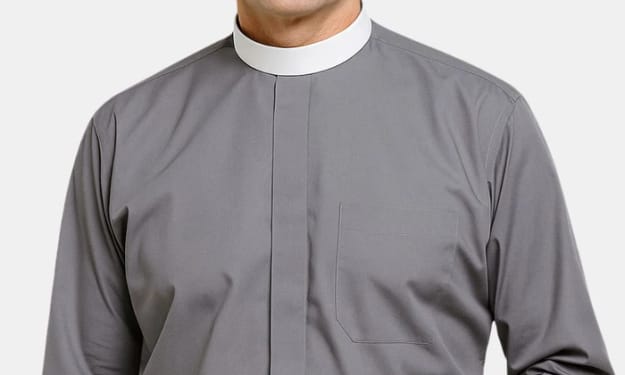
Why Pastor Collar Shirts Are Essential for Modern Church Leaders
In today’s modern church, appearance matters just as much as message. Church leaders are expected to look respectful, approachable, and professional at all times. Clothing plays a big role in creating this image. Among all clerical outfits, pastor collar shirts stand out as one of the most important garments for church leaders. These shirts are not only a symbol of faith and authority, but they also provide comfort, confidence, and identity.
By Sameera eclergysabout 19 hours ago in History



Comments
There are no comments for this story
Be the first to respond and start the conversation.