
The war of El-Basus
The War of al-Basus: A Tale of Honor, Revenge, and Endless Conflict Introduction The War of al-Basus stands as one of the most famous and longest-lasting tribal wars in pre-Islamic Arabian history. Spanning around forty years, this conflict epitomizes how a relatively minor incident — a dispute over a camel — escalated into decades of bloodshed and devastation between two powerful Arabian tribes: Banu Bakr and Banu Taghlib. This war reveals much about the values, culture, and social dynamics of the Arab tribes in the centuries before Islam, especially regarding honor, revenge, and tribal loyalty. It also highlights how personal grievances could ignite prolonged collective conflicts in a society where tribal identity was paramount. --- Historical Context Before the rise of Islam, the Arabian Peninsula was divided into numerous tribes and clans, each controlling their own territories and resources, such as grazing lands, water wells, and trade routes. The tribal system was based on kinship, mutual defense, and a rigid honor code. Blood feuds and revenge killings were common, as tribes sought to protect their dignity and retaliate against any perceived insults or attacks. The tribes of Banu Bakr and Banu Taghlib, both descendants of the larger Rabi'ah tribal confederation, were neighbors in the northeastern Arabian region near the Euphrates River. They frequently clashed over pasturelands and other resources, but despite occasional tensions, they generally maintained a balance of power for many years. --- The Spark: The Incident That Ignited the War The War of al-Basus began with an event so seemingly trivial that it could be easily overlooked: a dispute over a camel. The camel belonged to a man named Jassas ibn Murrah, a member of the Banu Taghlib tribe. One day, his camel wandered into the grazing lands controlled by the Banu Bakr. In retaliation or as a sign of authority, the camel was taken or appropriated by a man from Banu Bakr named Kulaib ibn Rabiah, a prominent and skilled warrior. When Jassas confronted Kulaib about the camel, tensions quickly escalated. During the heated exchange, Kulaib killed Jassas’s servant, a shepherd, which was a grave offense. This killing was the immediate cause of outrage among the Taghlib tribe. According to tribal customs, a killing demanded revenge, either through blood money (compensation) or by retaliatory killing (qisas). However, Kulaib and the Banu Bakr tribe refused to pay blood money or accept any compromise, insisting that the incident was either justified or a matter of honor. --- The Role of Al-Basus: The Woman Who Fanned the Flames The war gained its name from a woman known as al-Basus, whose real name was Al-Basousa bint Mas’ud al-Sadifiyah. She was a noblewoman from the Taghlib tribe and the wife of Kulaib ibn Rabiah from the Bakr tribe. The story goes that al-Basus was deeply angered by the killing of the shepherd and by the refusal of her husband and his tribe to make amends. She relentlessly incited her husband and her tribe to seek revenge against Taghlib. Al-Basus became a symbol of relentless vengeance. Her name was forever associated with this war, which came to be known as the "War of al-Basus." Her passionate and fiery nature helped prolong the war, as she reportedly urged continual retaliation and refused peace efforts. --- Escalation into Full-Scale War What might have been a brief dispute turned into a full-scale tribal war lasting nearly forty years. The tribal customs of honor and revenge made it impossible for either side to back down without losing face. The war consisted of: Skirmishes and raids: Both tribes frequently raided each other’s camps, stealing livestock and attacking settlements. Major battles: There were several large-scale battles with many casualties, although no decisive victory was achieved by either side. Personal duels and vendettas: Tribal champions and warriors often fought in one-on-one duels that were highly romanticized in Arab poetry. --- Impact on the Tribes The consequences of the War of al-Basus were devastating: Loss of life and resources: Thousands of people, including men, women, and children, perished in the decades of conflict. Economic disruption: Continuous warfare disrupted trade routes and grazing lands, leading to economic hardship. Fragmentation of alliances: The war weakened the cohesion of the tribes and caused divisions within families. Despite the immense suffering, the cycle of retaliation continued due to tribal honor codes and societal expectations. --- The Role of Poetry and Oral Tradition The War of al-Basus was immortalized in the rich tradition of pre-Islamic Arab poetry. Poets from both tribes composed verses that celebrated their heroes, lamented losses, and cursed their enemies. These poems were more than just art; they were a crucial part of the conflict itself, spreading news, inciting courage, and keeping the memory of grievances alive. The war contributed to the Arab cultural heritage by inspiring some of the most passionate and eloquent poetic works of the era. --- Attempts at Peace and Mediation Over the course of the four decades, several attempts were made to negotiate peace: Tribal elders and respected leaders tried to intervene to halt the bloodshed. Marriages were proposed between the tribes to create alliances. Promises of compensation and exchange of prisoners were discussed. However, these efforts mostly failed because of the strong emotions involved and the unwillingness of either tribe to appear weak. Al-Basus herself is said to have opposed peace efforts, fearing that reconciliation would dishonor her family and tribe. --- The End of the War and Its Legacy The War of al-Basus ended not with a clear victor but due to exhaustion on both sides and changing political circumstances. When Islam emerged in the Arabian Peninsula in the 7th century, it brought a new social order that discouraged tribal vendettas and promoted unity among the Arabs. The values of reconciliation, forgiveness, and brotherhood introduced by Islam gradually ended many long-standing tribal conflicts, including those like the War of al-Basus. --- Lessons from the War of al-Basus The War of al-Basus offers several important lessons that remain relevant: 1. The danger of unchecked vengeance: A minor conflict, left unmediated, can spiral into a destructive war. 2. The power of women in history: Though men fought the battles, women like al-Basus played a crucial role in shaping events. 3. The need for mediation and compromise: The failure to reconcile grievances early prolongs suffering. 4. The role of culture in conflict: Values such as honor and reputation can drive conflicts as much as economic or political factors. --- Conclusion The War of al-Basus is a powerful historical narrative that encapsulates the complexities of tribal society in pre-Islamic Arabia. It shows how deeply held values of honor and revenge can fuel endless conflict, and how reconciliation and unity are essential to peace. While tragic in its human cost, the story of this war also enriched Arab culture through poetry and storytelling, reminding later generations of the price of conflict and the hope for peace.

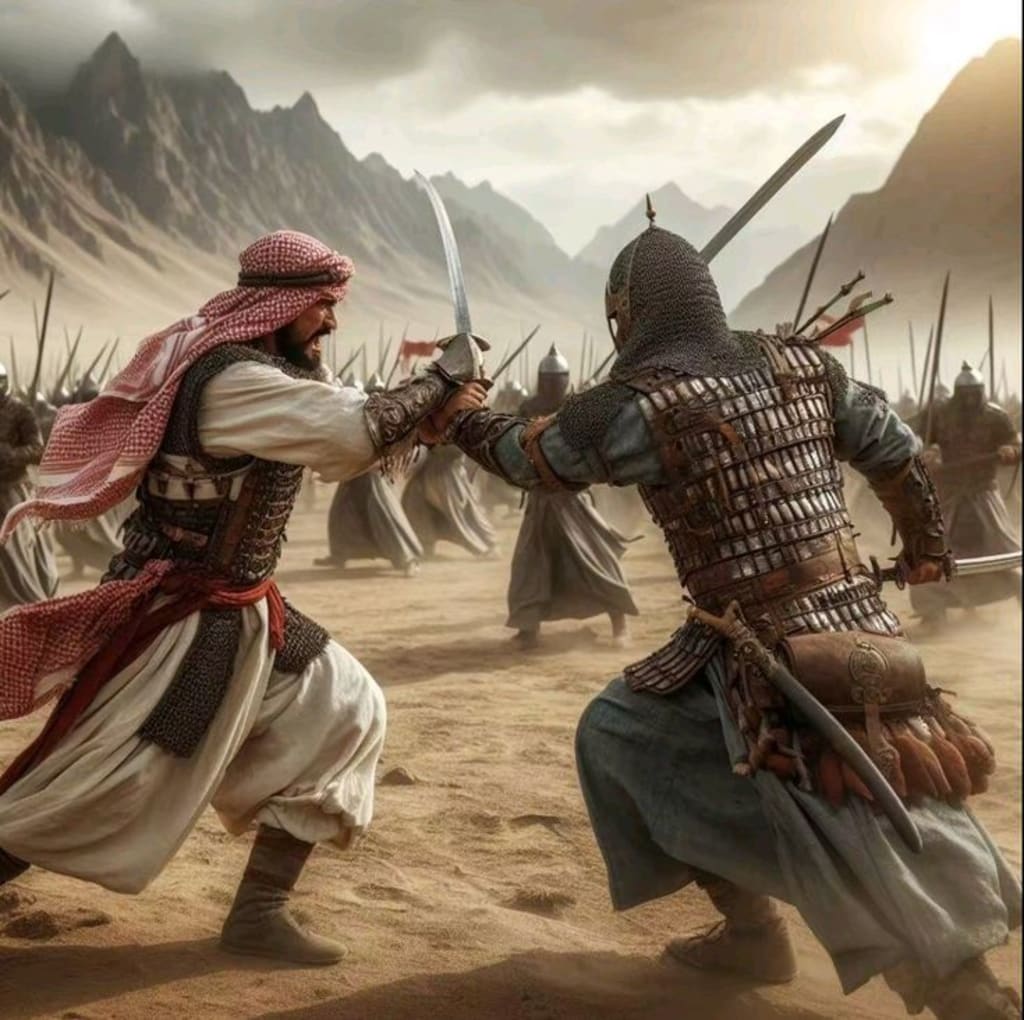
The War of al-Basus: A Tale of Honor, Revenge, and Endless Conflict
Introduction
The War of al-Basus stands as one of the most famous and longest-lasting tribal wars in pre-Islamic Arabian history. Spanning around forty years, this conflict epitomizes how a relatively minor incident — a dispute over a camel — escalated into decades of bloodshed and devastation between two powerful Arabian tribes: Banu Bakr and Banu Taghlib.
This war reveals much about the values, culture, and social dynamics of the Arab tribes in the centuries before Islam, especially regarding honor, revenge, and tribal loyalty. It also highlights how personal grievances could ignite prolonged collective conflicts in a society where tribal identity was paramount.
---
Historical Context
Before the rise of Islam, the Arabian Peninsula was divided into numerous tribes and clans, each controlling their own territories and resources, such as grazing lands, water wells, and trade routes. The tribal system was based on kinship, mutual defense, and a rigid honor code. Blood feuds and revenge killings were common, as tribes sought to protect their dignity and retaliate against any perceived insults or attacks.
The tribes of Banu Bakr and Banu Taghlib, both descendants of the larger Rabi'ah tribal confederation, were neighbors in the northeastern Arabian region near the Euphrates River. They frequently clashed over pasturelands and other resources, but despite occasional tensions, they generally maintained a balance of power for many years.
---
The Spark: The Incident That Ignited the War
The War of al-Basus began with an event so seemingly trivial that it could be easily overlooked: a dispute over a camel.
The camel belonged to a man named Jassas ibn Murrah, a member of the Banu Taghlib tribe. One day, his camel wandered into the grazing lands controlled by the Banu Bakr. In retaliation or as a sign of authority, the camel was taken or appropriated by a man from Banu Bakr named Kulaib ibn Rabiah, a prominent and skilled warrior.
When Jassas confronted Kulaib about the camel, tensions quickly escalated. During the heated exchange, Kulaib killed Jassas’s servant, a shepherd, which was a grave offense.
This killing was the immediate cause of outrage among the Taghlib tribe. According to tribal customs, a killing demanded revenge, either through blood money (compensation) or by retaliatory killing (qisas).
However, Kulaib and the Banu Bakr tribe refused to pay blood money or accept any compromise, insisting that the incident was either justified or a matter of honor.
---
The Role of Al-Basus: The Woman Who Fanned the Flames
The war gained its name from a woman known as al-Basus, whose real name was Al-Basousa bint Mas’ud al-Sadifiyah. She was a noblewoman from the Taghlib tribe and the wife of Kulaib ibn Rabiah from the Bakr tribe.
The story goes that al-Basus was deeply angered by the killing of the shepherd and by the refusal of her husband and his tribe to make amends. She relentlessly incited her husband and her tribe to seek revenge against Taghlib.
Al-Basus became a symbol of relentless vengeance. Her name was forever associated with this war, which came to be known as the "War of al-Basus."
Her passionate and fiery nature helped prolong the war, as she reportedly urged continual retaliation and refused peace efforts.
---
Escalation into Full-Scale War
What might have been a brief dispute turned into a full-scale tribal war lasting nearly forty years. The tribal customs of honor and revenge made it impossible for either side to back down without losing face.
The war consisted of:
Skirmishes and raids: Both tribes frequently raided each other’s camps, stealing livestock and attacking settlements.
Major battles: There were several large-scale battles with many casualties, although no decisive victory was achieved by either side.
Personal duels and vendettas: Tribal champions and warriors often fought in one-on-one duels that were highly romanticized in Arab poetry.
---
Impact on the Tribes
The consequences of the War of al-Basus were devastating:
Loss of life and resources: Thousands of people, including men, women, and children, perished in the decades of conflict.
Economic disruption: Continuous warfare disrupted trade routes and grazing lands, leading to economic hardship.
Fragmentation of alliances: The war weakened the cohesion of the tribes and caused divisions within families.
Despite the immense suffering, the cycle of retaliation continued due to tribal honor codes and societal expectations.
---
The Role of Poetry and Oral Tradition
The War of al-Basus was immortalized in the rich tradition of pre-Islamic Arab poetry. Poets from both tribes composed verses that celebrated their heroes, lamented losses, and cursed their enemies.
These poems were more than just art; they were a crucial part of the conflict itself, spreading news, inciting courage, and keeping the memory of grievances alive.
The war contributed to the Arab cultural heritage by inspiring some of the most passionate and eloquent poetic works of the era.
---
Attempts at Peace and Mediation
Over the course of the four decades, several attempts were made to negotiate peace:
Tribal elders and respected leaders tried to intervene to halt the bloodshed.
Marriages were proposed between the tribes to create alliances.
Promises of compensation and exchange of prisoners were discussed.
However, these efforts mostly failed because of the strong emotions involved and the unwillingness of either tribe to appear weak.
Al-Basus herself is said to have opposed peace efforts, fearing that reconciliation would dishonor her family and tribe.
---
The End of the War and Its Legacy
The War of al-Basus ended not with a clear victor but due to exhaustion on both sides and changing political circumstances.
When Islam emerged in the Arabian Peninsula in the 7th century, it brought a new social order that discouraged tribal vendettas and promoted unity among the Arabs.
The values of reconciliation, forgiveness, and brotherhood introduced by Islam gradually ended many long-standing tribal conflicts, including those like the War of al-Basus.
---
Lessons from the War of al-Basus
The War of al-Basus offers several important lessons that remain relevant:
1. The danger of unchecked vengeance: A minor conflict, left unmediated, can spiral into a destructive war.
2. The power of women in history: Though men fought the battles, women like al-Basus played a crucial role in shaping events.
3. The need for mediation and compromise: The failure to reconcile grievances early prolongs suffering.
4. The role of culture in conflict: Values such as honor and reputation can drive conflicts as much as economic or political factors.
---
Conclusion
The War of al-Basus is a powerful historical narrative that encapsulates the complexities of tribal society in pre-Islamic Arabia. It shows how deeply held values of honor and revenge can fuel endless conflict, and how reconciliation and unity are essential to peace.
While tragic in its human cost, the story of this war also enriched Arab culture through poetry and storytelling, reminding later generations of the price of conflict and the hope for peace.
About the Creator
Moayed_eldeen
Historical Storyteller | Bringing the Past to Life 📜⚔️ | Exploring Legends, Wars & Heroes 🏰🛡️ | Dive into History with Every Tale! 📖✨
Keep reading
More stories from writers in History and other communities.
Stanislav Kondrashov Oligarch Series: When Oligarchy Meets the IT Industry
In the digital age, influence has shifted. Where it once lay in natural resources and heavy industry, today it resides in data centres, software patents, and algorithmic leverage. Few understand this better than the elite individuals whose fortunes grew alongside the rise of the tech sector. In this edition of the Stanislav Kondrashov Oligarch Series, we examine the quiet entanglement between oligarchy and the world’s most vital modern sector: information technology.
By Stanislav Kondrashova day ago in History
Future Wars in the Age of Artificial Intelli
Future Wars in the Age of Artificial Intelligence If the new battlefield is hidden inside a nation’s systems, then Artificial Intelligence is becoming the most powerful weapon within it. Future wars will not begin with tanks crossing borders or fighter jets in the sky. They will begin with algorithms, data, and decisions made at machine speed. AI is changing not only how wars are fought, but also who controls power and how quickly conflicts can spiral out of control.
By Wings of Time 4 days ago in History




Comments
There are no comments for this story
Be the first to respond and start the conversation.