
The Vespasianus Titus Tunnel: A Marvel of Ancient Roman Engineering
Ancient Rome

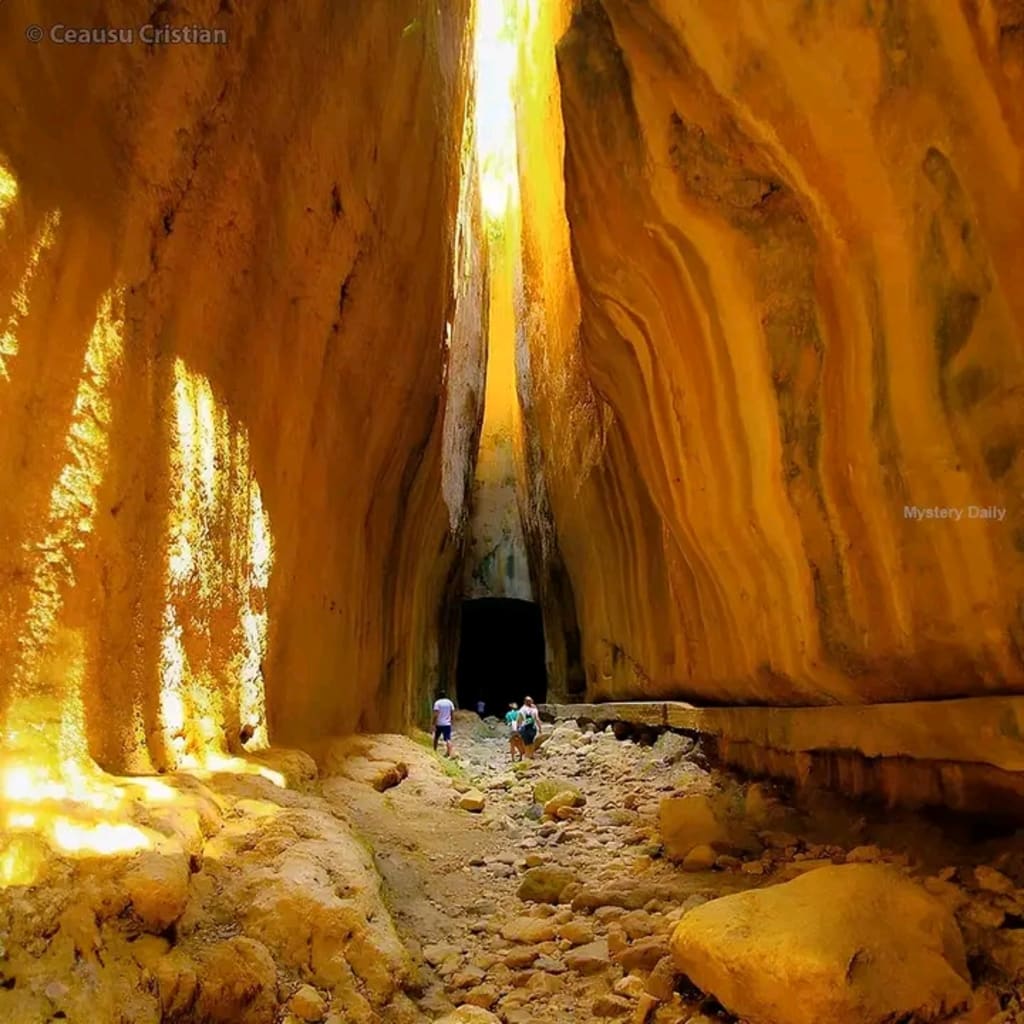
Forget everything you thought you knew about ancient engineering because the Vespasianus Titus Tunnel in Turkey is about to challenge your perception of what civilizations 2,000 years ago were capable of achieving. This remarkable structure is more than just a tunnel; it’s a 1.4-kilometer testament to the relentless ambition and ingenuity of the Roman Empire, a civilization that wasn’t satisfied with merely surviving but one that wanted to thrive—and make sure everyone knew it. Built to protect the city of Seleucia Pieria from flooding, the Vespasianus Titus Tunnel is an engineering marvel that underscores the Romans’ incredible ability to dominate and manipulate their environment in ways that still leave us in awe today.
The Purpose and Ambition Behind the Tunnel
The story of the Vespasianus Titus Tunnel begins in Seleucia Pieria, an ancient port city near what is now Antakya, Turkey. The city’s location at the base of the Nur Mountains made it vulnerable to seasonal flooding, which threatened both the city and its strategically significant harbor. Recognizing the need to protect Seleucia Pieria from these destructive floodwaters, Emperor Vespasian ordered the construction of the tunnel, a massive project aimed at diverting the river’s flow away from the city and the harbor, thereby preventing sediment buildup and potential flooding.
While other civilizations might have accepted seasonal flooding as an inevitable part of life, the Romans were driven by a vision of human supremacy over nature. For them, the tunnel wasn’t just a matter of utility—it was a statement. Vespasian’s initiative to start the project was a bold move, and his son, Emperor Titus, continued it. The tunnel would ultimately be completed during the reign of Emperor Antoninus Pius, almost a century later. The timeline alone speaks to the dedication and ambition of the Roman Empire: even across multiple reigns, the goal of completing this monumental task never wavered.
Engineering Brilliance Carved in Stone
So, what makes the Vespasianus Titus Tunnel so impressive? For starters, it wasn’t dug through loose soil or sediment; it was carved through solid rock. This means that Roman engineers had to employ extraordinary skill, precision, and manpower to cut their way through the mountainside. The tunnel, which measures 1.4 kilometers (almost a mile) in length, ranges between 6 and 7 meters in height and about 6 meters in width. To put that in perspective, it’s roughly the height of a two-story building and wide enough to accommodate modern-day vehicles if necessary.
The construction of the tunnel involved the use of basic tools like chisels, hammers, and wooden scaffolding. Without modern machinery, Roman engineers had to rely on sheer manpower and ingenuity to carve this massive structure. The rock-cut technique used in the tunnel showcases their expertise in stonework and architecture, as well as their understanding of hydraulics. The tunnel was designed not only to redirect water but also to ensure a smooth flow that would minimize sediment accumulation. Such foresight indicates a deep understanding of fluid dynamics, which was groundbreaking for the time.
A Labor-Intensive Feat of Human Willpower
Creating the Vespasianus Titus Tunnel required a massive workforce. Historical records suggest that the labor force consisted primarily of prisoners of war and slaves, underscoring the harsh realities of ancient engineering projects. Carving through solid rock was grueling, backbreaking work that likely spanned decades, demanding endurance and resilience from the workers involved. The effort and resources poured into the tunnel are a testament to the Roman Empire’s willingness to allocate substantial manpower for the sake of infrastructure projects that reinforced its image of strength and authority.
The project’s longevity—spanning multiple emperors’ reigns—reflects not only the Roman Empire’s organizational capabilities but also its vision. Vespasian may have initiated the construction, but his successors recognized the importance of finishing what he had started. In completing this tunnel, the Romans demonstrated their commitment to long-term projects and their belief that great achievements often required time, patience, and unwavering determination.
A Lasting Monument to Roman Ingenuity
Today, the Vespasianus Titus Tunnel stands as a testament to the advanced engineering capabilities of the Roman Empire. Despite being exposed to the elements for centuries, the structure remains remarkably well-preserved. This resilience speaks volumes about the Romans’ expertise in construction techniques and material selection, as well as their ability to foresee and plan for the challenges posed by nature. The tunnel has survived countless floods, earthquakes, and natural weathering, proving that the Romans didn’t just build for the present—they built for eternity.
Walking through the tunnel today, one can’t help but feel a sense of awe. The sheer scale and ambition of the structure make it hard to believe that it was created without the aid of modern technology. It’s no wonder that visitors and historians alike are drawn to this site, as it offers a tangible connection to a time when the Roman Empire dominated the known world and staked its claim as one of history’s most innovative civilizations.
A Lesson in the Power of Vision and Determination
The Vespasianus Titus Tunnel isn’t just an ancient artifact; it’s a reminder of what can be achieved when vision and ambition are matched by commitment and hard work. For the Romans, this tunnel wasn’t merely a project—it was a demonstration of their technical prowess and a symbol of their empire’s ability to control and shape the natural world.
In a world where infrastructure projects are often measured in years rather than decades, the tunnel serves as a powerful reminder of the importance of persistence and the impact of legacy. The Romans may be long gone, but the Vespasianus Titus Tunnel endures, an architectural marvel that continues to inspire admiration and respect. As we marvel at this ancient engineering wonder, we are reminded that sometimes, the greatest achievements are the ones that require generations to bring to life—a true testament to the Romans' determination to build not just for themselves, but for the ages.
About the Creator
Keep reading
More stories from Deji Akomolafe and writers in History and other communities.
Shiprock: New Mexico’s Sacred Monolith
Rising sharply from the desert floor of northwestern New Mexico, Shiprock is an extraordinary natural formation with a rich blend of geological and cultural significance. Known as “Tsé Bitʼaʼí,” or “rock with wings,” by the Navajo Nation, this towering volcanic monolith stands as a revered landmark, deeply woven into the traditions and stories of the Navajo people. With its jagged silhouette and impressive height of 1,583 feet, Shiprock’s mystique and majesty captivate not only those who live near it but also visitors, geologists, and photographers from across the world.
By Deji Akomolafeabout a year ago in History
"The Power of Belief: Ideology in the Roman Kingdom"
The Rise of Ideology in the Roman Kingdom In the earliest days of Rome, long before it became a republic or an empire, the Roman Kingdom was bound together by more than kings, armies, or stone walls. What truly unified Rome was a powerful and carefully shaped ideology—one that defined how Romans understood authority, duty, morality, and identity. This ideological foundation transformed a small settlement on the banks of the Tiber River into a disciplined and resilient civilization, prepared to rule others long after its kings were gone.
By The best writer 6 days ago in History
THE TREASURE IN THE FOREST
The canoe drifted quietly toward the island, where a wide bay opened beneath a blazing sky. A narrow gap in the white reef marked the mouth of a small river, its path visible by the darker green of thick forest spilling down the hillside. Beyond it, mountains rose like frozen waves. The sea was calm, almost unnaturally so.
By Faisal Khan6 days ago in History



Comments
There are no comments for this story
Be the first to respond and start the conversation.